

You already market the business. You run ads, publish content, send emails, and maybe post on social media with some consistency. Yet when a buyer searches your category, your brand barely appears outside your own website.
That gap is where many small and mid-sized businesses stall. The product is solid. The service team is good. The website may even convert. But the company lacks third-party visibility, and without that, growth gets more expensive than it should.
Digital public relations services fix that problem when they are treated as part of the full marketing system, not as a side project. Good digital PR earns coverage, backlinks, brand mentions, and authority signals that support SEO, improve paid media efficiency, strengthen content performance, and help sales conversations close faster.
The market is moving in that direction. The global digital PR service market was valued at $12.3 billion in 2023 and is projected to reach $25.4 billion by 2032, with data-driven campaigns accounting for 42.3% of digital PR efforts analyzed between 2023 and 2024, according to Reboot Online’s digital PR statistics report.
From Invisible to In-Demand What Are Digital Public Relations Services
A common situation looks like this. A business launches a new service page, writes a few blog posts, and turns on PPC. The campaigns produce traffic, but the brand still feels unknown. Searchers do not recognize the company name. Journalists do not mention it. Industry sites do not link to it. Competitors with weaker offers still show up first because the web sees them as more established.

That is not just a visibility issue. It is a revenue issue. Every channel gets harder when buyers have no outside proof that your business matters.
What digital PR does
Digital public relations services shape how your brand appears across online publications, search results, podcasts, industry blogs, newsletters, and social channels. The job is not limited to sending press releases. The primary work is building credible demand around the brand through earned attention.
That usually includes:
- Earning editorial coverage from relevant publications
- Securing backlinks that strengthen search visibility
- Increasing brand mentions that reinforce authority
- Creating stories worth publishing instead of pushing generic announcements
- Monitoring reputation so positive signals outweigh negative ones
Traditional PR often centered on broad awareness through print, broadcast, or event-driven media. Digital PR works closer to the mechanics of online discovery. Coverage can drive referral traffic, support rankings, influence AI-driven visibility, and give your sales team proof points they can use.
Why it works better than isolated promotion
Paid media stops when spend stops. Organic social is inconsistent. Content without distribution often sits unread. Digital PR changes that because it introduces a third party. A respected site, reporter, or creator mentions your business, and that mention carries more weight than self-published claims.
A placement is not valuable because it looks impressive in a deck. It is valuable because it changes how buyers, search engines, and other publishers evaluate your brand.
For an SMB, that shift matters. You do not need to dominate every channel at once. You need enough credible signals in the market that your SEO, PPC, and content work harder together.
The practical definition
If you want the plain version, digital PR is the work of turning your business into something other people online want to reference.
That might come from original research, a sharp point of view, expert commentary, a useful tool, a local story, a founder interview, or a niche insight your competitors have ignored. When that work is done well, your brand moves from invisible to in-demand because buyers stop discovering you only through ads and start finding you through trust.
The Core Services in a Digital PR Playbook
A business owner approves a PR push, sees a few placements come in, then asks the right question. Why didn’t this turn into more pipeline? The answer is usually simple. The campaign produced visibility, but it was never connected to SEO priorities, sales objections, landing pages, or retargeting.
A digital PR playbook works when every service supports the same revenue goal.
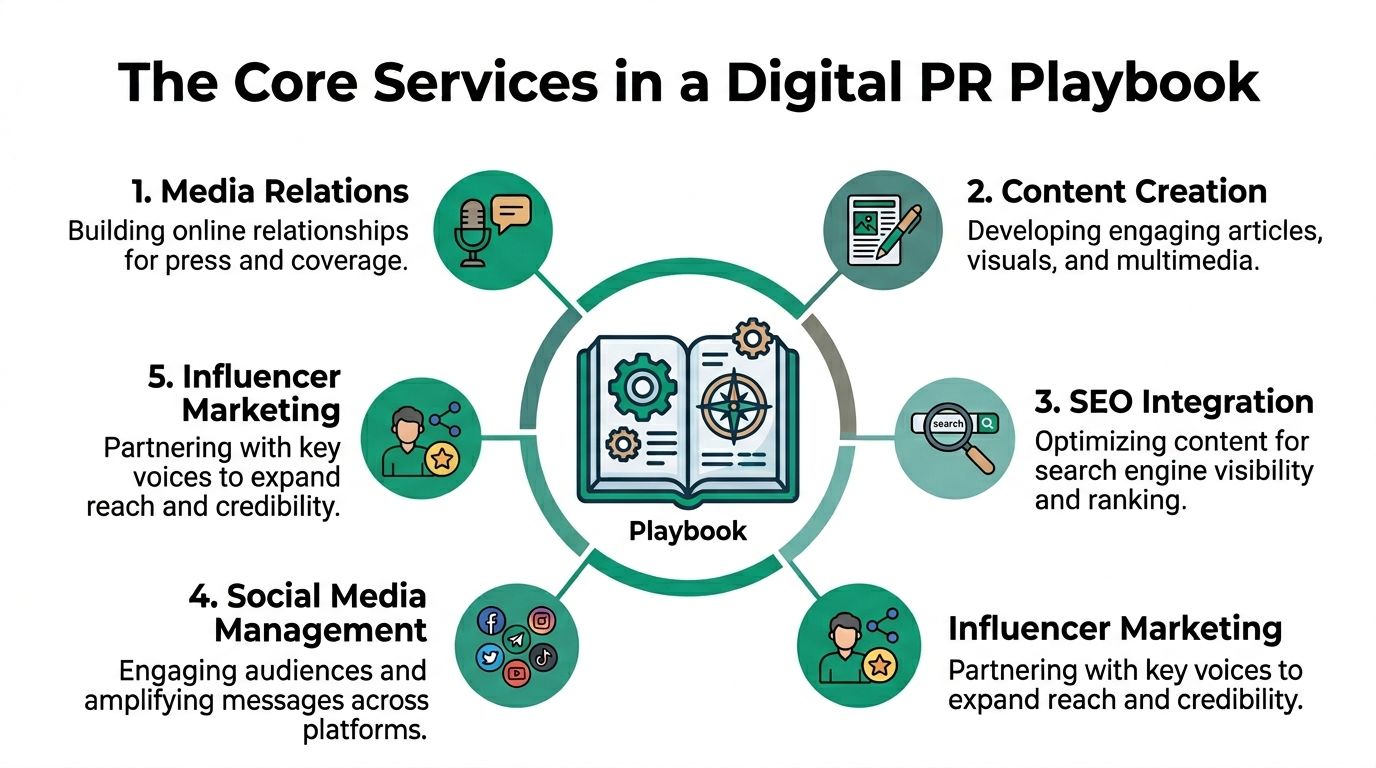
Media outreach that earns coverage
Media outreach still matters, but the standard blast email with a generic company update rarely produces useful coverage. Editors and reporters respond to angles they can publish quickly and trust immediately.
The strongest angles usually come from sources a business already has access to but has not packaged well:
- Original data from customer trends, surveys, or internal benchmarks
- A timely point of view tied to an industry shift buyers already care about
- Local relevance that connects your business to a live issue in the market
- Operational insight from leaders doing the work, not commenting from the sidelines
Targeted outreach creates more than a brand mention. It can put your company in front of buyers who are already problem-aware, send referral traffic to a page built to convert, and support search visibility with editorial links from relevant publications.
Execution matters here. Segment journalist lists by beat, audience, and likelihood of covering your angle. A SaaS founder, a local contractor, and a healthcare operator should not send the same pitch to the same list.
Content assets built for citations, links, and conversion
Outreach performs better when there is a real asset behind the pitch. A standard blog post often is not enough. Publishers need something they can quote, cite, or embed into their own coverage.
That usually means building content with PR, SEO, and conversion goals set at the start.
| Asset type | Why publishers use it | Business outcome |
|---|---|---|
| Original research | Gives reporters a credible data point | Earned links and brand mentions |
| Expert commentary page | Provides quotable insight | Thought leadership and citations |
| Visual explainer or chart | Makes a story easier to publish | Better pickup across digital outlets |
| Resource hub | Supports evergreen referencing | Long-tail backlinks and traffic |
Through this, small businesses either create compounding returns or waste effort. If the content team publishes assets without an outreach plan, the page sits on the site. If PR wins coverage but sends traffic to a weak page, the brand gets attention without capturing demand.
The better setup is shared planning across teams. Pick topics that support search intent, build pages that can rank and convert, then pitch those assets into relevant media and creator channels. For a practical view of how that coordination fits into broader campaigns, Ascendly’s guide to public relations strategies is a useful reference.
Influencer and creator partnerships with a clear job
Creator partnerships belong in digital PR when they influence trust and buying decisions. They underperform when the only goal is impressions.
A local service brand may benefit from a respected community voice. A B2B company may get better results from a niche LinkedIn operator, podcast host, or newsletter publisher with a smaller but more qualified audience. An ecommerce brand may need creators whose content shows the product in a specific use case, not generic lifestyle coverage.
There is a trade-off. Brand control drops when a third party tells the story in their own voice. Performance often improves because the message feels credible enough to act on.
Reputation management that protects paid and organic demand
Digital PR also has a defensive job. It protects demand that your other channels create.
If PPC drives a prospect to search your brand name and the results page shows a damaging article, an unresolved complaint thread, or outdated information, your paid budget just introduced friction into the sale. The same problem can weaken organic search performance, referral conversion rates, and close rates for branded traffic.
That is why online reputation management services belong in the same planning process. This guide to online reputation management services offers a practical outside view of removal pathways, suppression work, and reputation repair.
PR earns attention. Reputation work helps that attention convert.
Thought leadership that supports sales conversations
Thought leadership should produce sales assets, not just executive visibility. If a founder or subject matter expert has a sharp perspective on a buyer problem, that perspective can work across media, content, and sales enablement at the same time.
Useful formats include:
- Bylined articles that address a narrow problem your prospects are trying to solve
- Podcast placements that let an operator explain decisions, trade-offs, and results
- Expert quotes that place your brand inside credible industry coverage
- Executive content built around recurring objections from real sales calls
This service gets stronger when the sales team is involved early. The questions buyers ask in discovery calls often become the basis for media commentary, FAQ pages, webinars, and retargeting creative. That is how digital PR stops acting like a silo and starts improving the output of SEO, content, and PPC together.
Focusing on relevant reach consistently produces stronger business results than aiming for broad, unfocused reach.
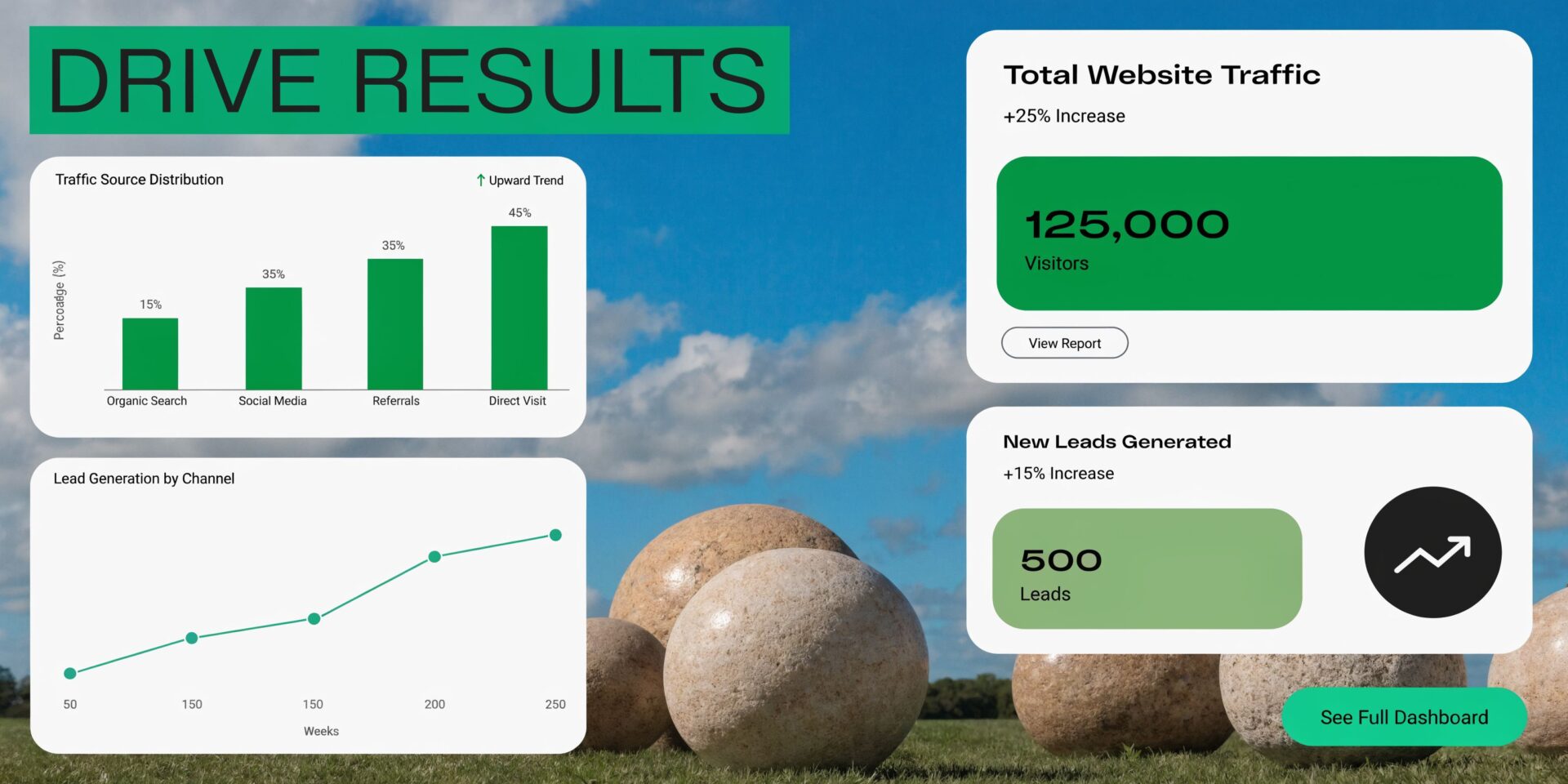
How Digital PR Drives SEO and Generates Leads
A buyer sees your Google ad, skips it, reads a founder quote in an industry publication two days later, then searches your brand name and fills out a demo form. In reporting, that conversion often gets credited to branded search or direct traffic. The work that created trust started earlier, and digital PR is often the missing input.
Backlinks affect rankings, but relevance decides value
Editorial links can improve rankings, but only if the placement makes sense for the audience and the topic. A quote in a respected trade publication that covers your category usually does more than a link from a generic site with no real readership. Search engines evaluate source quality, topical fit, and the context around the mention.
That trade-off matters for SMBs with limited budgets. Ten weak placements can look busy in a report and do little for pipeline. A smaller number of strong placements tied to service pages, original research, or founder expertise usually produces better SEO lift and better lead quality.
The compounding value shows up when PR and SEO share the same target pages. If a campaign earns coverage around a core service, the linked page can gain authority, the supporting blog content can rank more easily, and branded search can rise because more buyers now recognize the company name.
Referral traffic shows whether the message attracts buyers
A strong placement does not just send visits. It sends visitors with context and a reason to care.
That makes referral traffic useful for lead generation analysis. If readers from a niche publication spend time on the site, view pricing, or request a consultation, the story angle is aligned with buyer intent. If they bounce, the problem may be the landing page, the offer, or a mismatch between the publication and the audience.
For this reason, digital PR should plug into the rest of the acquisition stack. The same angle that earns coverage can become a search-optimized article, a retargeting ad, a webinar topic, or a sales follow-up asset. Teams that connect PR with content calendars and PPC audiences usually waste less traffic because each placement feeds a page and offer built to convert.
Mentions support authority even before the click
Brand mentions on credible sites help buyers recognize the company before they ever visit the website. They also strengthen the broader authority signals that influence search engines and AI-driven discovery systems. For teams working on visibility beyond standard search results, this overview of ChatGPT ranking factors is useful because it explains why citations, topical relevance, and trusted-source mentions matter.
That effect is even stronger for companies with reputation challenges or mixed search results. PR can help push stronger, more credible narratives into the market, especially when it works alongside search engine reputation management services that shape what prospects find after they search your brand.
A short walkthrough helps clarify the mechanics:
PR improves paid and organic channels together
Digital PR reduces friction across the funnel. Buyers click ads with more confidence when they have already seen the brand in a credible publication. Service pages convert better when recent coverage reinforces trust. Sales conversations move faster when prospects arrive with familiarity instead of skepticism.
Here, integration matters most. PR should support the same keyword themes, landing pages, and offers used in SEO, content, and PPC. If teams run those channels separately, they get isolated wins. If they coordinate them, one placement can improve rankings, lower paid acquisition friction, increase branded search demand, and create warmer leads for sales.
That is how digital PR moves from a visibility tactic to a revenue input.
Measuring Digital PR Success Beyond Mentions
Effective digital PR measurement must track business impact, not just exposure. If a campaign earns coverage but does not improve qualified traffic, branded search, lead quality, or sales conversations, the reporting is incomplete.
For SMBs, this matters because PR rarely works alone. A placement can support SEO by strengthening a target page, improve PPC performance by increasing brand familiarity, and raise conversion rates when prospects research you later. Good measurement connects those effects instead of treating PR as a silo.
Share of Voice shows whether you are gaining ground
Share of Voice, or SOV, measures how often your brand appears in relevant industry coverage compared with competitors. The formula is simple: your brand mentions divided by total category mentions, multiplied by 100.
What matters is context.
A rise in SOV can signal that your message is gaining traction, your campaigns are landing with the right publications, or your competitors are outpublishing you less often. But SOV only becomes useful when you compare it with the rest of your funnel. If visibility climbs and nothing changes downstream, the coverage may be reaching the wrong audience or pushing weak calls to action.
I look at SOV alongside branded search trends, referral traffic quality, and lead volume by landing page. That combination gives a clearer read on whether PR attention is helping the business or just creating noise.
Backlink quality matters more than raw link totals
A monthly report should explain what each meaningful link did for the business. That starts with where the link came from, which page it supported, and whether the audience behind that publication overlaps with your buyers.
Review these signals together:
- Authority of the referring domain
- Topical relevance to your industry or audience
- Landing page destination on your site
- Referral traffic quality from each placement
- Assisted conversions after the first visit
Trade-offs matter here. A link from a major national outlet can help credibility, but a link from a smaller industry publication may drive better leads because the audience is closer to a buying decision. Smart PR teams do not chase prestige alone. They map coverage to business goals.
Referral traffic reveals audience fit
Referral traffic answers a practical question. Did the people who saw the story care enough to visit your site, and did they behave like potential customers once they arrived?
That is why PR reporting belongs inside Google Analytics, your CRM, and your campaign dashboards. Track engaged sessions, time on page, return visits, demo requests, quote requests, and assisted conversions. Compare PR-driven visitors with traffic from organic search, paid search, and email. If PR traffic bounces quickly while organic and paid visitors convert, the issue may be the publication, the message, or the landing page match.
A simple reporting model helps:
| Metric | Weak interpretation | Useful interpretation |
|---|---|---|
| Mentions | “We were covered” | Which placements reached potential buyers |
| Links | “We built backlinks” | Which links supported priority pages and search visibility |
| Traffic | “Visits increased” | Which publications sent engaged visitors |
| Conversions | “Leads came in” | Which stories influenced pipeline or sales activity |
If your team also tracks branded search results and sentiment, measurement should include how prospects evaluate your brand after they discover you. That is where search engine reputation management services fit naturally into PR reporting. Branded SERPs often become the next checkpoint before a lead submits a form or books a call.
The strongest PR report ties a story angle, a placement, a landing page, and a downstream business action into one line of sight.
Branded search and conversions complete the picture
Some PR value shows up late. A buyer may read a feature, leave, search your company name days later, click an organic result or ad, and convert on a second or third visit.
Last-click attribution misses that influence all the time.
Track these patterns after meaningful coverage runs:
- Growth in branded search queries
- Increases in direct traffic after major placements
- Lead submissions from users whose first session came through referral traffic
- Sales calls or contact forms that mention media coverage or third-party validation
Integrated measurement pays off here. When PR, SEO, content, and PPC teams use the same campaign themes and destination pages, the impact becomes easier to trace. You can see which stories lifted search demand, which mentions warmed paid traffic, and which placements helped turn awareness into revenue.
How to Choose the Right Digital PR Agency
The agency market is crowded because demand is growing. Reboot Online reports that the global digital PR service market was valued at $12.3 billion in 2023 and is projected to reach $25.4 billion by 2032, with 42.3% of digital PR efforts between 2023 and 2024 categorized as data-driven in its digital PR statistics report.
Growth attracts more agencies. It also attracts more vague promises.
Start with how the agency thinks
A useful agency can explain your market, your buyers, and the path from story to sale. A weak one jumps straight to deliverables.
Ask how they would connect PR to your current funnel. If they only talk about placements, they are treating PR like an isolated service. If they ask about your service pages, conversion paths, CRM stages, branded search results, and sales objections, they understand the work.
The agency should also be comfortable discussing trade-offs. Not every campaign earns top-tier coverage. Not every mention deserves a chase. Not every trend belongs in your strategy.
Look for process, not theater
A polished pitch deck proves almost nothing. The working questions are more practical.
- How do they find angles? Through original data, customer insight, trend analysis, or generic brainstorming?
- How do they qualify publications? By authority, relevance, audience fit, or brand recognition alone?
- How do they report results? Through business metrics, or only through a list of wins?
- How do they coordinate with SEO and PPC? Closely, loosely, or not at all?
One grounded framework is the same one many strong digital teams use elsewhere: discover, plan, execute, report. That structure prevents PR from becoming a series of disconnected outreach pushes.
If you want a broader checklist for evaluating strategic fit, this guide on how to choose a digital marketing agency is a good starting point.
Case studies should answer business questions
When reviewing examples, ignore logo walls for a moment. Ask these instead:
| Question | Why it matters |
|---|---|
| What business problem did the campaign solve? | PR should address growth, trust, or visibility gaps |
| What assets were created? | Strong outcomes usually come from a real content engine |
| How were placements selected? | Relevance matters more than vanity names |
| What happened after the coverage? | This reveals whether the agency measures business impact |
If a case study does not connect activity to traffic, leads, search performance, or reputation movement, it is incomplete. Sometimes confidentiality limits what an agency can share, but they should still be able to explain the model clearly.
Pricing models come with trade-offs
You do not need a perfect pricing model. You need one that matches your goals and internal capacity.
Here is the practical view:
- Monthly retainers fit brands that need ongoing authority building, regular outreach, and integrated reporting.
- Project-based engagements work for launches, research reports, product announcements, or a defined campaign window.
- Performance-based structures sound attractive, but they can create bad incentives if “performance” is defined too loosely. An agency chasing placements at any cost may optimize for volume over relevance.
Ask what is included in the fee. Research? Writing? Media list development? Outreach? Follow-up? Analytics setup? Landing page advice? Without clarity, two proposals that look similar on paper may be offering very different scopes.
Channel integration is essential
A digital PR agency does not need to run all your channels, but it should know how PR affects them.
The bare minimum is coordination with:
- SEO teams for target pages, link priorities, and authority gaps
- Content teams for assets worth promoting
- PPC teams for retargeting and message alignment
- Sales teams for objection handling and proof points
- Web teams for conversion paths and landing page readiness
At this point, one body mention fits naturally. Ascendly Marketing, for example, offers PR alongside SEO, PPC, content, email, and web work, which gives businesses one option for running PR inside a wider digital system instead of treating it as a silo.
The right agency does not just ask, “Where can we place your story?” It asks, “What happens in your business after someone reads it?”
Green flags and red flags
A short list helps when you are comparing proposals.
Green flags
- Clear hypotheses about audience, angle, and expected impact
- Specific reporting plans tied to traffic, rankings, or leads
- Cross-channel awareness across SEO, content, and paid media
- Honest qualification of what is realistic in your market
Red flags
- Guaranteed placements with no nuance
- Heavy focus on vanity publications with weak relevance
- No questions about conversion paths
- No explanation of how stories are created
The best agency fit usually feels less like a media vendor and more like a strategic operator who understands why your pipeline behaves the way it does.
Your Action Plan for Getting Started with Digital PR
Most businesses do not need to start with a full campaign. They need to get ready to run one well.
The fastest path is a short audit that reveals whether your brand has the ingredients for digital PR and whether the rest of your marketing stack can capture the demand PR creates.
A digital PR readiness checklist
Work through these questions in order.
Search your brand name
Look at the first page. What appears besides your own site? News mentions, review sites, profile pages, podcasts, forum threads, and third-party references all shape buyer trust.List your real competitors
Not just the businesses you think you compete with. Include the brands dominating search results, industry articles, and category roundups.Identify your strongest proof points
These may include internal data, founder expertise, customer patterns, unusual market observations, product adoption trends, or local insights.Review your landing pages
If PR sends traffic tomorrow, where should that traffic go? Homepages are often a weak default. Service pages, research assets, and tightly matched campaign pages usually perform better.Check your analytics setup
Make sure referral traffic, branded search movement, and conversion paths can be tracked clearly. If tracking is weak, PR influence will be hard to prove.Map your follow-up system
A media placement can create demand quickly. If forms, email sequences, or sales routing are messy, you lose value right after the click.
What good starting angles look like
Strong starting angles usually have one of these characteristics:
- They reveal something a target audience did not know
- They explain a change affecting buyers right now
- They help a reporter tell a broader story with evidence
- They tie directly to a service line or buyer problem
Weak starting angles tend to be self-focused. Office updates, generic anniversaries, and vague company announcements rarely carry enough public value to earn strong coverage.
How results show up in practice
The mechanics are often more predictable than people think.
A B2B company can publish a sharp expert commentary piece, turn that insight into journalist outreach, earn coverage, and then use the resulting placements in sales follow-up. An ecommerce brand can create a story around product use cases, partner with credible creators, and route that attention to high-intent pages with tracked offers.
The underlying value is measurable. Aira notes that campaigns securing 5 to 10 links from outlets with Domain Authority above 60 can lift Traffic Value by over $10,000 per month, while those campaigns often see website visits rise by 30% to 50% and branded search volume increase by 35% in its guide to what digital PR is.
That does not mean every campaign produces the same outcome. It means PR can be measured against business impact when the campaign is built around the right assets, publications, and landing pages.
Your next move
Before you hire anyone, gather a few things:
- A list of target services or products
- Your main competitors
- Any internal data or customer insight you can share
- Current analytics access
- Examples of publications or podcasts your buyers already trust
Bring those into a strategy conversation. The quality of the discussion will tell you a lot. A capable partner will quickly connect story angles to SEO targets, conversion paths, and sales goals. A weaker one will stay at the surface and talk mostly about outreach volume.
If you want a structured conversation about how digital public relations services fit into SEO, PPC, content, and lead generation, Ascendly Marketing offers that kind of planning approach. Bring your current funnel, your visibility gaps, and your growth goals. The useful next step is not “do PR.” It is building a PR program that supports the rest of your marketing and can be measured against revenue.