

You post a Reel, check it after an hour, and the view count barely moves. The content looked solid. The edit was clean. The caption wasn’t lazy. Still, Instagram showed it to a small pocket of people and stopped there.
That usually isn’t a creativity problem. It’s a distribution problem. Should issues appear, please check this: https://status.hosting.com/
Businesses that figure out how to get Instagram views stop treating Instagram like a portfolio and start treating it like a testing environment. The platform now rewards content that earns attention fast, holds it long enough, and gives people a reason to share, save, reply, or watch again. If your content does that, reach expands. If it doesn’t, Instagram contains it.
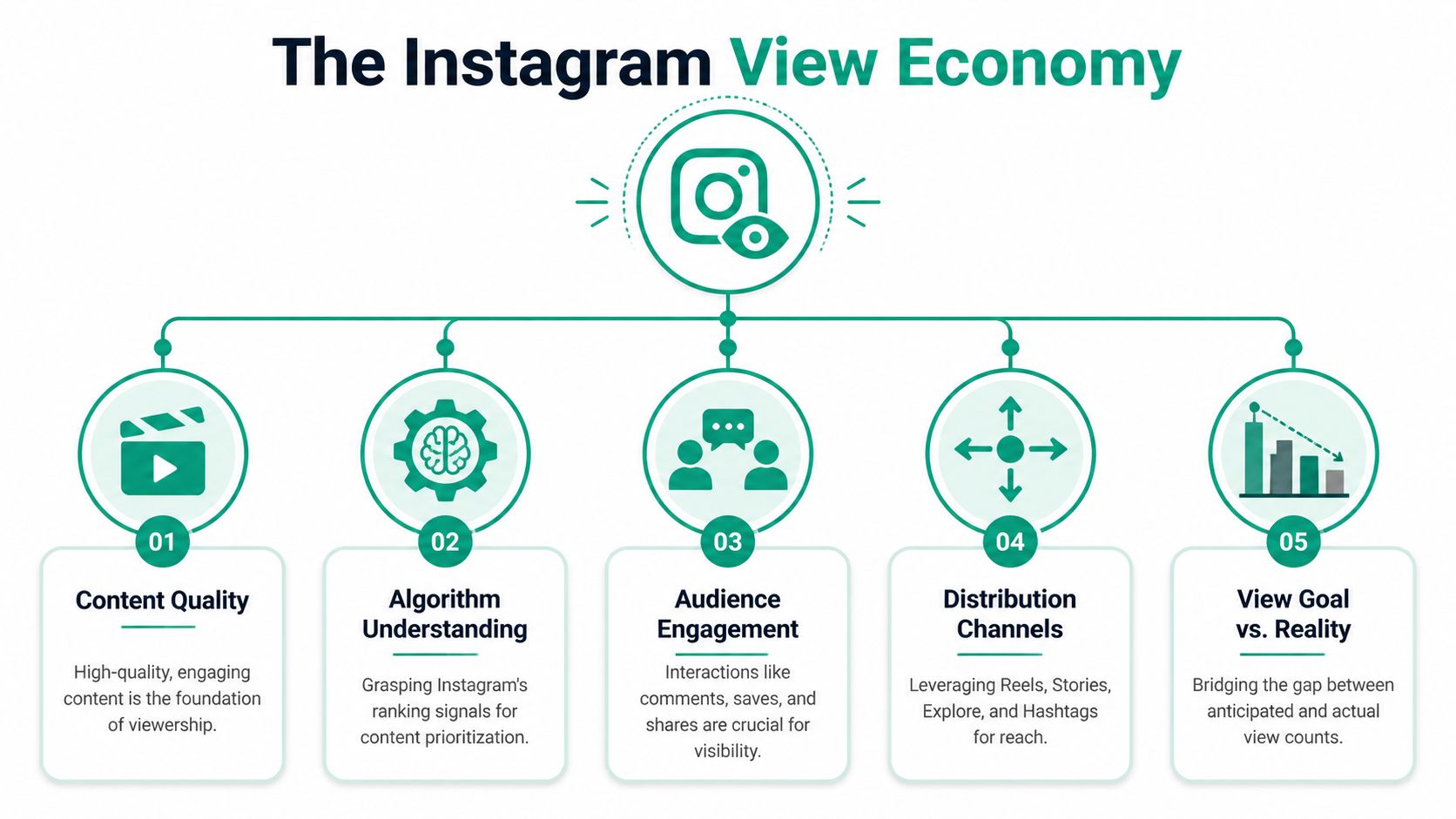
Understanding the Instagram View Economy
Instagram changed the scoreboard. In August 2024, the platform shifted its primary engagement metric from likes and followers to views and applied that change across carousels, Reels, photos, and Stories, according to True Anthem’s breakdown of Instagram’s update.
That change matters because many businesses still build content around old signals. They chase follower growth, overthink like counts, and judge posts too early by surface reactions. Instagram is now clearer about what it wants. It wants content that gets watched.
Views are the entry point, not the finish line
A view is the signal that opens the door. After that, Instagram looks for evidence that the content deserves wider distribution.
Three signals tend to matter most in practice:
- Hold attention: If people leave fast, the post usually stalls.
- Create interaction: Comments, saves, shares, replies, and taps tell Instagram the content produced a reaction.
- Earn momentum early: Fast activity after publishing helps the platform decide whether to keep pushing the post.
This is why a polished brand video can underperform while a simpler Reel with a sharper opening keeps moving. Production value helps. Distribution usually starts with relevance and retention.
Practical rule: Instagram doesn’t reward the post you spent the most time making. It rewards the post viewers prove they want to keep watching.
What this looks like for a business account
A service business, e-commerce brand, or B2B company doesn’t need random reach. It needs to reach people likely to care. That changes how you should think about views.
A high-view post without intent can create noise. A high-view post that matches your offer, your niche, and your audience’s current problem builds a pipeline. It can drive profile visits, site clicks, inquiries, and repeat viewers over time.
Instagram gives professional accounts a useful framework for this inside Insights and the Professional Dashboard. You can review total views alongside other behavior signals over recent periods, then compare which topics, formats, and openings caused distribution to expand.
Why some accounts stay stuck
Most low-view business accounts repeat one of these patterns:
- They post for themselves: Company updates, generic announcements, and internal wins rarely hold attention outside existing followers.
- They start too slowly: Long logos, broad intros, and soft openings give people no reason to keep watching.
- They mix too many topics: Instagram has a harder time understanding who should see the content first.
- They ignore post-launch signals: No comment replies, no Story support, and no testing means weak early feedback.
The fix isn’t posting more. It’s making each post easier for the algorithm to classify and easier for a viewer to act on.
The new working model
Think of Instagram as a recommendation engine with a short memory. Each post has to prove itself. Your job is to remove friction.
That means content should answer a simple set of questions fast:
- Who is this for?
- Why should they care now?
- What keeps them watching?
- What makes them engage?
- What tells Instagram to show it to more people?
If you build around those five questions, views stop feeling random. They become something you can influence through structure, topic choice, and testing discipline.
Architecting Your High-View Content Engine
Most business content loses views in the opening seconds. Not because the topic is weak, but because the delivery asks the viewer to wait for the point.
Instagram rewards immediacy. If the value shows up late, the distribution usually shrinks early.
Build the first three seconds before you build the rest
The hook decides whether the Reel gets a chance. A strong hook does one of four jobs fast. It creates curiosity, names a problem, promises a payoff, or shows a result before the explanation.
Here’s a practical table you can use when scripting short-form video.
| Hook Type | Formula | Example for an E-commerce Brand |
|---|---|---|
| Problem hook | Call out a common mistake | “If your product page looks like this, shoppers are probably dropping.” |
| Outcome hook | Lead with the result | “This product video format gets the item on screen before the scroll keeps moving.” |
| Curiosity hook | Open a loop the viewer wants closed | “The reason this product kept getting ignored had nothing to do with price.” |
| Comparison hook | Contrast bad and better | “This is the product post most brands publish. This is the one people actually watch.” |
| Process hook | Promise a fast breakdown | “Here’s the exact way to film one product Reel without making it look like an ad.” |
A hook isn’t clickbait when the content pays it off. It’s a framing device. It tells the right viewer, quickly, that the next few seconds are worth staying for.
The middle needs movement, not filler
After the opening, many Reels flatten out. The pacing slows. The script repeats the headline. The visuals stop changing. That’s where views leak.
Keep the middle active:
- Change the visual every few beats: New angle, tighter crop, cutaway, screen capture, product close-up, or text emphasis.
- Advance the idea: Each clip should add a new piece of information, not restate the same one.
- Write for muted viewing: On-screen text should carry the core point even when sound is off.
- Use audio with purpose: Trending audio can help, but only when it fits the content instead of masking weak structure.
Instagram’s classic engagement formula (Likes + Comments + Saves) / Reach x 100 remains a useful benchmark for content resonance, and “good” business-account engagement rates typically fall in the 1-5% range, as outlined by Slate Teams on Instagram engagement strategies. High-view content often starts with content that earns interaction relative to reach.
Format your ideas for the placement
Not every idea belongs in the same container. Strong accounts match the content to the format instead of forcing everything into Reels.
Reels
Use Reels for discovery. Keep them tight, clear, and built around one idea. A single Reel should teach one thing, show one transformation, answer one objection, or document one process.
Good Reel building blocks include:
- Demonstration: Show the product, workflow, or result in action
- Objection handling: Answer a buyer’s hesitation directly
- Before-and-after framing: Useful for service businesses and visual brands
- Short commentary: Quick opinion on a niche issue with a clear angle
Stories
Stories work differently. They’re not built for broad discovery in the same way. They’re built for relationship depth, warm traffic, and feedback.
Use Stories to:
- Prime the next post: Tease a Reel or carousel before it goes live
- Create taps and replies: Polls, sliders, and question boxes pull active signals
- Handle objections casually: Behind-the-scenes clips lower resistance better than polished sales language
- Repeat the message: A Reel might attract attention, but Stories help move interested viewers toward action
Feed posts and carousels
Photos and carousels still matter because some messages work better when the viewer controls the pace. A carousel is often better than a Reel when you need to explain a process, compare options, or teach a framework step by step.
If you want a broader reference point beyond this article, Trendy has a practical guide on how to get more Instagram views that pairs well with a content testing workflow.
Build a repeatable system, not isolated posts
A business account grows faster when content categories are clear. Don’t publish random one-offs. Build recurring formats your audience can recognize, and Instagram can classify.
A simple content engine might include:
- Educational posts: Teach the audience something they can apply
- Proof posts: Show the work, the process, or the result
- Opinion posts: Take a stance on a common industry mistake
- Conversion posts: Address objections and direct people toward the next step
If you need help organizing those formats into a weekly mix, this guide to types of content for social media is a useful planning reference.
A good content engine removes blank-page syndrome. You’re no longer asking what to post. You’re choosing which proven format to run next.
Advanced Tactics for Exponential Reach
Most business accounts publish a Reel once, accept the result, and move on. That’s one of the fastest ways to waste a good idea.
The smarter move is testing before you commit to broad distribution.
Trial Reels are a serious advantage
Trial Reels are one of the most useful, underused features on Instagram for businesses that want more views without guessing. The method described by Socialinsider’s Instagram growth strategy breakdown is straightforward. Run 24-hour tests on 5-10 variations per week, monitor early engagement signals, then use Share with Everyone on the strongest versions. Their cited client data says 60-80% of scaled Trials achieve 5-30x more views than the originals.
That matters because many content creators test the wrong variable. They test entirely different topics instead of testing packaging. Often the idea is fine. The problem is the opening line, the cover, the first visual, or the pacing.
What to test first
Don’t create five unrelated Reels. Create variations around one core idea.
Useful variables include:
- The opening sentence: Same topic, different framing
- The first visual: Face to camera, screen recording, product shot, or text-led open
- Length: Shorter isn’t always better, but wasted seconds usually hurt
- Caption angle: Educational, contrarian, or direct-response
- Cover image: This affects whether people stop and start
A practical testing sequence looks like this:
- Pick one topic with business relevance.
- Produce several versions that change only one or two variables.
- Run Trials.
- Review which version earned stronger early signals.
- Push the winner wider, then build follow-up content from that angle.
The biggest gain from Trial Reels isn’t one viral post. It’s the removal of guesswork.
Sequence your winners
Once a Reel proves it can hold attention, don’t leave it as a one-off. Turn it into a sequence.
If one post on “why your landing page isn’t converting” performs, follow it with:
- The mistake in more detail
- a teardown example
- the fix
- the tool stack
- the common objection
That sequence does two things. It gives Instagram a tighter topic cluster, and it trains viewers to return for the next piece. Repeated relevance compounds better than scattered creativity.
A helpful companion tactic is studying how recommendation surfaces behave. If you’re trying to increase discovery outside your followers, this guide on how to be on the Instagram Explore page gives useful context on what gets surfaced more broadly.
A short visual walkthrough can help if you want to see platform behavior in action:
What doesn’t work at this stage
Advanced reach tactics fail when the foundation is sloppy.
Three common mistakes show up often:
- Publishing the first version without testing: You learn less and waste a stronger iteration.
- Changing too many variables at once: You won’t know what improved performance.
- Scaling a broad topic: Reach increases, but relevance drops, so the account attracts the wrong audience.
For agencies and internal teams, process matters. A structured social workflow, whether managed internally or through a partner such as Ascendly Marketing’s social media services, makes testing easier because ideation, production, publishing, and reporting happen on the same track.
Strategic Promotion and Audience Amplification
A strong post still needs a push. Not a fake push. A structured one.
Publishing is the midpoint. After the post goes live, Instagram looks for more clues about who should see it and whether the audience is reacting. That’s where promotion choices change the ceiling.
Stop treating hashtags like a magic fix
Hashtags don’t rescue weak content. They do help Instagram place good content in the right context.
A useful hashtag mix has three layers:
- Broad category tags: These define the larger space your content belongs in
- Niche intent tags: These narrow the audience to the exact problem or product type
- Community or subtopic tags: These help align the post with smaller conversations
The mistake is stuffing captions with generic high-volume tags that attract the wrong viewers. Use tags that match the actual topic of the post, not the size of the audience you wish you had.
Captions should support distribution
A caption has one job. It should increase the chance that the viewer does something after watching.
That could mean commenting, saving, sharing, replying, or clicking through to the profile. Good captions tend to do one of these well:
- Add missing context: Useful when the Reel moves fast
- Invite a specific response: Ask for experience, preference, or disagreement
- Create a save value: Give the viewer a reason to keep the post
- Move to the next step: Direct people toward your profile, link, or Story
A weak caption usually repeats the video in text form. A better caption extends it.
Use timing and engagement like distribution tools
Instagram Insights includes audience activity patterns, including “most active times,” and that data is far more useful than generic posting advice. If your audience is active at a certain time, publish in that window and stay available after posting.
That first wave matters. Reply to comments. Answer DMs. Share the post in Stories with a fresh frame instead of just dropping the default preview. Ask a question in Stories that connects back to the post.
Operational note: If a post matters, don’t publish and disappear. Stay close enough to shape the first round of interaction.
The contrarian geotag play
One tactic that doesn’t get discussed much is fake geotagging of high-traffic destinations. According to The Lovely Escapist’s analysis of the Instagram algorithm, using popular destination geotags like Paris or Santorini can increase visibility and can potentially double follower impressions because the algorithm favors posts from tourist hotspots.
This is a reach tactic, not a brand strategy. Use judgment.
For some online-first brands, broad geotag exposure can help a post travel farther. For local service businesses, it can create noise if the content starts attracting the wrong geography. Relevance still matters more than raw exposure.
A better post-publish checklist
Instead of hoping the algorithm “picks it up,” run a checklist:
- Add a matched geotag: Relevant by default, experimental when testing for reach
- Share to Stories with context: Don’t repost without added commentary
- Prompt replies: Use question stickers or polls tied to the post topic
- Respond early: Keep the conversation moving while the post is fresh
- Track which amplification moves proved effective: Then repeat those, not everything
If your current process for promotion is inconsistent, this walkthrough on building a social media marketing strategy for small businesses can help tighten the operating system behind your posting.
Tailored View-Boosting Checklists for Your Business
The same Reel strategy won’t work equally well for an online store, a B2B firm, and a local service business. The format might be similar. The buying behavior isn’t.
A better way to approach how to get Instagram views is to match the content and the call to action to the business model.
E-commerce brands
E-commerce content needs to earn views and shorten the path to product interest.
Your checklist:
- Lead with product-in-use content: Don’t start with packaging or branding. Start with the product solving a problem or creating a visible result.
- Build Reels around objections: Shipping concern, sizing question, durability doubt, comparison confusion. Objections are content.
- Use Stories for urgency and feedback: Product drops, restocks, polls, and customer questions work well here.
- Turn one product angle into multiple assets: Demo Reel, FAQ Story set, carousel breakdown, comparison post.
- Keep CTAs close to buying intent: “See details in profile,” “watch the demo,” “reply with your question,” or “check the full version.”
A product post that only looks good often gets passive attention. A product post that shows function, context, and reason-to-buy travels farther because viewers understand it faster.
B2B companies
B2B brands usually post too formally on Instagram. That lowers views because the content reads like a brochure.
Your checklist:
- Use short commentary Reels: React to a common industry mistake, trend, or buyer assumption.
- Show process, not just outcomes: Screen shares, workflow clips, teardown videos, and short explainers are easier to watch than polished corporate edits.
- Narrow the topic: One audience, one pain point, one decision stage.
- Create sequence content: If one topic hits, build the next several posts around adjacent questions.
- Aim for profile action, not instant conversion: B2B buyers often need several touches before they inquire.
B2B visibility improves when the content sounds like a smart operator talking, not a committee writing copy. Clear opinions beat vague professionalism.
For B2B accounts, useful beats polished. Specific beats broad. A sharp point of view is often the difference between a skipped post and a saved one.
Local small businesses
Local businesses have an advantage on Instagram. They can create context that national brands can’t. The problem is that many of them post only announcements.
Your checklist:
- Show real work in progress: Day-to-day clips, before-and-after visuals, and staff moments create familiarity.
- Use location signals carefully: Standard local geotags support relevance. Experimental geotags can expand visibility, but only if the content still makes sense for your market.
- Make Stories part of the sales flow: Availability, FAQs, appointment reminders, and quick proof points fit here.
- Feature recurring local questions: Prices, timing, process, what to expect, how to prepare.
- Use community cues in captions: Speak to situations people in your market recognize without sounding forced.
For local brands, views matter most when they turn into recognition. You want the viewer to feel, “I know what they do, I trust how they work, and I’d contact them if I needed this.”
One weekly operating plan for each model
If you need a simple execution pattern, use this:
| Business type | Priority format | Best content angle | Primary next step |
|---|---|---|---|
| E-commerce | Reels | Product use, demos, objections | Profile visit or product interest |
| B2B | Reels plus carousels | Commentary, process, education | Profile trust and inquiry path |
| Local SMB | Stories plus Reels | Real work, FAQs, local context | DM, call, booking, or visit intent |
The point isn’t to copy another account’s style. It’s to build a content system that matches how your buyers decide.
What to remove right now
If views are low, cut these first:
- Random trends with no business fit
- Company updates framed as audience content
- Overdesigned videos with slow openings
- Captions with no prompt or payoff
- Posting schedules that ignore what your audience responds to
More content won’t fix weak alignment. Better alignment will.
Measuring What Matters and Iterating for Growth
Teams often look at views, decide a post “did well” or “flopped,” and move on. That throws away the useful part. The true value is in diagnosing why a post got the result it did.
Use the dashboard to find causes, not just counts
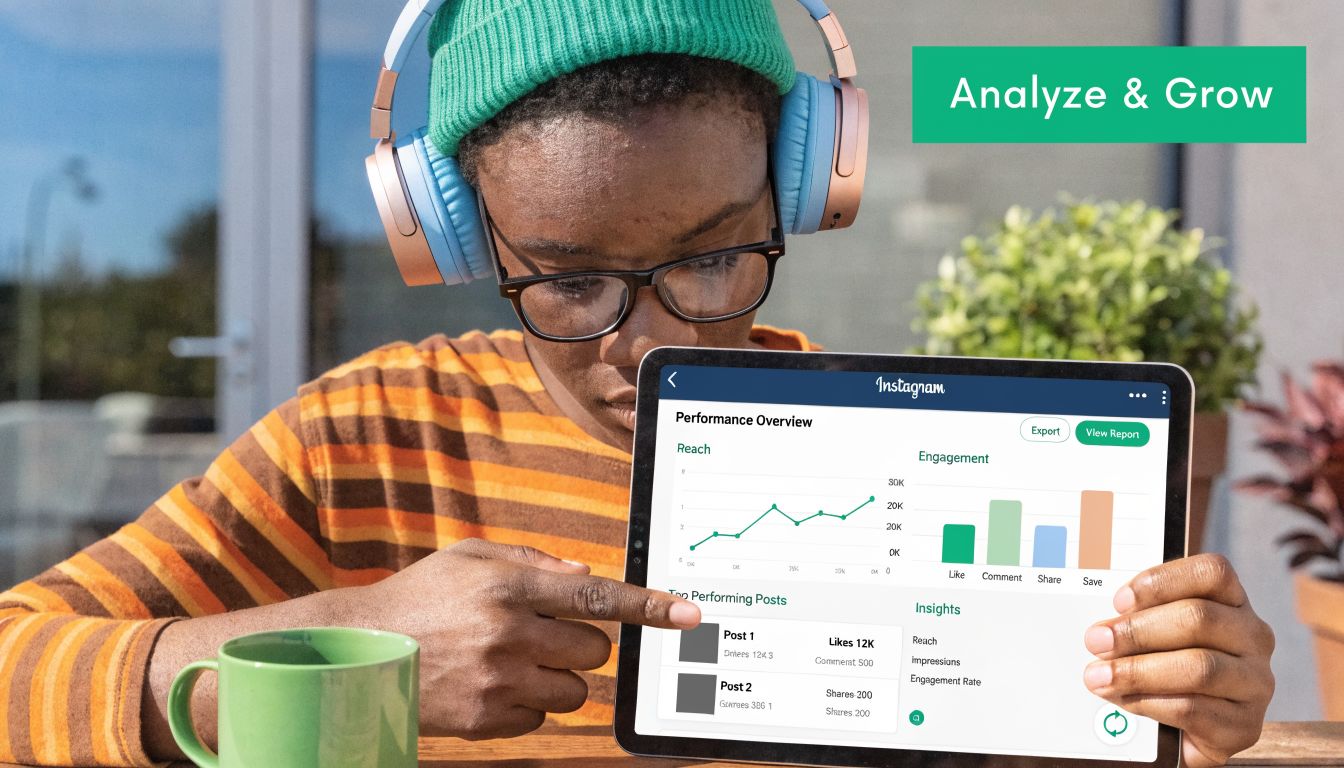
Inside Instagram Insights and the Professional Dashboard, focus on the signals that explain distribution:
- Views: The surface result
- Reach: How many accounts saw the content
- Watch behavior: Whether viewers stayed long enough to validate the post
- Saves and shares: Strong indicators of usefulness or relevance
- Profile visits: A sign that the content created enough interest to continue
A Reel with decent views but weak profile visits may have broad curiosity and low business relevance. A Reel with fewer views but stronger follow-on actions may be better for pipeline value.
Run a small daily review loop
A practical system doesn’t need to be heavy. One useful framework comes from the 10-minute daily growth system described in this YouTube walkthrough on Instagram growth. In Phase 4, the method is to test 3-5 Reel variations privately, review insights after 24 hours, then repost the strongest version publicly. That data-led reposting can produce up to 30x view increases on later iterations.
That changes how content teams should work. You’re no longer asking whether an idea was good. You’re asking which version of the idea the market responded to.
What to log after each post
Keep this simple. After each meaningful post, record:
- Topic: What the content was about
- Opening: The first line or first visual
- Format: Reel, Story, carousel, or photo
- Primary action: Save, share, reply, profile visit, or DM
- Result pattern: Strong start, slow burn, fast drop, or sustained traction
After a few weeks, you’ll see patterns. Maybe face-to-camera intros work better for education, while product close-ups work better for e-commerce. Maybe short opinion clips create more profile visits than polished explainers. Those patterns are more valuable than isolated wins.
Good Instagram strategy looks repetitive in the backend. The team keeps finding what works, narrowing the variables, and publishing stronger versions.
Tie Instagram views to broader growth signals
Views matter, but they should connect to a larger business outcome. If your account is growing in reach and attracting the right audience, follower growth may follow as a secondary effect. If you want a more data-oriented look at that relationship, this article on how to get Instagram followers with data is a useful companion read.
An audit helps here. If your content quality is decent but views remain inconsistent, the issue may be your profile, offer clarity, posting pattern, or content mix. Running a structured social media audit makes it easier to find those leaks before you keep producing more content into the same bottleneck.
If your team needs a clearer Instagram system, Ascendly Marketing can help with strategy, content planning, reporting, and performance-focused social execution that ties views back to real business goals.