

Finding the right pest control marketing agency can transform your business from struggling to acquire customers into a lead-generating machine that dominates your local market. Whether you’re a small operation looking to scale or an established pest control company seeking consistent growth, understanding how specialized marketing agencies work—and what separates the exceptional from the mediocre—is critical to making an informed decision that protects your investment and accelerates your revenue.
This comprehensive guide explores everything you need to know about pest control marketing agencies, from the specific services they provide to how to evaluate potential partners, what results you should expect, and how much you should budget for professional marketing support. By the end, you’ll have a clear framework for choosing the agency that aligns with your growth goals and market position.
What Is a Pest Control Marketing Agency and Why Specialization Matters
A pest control marketing agency is a specialized digital marketing firm that focuses exclusively—or primarily—on helping pest control operators (PCOs) attract, convert, and retain customers through targeted online marketing strategies. Unlike general marketing agencies that work across multiple industries, these specialists understand the unique challenges, seasonal fluctuations, regulatory considerations, and customer psychology specific to the pest control industry.
The specialization advantage cannot be overstated. Pest control marketing requires deep knowledge of local service area marketing, emergency service positioning, recurring revenue models, and the specific search behaviors of homeowners and commercial property managers dealing with pest problems. A specialized agency already understands your customer acquisition costs, lifetime value metrics, competitive landscape, and the regulatory constraints around advertising pest control services.
Core Services Offered by Pest Control Marketing Agencies
Most reputable pest control marketing agencies provide an integrated suite of digital marketing services designed to work synergistically:
Search Engine Optimization (SEO) focuses on ranking your website for local pest control searches like “termite inspection near me” or “bed bug exterminator [city name].” This involves technical website optimization, local business profile management, content creation, and building authoritative backlinks that signal trustworthiness to Google.
Pay-Per-Click Advertising (PPC) delivers immediate visibility through Google Ads and social media advertising. For pest control companies, PPC is particularly valuable for capturing high-intent searches during peak seasons or when launching in new service areas where organic rankings haven’t yet developed.
Web Design and Conversion Rate Optimization ensures your website doesn’t just attract visitors but converts them into booked appointments. This includes mobile-responsive design, clear calls-to-action, online booking systems, trust signals like reviews and certifications, and fast-loading pages that keep potential customers engaged.
Reputation Management helps you generate, monitor, and respond to online reviews across Google, Yelp, Facebook, and industry-specific platforms. Since pest control is a trust-based service, your online reputation directly impacts conversion rates and local search rankings.
Content Marketing establishes your authority through blog posts, videos, and educational resources that answer common pest-related questions. This content serves dual purposes: attracting organic search traffic and nurturing leads who aren’t ready to book immediately.
Marketing Automation and CRM Integration connects your marketing efforts to your business operations, ensuring leads are tracked, followed up with systematically, and measured for ROI. This technology stack is essential for understanding which marketing channels deliver your most profitable customers.
How Pest Control Marketing Differs from General Digital Marketing
The pest control industry presents unique marketing challenges that general agencies often mishandle, leading to wasted budgets and poor results. Understanding these differences helps explain why specialized agencies consistently outperform generalists.
Seasonal Demand Fluctuations and Budget Allocation
Pest control demand varies dramatically by season and pest type. Termite inquiries spike in spring when swarms emerge. Mosquito treatments peak in summer. Rodent problems increase as temperatures drop in fall and winter. A specialized agency understands these patterns and adjusts your marketing spend accordingly, ramping up investment before peak seasons and maintaining brand presence during slower periods.
General agencies typically apply static monthly budgets regardless of demand cycles, missing opportunities to capture high-intent searchers when they’re most active and wasting money during low-demand periods when cost-per-acquisition naturally increases.
Local Service Area Complexity and Geographic Targeting
Pest control is inherently local, with most companies serving specific cities, counties, or radius-based service areas. Effective marketing requires precise geographic targeting that captures customers within your service area while excluding those outside it. This involves sophisticated local SEO strategies, geo-targeted PPC campaigns, and location-specific landing pages.
Specialized agencies understand the nuances of local pack rankings, Google Business Profile optimization, and how to structure service area pages to rank for multiple locations without triggering duplicate content penalties. They know which zip codes in your market have the highest customer lifetime value and can target accordingly.
Emergency Service Positioning and 24/7 Lead Capture
Many pest situations require immediate attention—bed bugs, wasp nests near entryways, rodent infestations, or termite swarms. Your marketing must communicate availability, speed of response, and emergency service capabilities. This requires specific website features like click-to-call buttons, online scheduling with same-day availability, and messaging that emphasizes rapid response times.
Specialized agencies build marketing systems that capture and route emergency leads 24/7, ensuring you don’t lose high-value customers to competitors simply because someone called after business hours. They understand the conversion rate differences between emergency and routine service requests and optimize accordingly.
Recurring Revenue Models and Customer Lifetime Value
Unlike one-time service businesses, pest control companies generate significant revenue from recurring treatments—quarterly pest control, annual termite inspections, ongoing mosquito programs. Your marketing strategy must account for customer lifetime value (CLV), not just initial acquisition cost.
A specialized agency structures campaigns to attract customers likely to convert to recurring services, tracks retention rates by acquisition channel, and calculates true ROI based on multi-year customer value rather than single-transaction revenue. This fundamentally changes which marketing channels and messages receive investment priority.
Evaluating Pest Control Marketing Agencies: What to Look For
Choosing the wrong marketing agency wastes money, delays growth, and can even damage your brand reputation through poor-quality tactics. Use this evaluation framework to separate legitimate specialists from generalists claiming pest control expertise.
Industry-Specific Experience and Case Studies
Request detailed case studies from pest control clients similar to your business size and market. Look for specific metrics: organic traffic growth, lead volume increases, cost per acquisition, conversion rate improvements, and revenue impact. Vague testimonials without numbers indicate limited real-world success.
Ask how long they’ve worked in the pest control industry and how many active pest control clients they currently serve. Agencies with 5+ years of pest control focus and 10+ active clients have proven staying power and accumulated expertise that newer entrants lack.
Transparent Methodology and Realistic Expectations
Reputable agencies explain their methodology clearly and set realistic timelines for results. SEO typically requires 4-6 months to show significant organic traffic growth. PPC can generate leads immediately but requires ongoing optimization to improve efficiency. Be wary of agencies promising page-one rankings in 30 days or guaranteed lead volumes—these claims indicate either inexperience or unethical tactics.
Ask specifically about their link-building approach, content creation process, and technical SEO practices. Ethical agencies focus on creating genuine value, earning authoritative links, and following Google’s guidelines. Red flags include buying links, using private blog networks, or keyword stuffing tactics that risk penalties.
Technology Stack and Reporting Capabilities
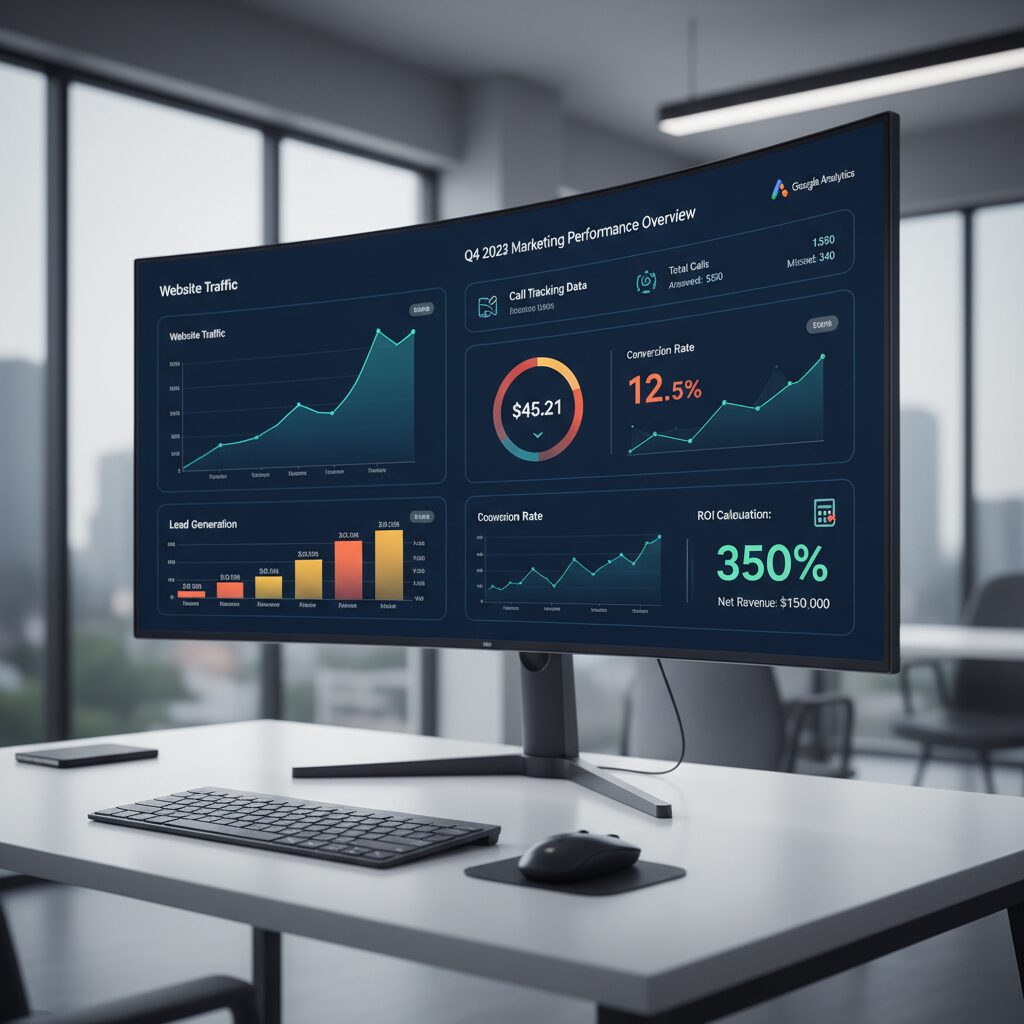
Modern pest control marketing requires sophisticated technology for tracking, attribution, and optimization. Ask what tools and platforms the agency uses for analytics, call tracking, CRM integration, and reporting. Quality agencies provide dashboard access showing real-time performance across all channels.
Specifically, verify they can track phone calls to specific marketing sources (essential since most pest control leads call rather than fill out forms), attribute revenue to marketing channels, and integrate with popular pest control software like PestPac, ServSuite, or Briostack.
Communication Structure and Account Management
Understand who will manage your account day-to-day and how often you’ll receive updates. Agencies that assign dedicated account managers with pest control expertise provide better service than those rotating your account among junior staff. Monthly strategy calls and detailed performance reports should be standard.
Ask about their client retention rate and average client tenure. High retention (80%+ annual) indicates satisfied clients receiving results. High churn suggests poor performance or misaligned expectations.
Exclusivity and Market Protection
Some specialized agencies offer territorial exclusivity, working with only one pest control company per market to avoid conflicts of interest. While this limits their potential client base, it ensures they’re fully invested in your success rather than hedging bets across multiple competitors.
Exclusivity isn’t essential, but if an agency works with multiple companies in your market, understand how they differentiate strategies and ensure your competitive intelligence remains confidential.
Pest Control Marketing Strategies That Drive Measurable Results
Understanding the specific tactics that generate pest control leads helps you evaluate agency proposals and hold your marketing partner accountable for performance. Here are the strategies that consistently deliver ROI for pest control companies.
Local SEO: Dominating the Google Local Pack
The Google Local Pack—the map-based results appearing for local searches—generates more pest control leads than any other single source. Ranking in the top three positions requires optimizing multiple factors that Google uses to determine local relevance and authority.
Google Business Profile optimization starts with complete, accurate information including business name, address, phone number, service areas, business hours, and service categories. Add high-quality photos of your team, vehicles, and completed work. Post regular updates about seasonal services, promotions, and pest prevention tips.
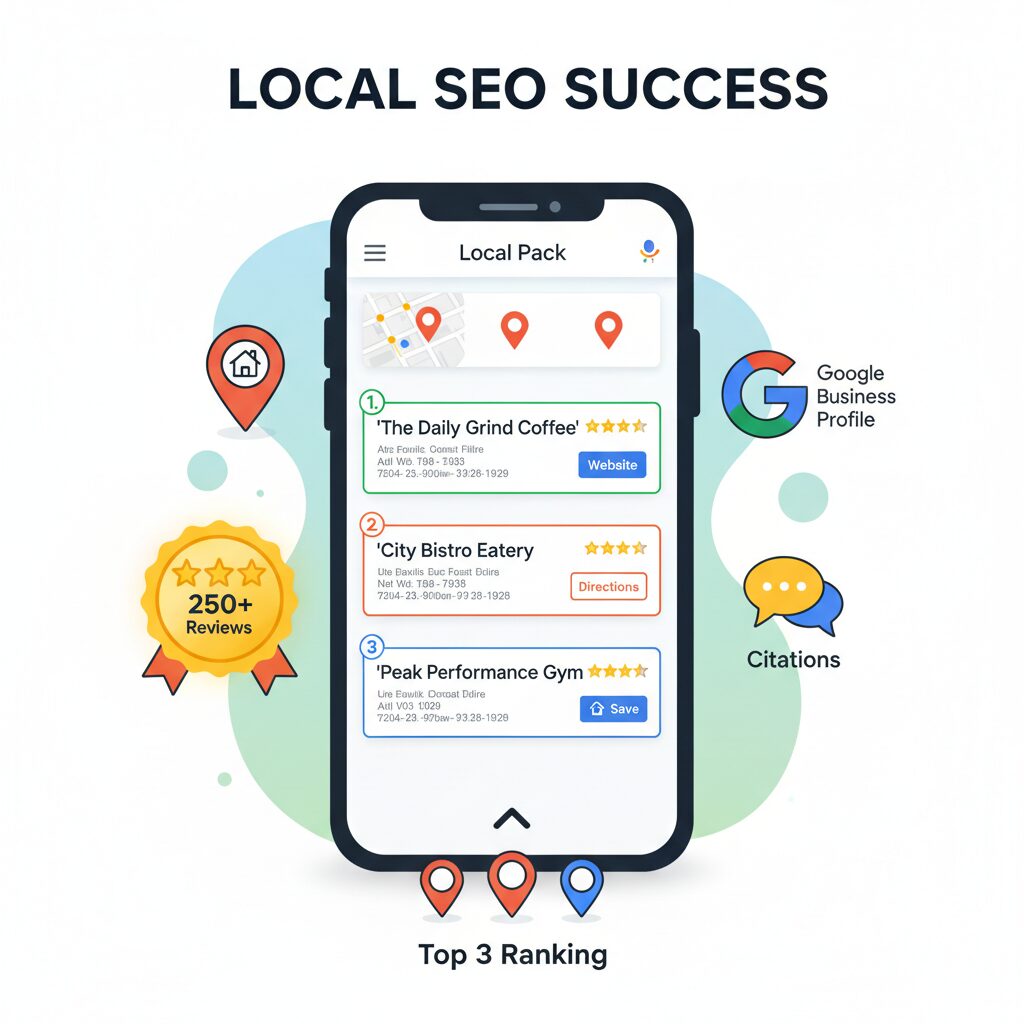
Review generation and management directly impacts local pack rankings. Implement systematic processes for requesting reviews from satisfied customers immediately after service completion. Respond professionally to all reviews, positive and negative, demonstrating customer service commitment that influences both rankings and conversion rates.
Local citation building ensures your business information appears consistently across directories, industry sites, and local business listings. Inconsistent NAP (name, address, phone) information confuses Google and dilutes ranking signals. Quality agencies audit and correct citation inconsistencies across hundreds of platforms.
Location-specific content helps you rank for searches in multiple service areas. Create dedicated pages for each city or neighborhood you serve, featuring unique content about local pest problems, service area information, and customer testimonials from that location.
Content Marketing: Attracting and Educating Potential Customers
Educational content serves multiple purposes in pest control marketing: attracting organic search traffic, establishing expertise, nurturing leads not ready to book immediately, and providing shareable resources that earn backlinks.
Pest identification guides rank well for informational searches and position your company as the local expert. Create comprehensive guides for common pests in your area—termites, bed bugs, rodents, ants, mosquitoes—including identification tips, prevention strategies, and when to call professionals.
Seasonal pest prevention content aligns with natural search patterns and keeps your brand top-of-mind year-round. Publish articles about spring termite swarms, summer mosquito control, fall rodent prevention, and winter pest-proofing before these seasons peak.
FAQ content captures featured snippet opportunities and addresses common objections. Answer questions about treatment safety, pet-friendly options, organic alternatives, pricing expectations, and what to expect during service visits.
Video content increases engagement and provides additional ranking opportunities on YouTube. Create videos showing your team in action, explaining treatment processes, offering DIY prevention tips, and introducing your technicians to build trust before prospects even call.
Pay-Per-Click Advertising: Immediate Lead Generation
PPC advertising delivers instant visibility for high-intent searches while your organic rankings develop. Effective pest control PPC requires sophisticated targeting and continuous optimization to maintain profitable cost-per-acquisition.
Search campaign structure should separate campaigns by service type (general pest control, termite, bed bugs, rodents, wildlife) and match type (exact, phrase, broad match modifier). This granular structure allows precise bid management and budget allocation based on service profitability.
Negative keyword management prevents wasted spend on irrelevant searches. Continuously add negative keywords for DIY searches, job seekers, pest control supplies, and locations outside your service area. This refinement process significantly improves campaign efficiency over time.
Ad extension utilization maximizes ad real estate and provides additional information that improves click-through rates. Use call extensions for one-click calling, location extensions showing your proximity, callout extensions highlighting unique selling propositions, and structured snippets listing services.
Landing page optimization ensures PPC traffic converts efficiently. Create dedicated landing pages for each service type with clear headlines, compelling offers, trust signals like reviews and certifications, and prominent calls-to-action. Match landing page messaging to ad copy for consistency.
Remarketing campaigns re-engage website visitors who didn’t convert initially. Since pest control decisions often involve research and comparison shopping, remarketing keeps your brand visible as prospects evaluate options, significantly improving overall conversion rates at lower cost-per-click.
Conversion Rate Optimization: Turning Traffic into Customers
Driving traffic accomplishes nothing if visitors don’t convert into leads and customers. Conversion rate optimization (CRO) systematically improves the percentage of website visitors who call, book online, or submit contact forms.
Mobile optimization is non-negotiable since 60-70% of pest control searches occur on mobile devices. Ensure fast loading times, easy navigation, click-to-call buttons prominently displayed, and forms optimized for mobile completion. Test your website on multiple devices and browsers regularly.
Trust signals reduce anxiety about inviting service providers into homes. Display licenses and certifications prominently, showcase customer reviews and ratings, include photos of uniformed technicians and marked vehicles, and highlight guarantees or warranties clearly.
Clear value propositions communicate what differentiates your company within seconds of page load. Whether it’s same-day service, eco-friendly treatments, family-owned operation, or decades of experience, make your unique selling proposition immediately obvious.
Simplified conversion paths remove friction from the booking process. Offer multiple contact methods (phone, online booking, text, chat) and minimize form fields to essential information only. Every additional field decreases completion rates.
Social proof integration leverages customer testimonials, before-and-after photos, and video reviews throughout the website. Place testimonials strategically on service pages, near calls-to-action, and on dedicated review pages that build credibility.
Understanding Pricing Models and Marketing Investment
Pest control marketing agency pricing varies significantly based on service scope, market competitiveness, and business size. Understanding common pricing structures helps you budget appropriately and evaluate proposals fairly.
Monthly Retainer Models
Most agencies charge monthly retainers ranging from $2,000 to $10,000+ depending on services included and market size. Smaller markets with less competition typically require lower investment, while major metropolitan areas with intense competition demand larger budgets to achieve meaningful results.
SEO-focused retainers ($2,000-$5,000/month) typically include technical optimization, content creation, link building, local SEO management, and monthly reporting. Expect 4-6 months before seeing significant organic traffic increases and 6-12 months for substantial lead volume growth.
Integrated marketing retainers ($5,000-$10,000+/month) combine SEO, PPC management, content marketing, reputation management, and conversion optimization. This comprehensive approach delivers faster results since PPC generates immediate leads while organic strategies develop.
Performance-Based Pricing
Some agencies offer performance-based models where fees tie directly to results—cost per lead, cost per acquisition, or revenue share arrangements. While appealing in theory, these models require careful evaluation.
Lead generation pricing ($50-$150 per lead) seems straightforward but requires clear lead quality definitions. Ensure contracts specify lead criteria (geographic location, service type, contact information quality) and dispute resolution processes for invalid leads.
Revenue share models (10-20% of new customer revenue) align agency incentives with business growth but require transparent revenue tracking and agreement on attribution windows. These work best for companies with mature tracking systems and clear customer lifetime value metrics.
Setup Fees and Initial Investment
Quality agencies typically charge setup fees ($1,000-$5,000) covering initial website audits, competitor analysis, strategy development, and account configuration. This upfront investment ensures proper foundation before ongoing optimization begins.
Budget for 6-12 months of consistent investment to fairly evaluate agency performance. Marketing momentum compounds over time—stopping after 3-4 months wastes the initial investment before results fully materialize.
In-House vs. Agency Cost Comparison
Building an in-house marketing team requires salaries for specialists in SEO, PPC, content creation, and web development—easily exceeding $200,000 annually plus benefits, software subscriptions, and training costs. Agencies provide this expertise for a fraction of the cost with no hiring risk or management overhead.
However, in-house teams offer dedicated focus and deep company knowledge that agencies can’t match. Hybrid approaches—in-house marketing director managing agency specialists—often deliver optimal results for pest control companies generating $3M+ in annual revenue.
Red Flags and Warning Signs When Choosing an Agency
Avoid costly mistakes by recognizing warning signs that indicate an agency lacks expertise, uses unethical tactics, or won’t deliver promised results.
Guaranteed Rankings and Unrealistic Promises
No legitimate agency can guarantee specific search rankings since Google’s algorithm remains proprietary and constantly evolves. Agencies promising “#1 rankings in 30 days” or “guaranteed page-one results” either don’t understand SEO or plan to use black-hat tactics that risk penalties.
Similarly, be skeptical of guaranteed lead volumes without understanding your market size, competition level, and current digital presence. Realistic agencies provide estimated ranges based on similar client results, not guarantees.
Lack of Pest Control Portfolio or Vague Case Studies
Agencies claiming pest control expertise should easily provide 3-5 detailed case studies with specific metrics, client testimonials, and before-after comparisons. Vague success stories without numbers or inability to share pest control client examples indicates limited relevant experience.
Request references from current pest control clients and actually call them. Ask about communication quality, results timeline, challenges encountered, and whether they’d hire the agency again.
Ownership of Assets and Lock-In Contracts
Ensure contracts specify that you own your website, content, business profiles, and advertising accounts. Some agencies maintain ownership to prevent clients from leaving, essentially holding digital assets hostage. This practice is unethical and should disqualify an agency immediately.
Review contract terms carefully for cancellation policies, notice periods, and transition assistance. Reputable agencies allow 30-60 day cancellation notice and provide documentation for smooth transitions if the relationship ends.
Poor Communication and Lack of Transparency
Agencies that don’t respond promptly to questions, provide vague answers about methodology, or resist sharing performance data create frustration and indicate potential problems. Marketing partnerships require open communication and transparency to succeed.
Request sample reports during the evaluation process to understand what metrics they track and how clearly they communicate results. Monthly reports should include traffic trends, ranking changes, lead volume, cost metrics, and strategic recommendations.
One-Size-Fits-All Approaches
Every pest control market has unique characteristics—competition levels, seasonal patterns, customer demographics, and service mix. Agencies applying identical strategies to all clients regardless of market conditions won’t deliver optimal results.
During initial consultations, quality agencies ask detailed questions about your business, market, goals, and current marketing efforts before proposing solutions. Cookie-cutter proposals without market research indicate lack of strategic thinking.
Maximizing ROI from Your Pest Control Marketing Agency
Hiring an agency is just the beginning—active partnership and strategic collaboration maximize your marketing investment’s return.
Setting Clear Goals and Success Metrics
Define specific, measurable goals before engaging an agency. Examples include increasing monthly leads by 40%, reducing cost-per-acquisition by 25%, ranking top-three for 10 target keywords, or generating 50 new recurring service customers quarterly.
Align on how success will be measured and reporting frequency. Establish baseline metrics for current performance so improvement can be accurately tracked. Review goals quarterly and adjust based on business priorities and market changes.
Providing Agency Access and Information
Agencies need access to analytics platforms, advertising accounts, website backend, and business performance data to optimize effectively. Delays in providing access slow progress and waste time during the critical initial months.
Share information about your best customers, most profitable services, seasonal patterns, and competitive intelligence. The more context your agency has about your business and market, the better they can tailor strategies.
Responding to Recommendations Promptly
Agencies identify optimization opportunities requiring your input—website updates, new service offerings, pricing adjustments, or operational changes that improve customer experience. Delayed responses to recommendations slow momentum and limit results.
Establish clear decision-making processes and response timeframes. If recommendations require significant investment or operational changes, schedule dedicated strategy sessions to evaluate thoroughly rather than letting proposals languish unanswered.
Investing in Supporting Infrastructure
Marketing effectiveness depends on operational capacity to handle increased lead volume. Ensure you have adequate staffing for phone coverage, scheduling systems that accommodate growth, and service capacity to fulfill new customer demand.
Nothing wastes marketing investment faster than missed calls, delayed callbacks, or inability to schedule appointments promptly. Invest in call tracking, CRM systems, and operational processes that support marketing success.
Maintaining Long-Term Perspective
Digital marketing delivers compounding returns over time. SEO rankings strengthen as content accumulates and backlinks grow. PPC campaigns become more efficient as conversion data informs optimization. Brand awareness builds gradually through consistent presence.
Resist the temptation to judge agency performance after 60-90 days. Meaningful results typically emerge after 4-6 months, with substantial growth occurring in months 6-12 as strategies mature and momentum builds.
The Future of Pest Control Marketing: Emerging Trends
Staying ahead of marketing trends provides competitive advantages as the digital landscape evolves. Forward-thinking agencies incorporate these emerging strategies into pest control marketing.
AI-Powered Customer Service and Lead Qualification
Artificial intelligence chatbots and virtual assistants now handle initial customer inquiries, answer common questions, schedule appointments, and qualify leads 24/7. These tools improve response times, capture leads outside business hours, and free staff for higher-value activities.
Advanced AI systems analyze conversation patterns to identify high-intent prospects, prioritize follow-up, and personalize communication based on pest type, urgency level, and customer preferences.
Video Marketing and Virtual Consultations
Video content consumption continues growing, with YouTube serving as the second-largest search engine. Pest control companies investing in educational videos, virtual home inspections, and treatment explanations gain visibility and build trust before prospects call.
Virtual consultation capabilities expanded during COVID-19 and remain valuable for initial assessments, providing estimates, and explaining treatment options remotely before scheduling in-person service.
Voice Search Optimization
Voice-activated searches through Siri, Alexa, and Google Assistant require different optimization approaches than typed queries. Voice searches tend to be longer, more conversational, and question-based—”What’s the best pest control company near me?” versus “pest control near me.”
Optimizing for voice search involves creating FAQ content, using natural language, focusing on local SEO, and ensuring fast-loading mobile experiences since voice searches predominantly occur on mobile devices.
Hyper-Local Targeting and Neighborhood Marketing
Advanced geographic targeting allows marketing to specific neighborhoods, subdivisions, or even individual streets based on pest prevalence, home values, or demographic characteristics. This precision reduces wasted spend and improves conversion rates.
Neighborhood-level content marketing—addressing pest problems specific to particular communities—creates highly relevant content that resonates with local homeowners and ranks for ultra-specific searches.
Conclusion: Making the Right Choice for Your Pest Control Business
Selecting the right pest control marketing agency represents one of the most impactful business decisions you’ll make. The right partner accelerates growth, improves profitability, and positions your company for long-term market dominance. The wrong choice wastes money, delays progress, and potentially damages your brand through poor-quality tactics.
Prioritize agencies with proven pest control industry experience, transparent methodologies, realistic expectations, and communication styles that match your preferences. Evaluate proposals based on strategic thinking rather than just price—the cheapest option rarely delivers the best results, while the most expensive doesn’t guarantee success.
Remember that pest control marketing agency partnerships work best as collaborations, not vendor relationships. Your active participation, prompt responses to recommendations, and willingness to invest in supporting infrastructure significantly impact results. Set clear goals, maintain realistic timelines, and measure performance against agreed-upon metrics rather than arbitrary expectations.
The pest control industry’s digital transformation continues accelerating, with companies embracing sophisticated marketing strategies gaining disproportionate market share. Whether you’re a $500K operation looking to break through $1M or a $5M company targeting $10M, the right marketing agency provides the expertise, technology, and strategic guidance to achieve your growth objectives while you focus on delivering exceptional pest control services that keep customers coming back season after season.