A public relations strategy shapes how the world sees your brand. It builds a positive narrative, earns trust, and manages your reputation.
Why Public Relations Strategies Are Relevant
Public relations manages the flow of information between your business and its audience, including customers, investors, and employees. This differs from paid advertising.
Advertising is a direct claim from a company, such as "We're a great company!" Public relations is when a third party, such as an industry publication, makes that claim on your behalf. Understanding what PR stands for in business and its role is a preliminary step. PR influences how people feel about your brand.
To better understand the core ideas, we can break down foundational PR concepts and see how they directly tie into business goals.
Key Public Relations Concepts at a Glance
PR Concept
Primary Goal
Business Impact
Brand Narrative
To craft a consistent story about the company.
Creates emotional connection and brand loyalty.
Earned Media
To secure positive coverage from third-party sources (journalists, influencers).
Builds credibility and third-party validation.
Reputation Management
To monitor and improve public perception of the brand.
Safeguards brand value and mitigates potential crises.
Stakeholder Relations
To build and maintain positive relationships with key groups (investors, employees, etc.).
Fosters trust, supports growth, and improves internal morale.
These concepts work together to create a brand that people recognize and trust.
The Shift From Announcement to Connection
Previously, public relations involved writing a press release, distributing it, and waiting for coverage. Today’s public relations strategies are integrated into broader marketing efforts, working with SEO and content to tell a cohesive story.
The focus has shifted from securing a mention to building relationships. The goal is to shape a perception that attracts people to your brand. Managing this brand conversation is part of building a resilient business, which makes understanding the benefits of online reputation management a factor.
The global PR market is projected to grow from $106.63 billion in 2025 to $160.54 billion by 2031. It is a core business function. Approximately 60% of online businesses outsourced their digital PR in the last year. You can find more details in these PR statistics for 2026 and beyond on avaansmedia.com.
Building Credibility That Advertising Cannot Buy
Authenticity is a key component. When an industry blog features your business or an influencer endorses your product, it creates an impact that paid ads cannot match. This is known as earned media, and it is a component of effective public relations strategies.
A strong PR strategy builds bridges of trust between a business and its audience. This trust is earned through consistent, authentic communication and becomes the foundation for customer loyalty and brand advocacy.
This earned credibility can drive business results. It can directly lead to:
Increased Website Traffic: A feature in a popular online publication can send visitors to your site who are interested in what you offer.
Improved Search Engine Rankings: Media mentions often include backlinks, which signal to Google that your site is an authority.
Higher Quality Leads: An audience that trusts the source recommending you is more likely to convert into a customer.
The 5 Core PR Plays in Your Modern Playbook
Think of public relations as a collection of specialized tools. The effectiveness of a strategy depends on knowing which tool to use for a specific job.
Using a crisis plan when influencer outreach is needed is an example of a misaligned tactic. Let's examine five essential strategies that can generate positive conversation about your business.
1. Media Relations: Earning Expert Endorsements
Media relations focuses on getting your story told by credible journalists, bloggers, and broadcasters. This is what many people associate with PR, such as a feature in a magazine or a mention on the news.
When a respected publication covers your business, it acts as a public endorsement. An expert is telling their audience you are worth paying attention to. This is a go-to play for:
Launching a new product or company to generate initial buzz.
Announcing major milestones, like a funding round or a partnership.
Releasing original data that positions you as an industry authority.
Building relationships with reporters is a key part of this. You provide them with a story, and they provide you with access to their audience.
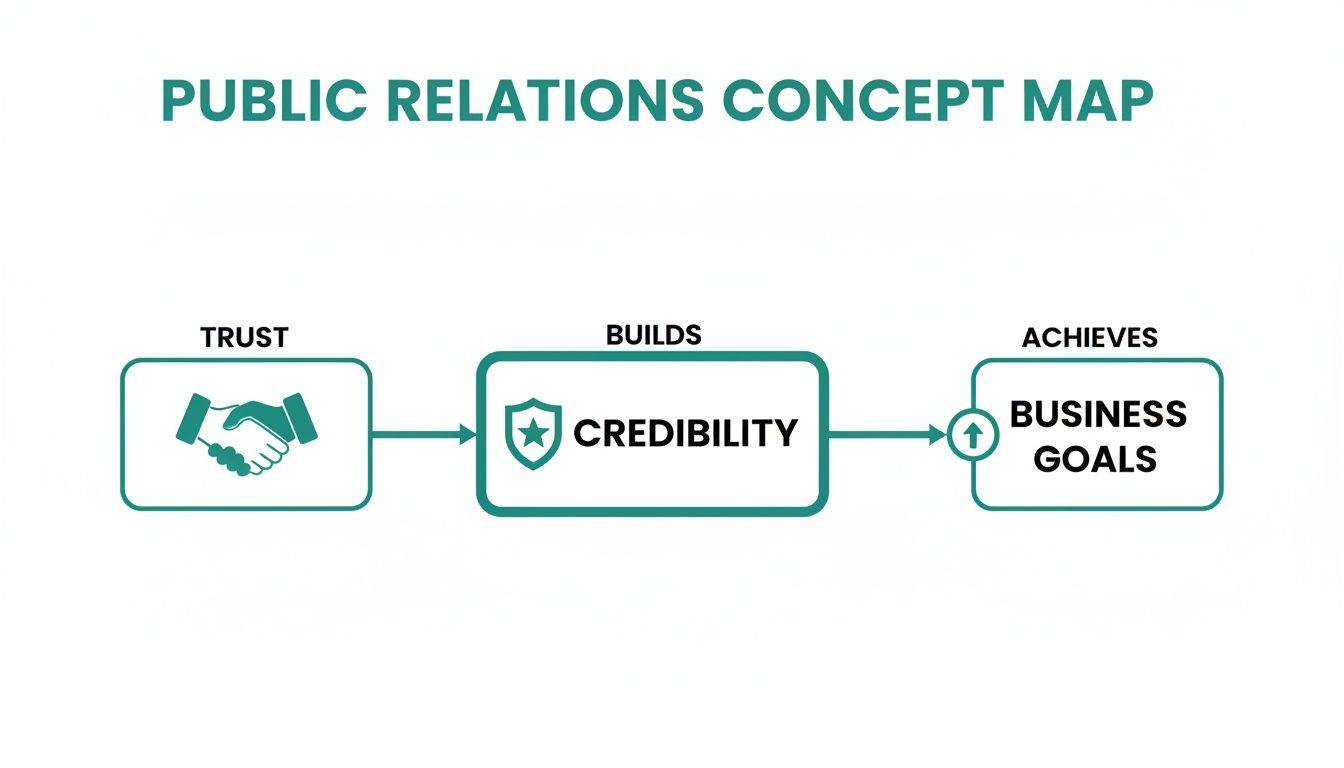
This flow chart breaks down how these efforts contribute to results.
It starts with trust. From there, you build the credibility needed to achieve your business goals.
2. Thought Leadership: Proving Expertise
Thought leadership is not about declaring expertise; it is about methodically demonstrating it. This strategy involves creating and sharing valuable content that showcases your industry knowledge. The goal is to become the go-to name in your niche.
Think of it as writing the definitive guide on your subject through blog posts, webinars, or podcast interviews. This is a powerful strategy for B2B companies, consultants, or any business built on expertise.
Thought leadership shifts the public's perception from "This company wants to sell me something" to "This company understands my problem and knows how to solve it." You transition from being a vendor to a trusted advisor.
3. Content-Driven PR: Creating Shareable Stories
Content-driven PR involves creating useful assets like data reports, guides, or interactive tools that journalists and bloggers want to cite and link back to.
Unlike thought leadership, which builds an individual's authority, this play focuses on creating linkable assets for your brand. This is an intersection of PR and SEO. Each link earned from a reputable site is a signal to Google that your website is credible, which helps improve search rankings over time.
4. Community Relations: Engaging Locally
For any business with a physical location, from a coffee shop to a law firm, community relations are a component of its strategy. This strategy involves engaging with the local community through sponsorships, partnerships, events, and volunteering. It is about being a good neighbor.
A local brewery sponsoring a town's softball team or a dental office hosting a free smile check-up day are examples. These actions build goodwill and generate authentic word-of-mouth. Your online presence is also part of this; effective reputation management in social media can influence your local image.
5. Influencer Marketing: Tapping into Existing Trust
Influencer marketing involves partnering with individuals who have built a dedicated, engaged audience on social media. Instead of pitching a single journalist with a broad audience, you collaborate with an influencer who speaks to a specific niche.
Think of it as hyper-targeted PR. This approach can be effective for e-commerce and consumer brands. A single post from the right influencer can place your product in front of potential customers who already trust that person's recommendations. It is like getting a recommendation from a friend, but at scale.
How to Build Your Public Relations Plan Step by Step
Effective PR is the result of a well-crafted plan that turns ideas into a concrete roadmap. Without a plan, you are testing tactics without a clear direction. With one, every press release, social media post, and event has a purpose.
Think of it like building a house. You would start with a blueprint, not with a pile of lumber. Your PR plan is that blueprint, showing what you are building, who you are building it for, and how to execute it.
Step 1: Set Clear and Measurable Objectives
First, define what success looks like for your business. Vague goals like "get more exposure" are difficult to measure and can lead to wasted effort. Connect your PR goals to real business results using the SMART framework: Specific, Measurable, Achievable, Relevant, and Time-bound.
This exercise turns a general wish into a specific target. For instance, instead of "more brand awareness," a SMART goal is: "Increase organic brand name searches by 20% within six months." This provides a clear finish line.
Here are a few other examples of measurable PR objectives:
Secure five media placements in top-tier industry publications next quarter.
Boost referral traffic from our earned media coverage by 30% over the next year.
Generate 50 qualified leads from our thought leadership campaign within three months.
Step 2: Identify Your Target Audience
You cannot create an effective message if you do not know who you are talking to. Who are the people whose opinions and actions affect your business? This is your target audience.
Go deeper than basic demographics. Create detailed personas that represent real people. What are their challenges? Where do they get their news, what podcasts do they listen to, and which social media feeds do they follow?
Understanding your audience is like having a key to a locked door. Once you know their needs and where they spend their time, you can craft messages that unlock their attention and build a genuine connection.
Knowing this allows you to tailor your public relations strategies to appear in the right places with a message that resonates with them.
Step 3: Craft Your Key Messages
Now that you know who you are talking to, determine what you want to say. Your key messages are the core ideas you want your audience to remember. They are the simple, powerful truths about your brand that should appear consistently across all channels, from a formal press release to a social media post.
A great key message should be:
Concise and memorable: Is it easy to repeat and remember?
Address a pain point: Does it show you understand their world?
Highlight your unique value: What makes you a distinct choice?
Believable and authentic: Does it reflect your brand's values?
For example, a software company's key message could be: "Our app automates routine tasks so your team can focus on work that matters." It is simple, solves a problem, and shows a clear benefit.
Step 4: Select Tactics and Allocate Resources
This is where you choose the right tools for the job. Based on your goals and audience, which PR tactics make the most sense? If you want to earn trust with C-suite executives, a thought leadership campaign and podcast interviews may be effective. If you are an ecommerce brand targeting Gen Z, an influencer campaign on TikTok could be more suitable.
Once you have selected your tactics, map them out on a timeline and attach a realistic budget. Outline the specific actions needed, assign responsibility for each, and set firm deadlines. This step turns your plan into an actionable guide for your team.
PR strategies like "thought leadership" and "community relations" are abstract concepts. What do they look like in practice?