You searched sports videography near me because you don't want to miss the play that matters. Maybe it's your kid's best game so far. Maybe your team needs clean film for coaching. Maybe you need a highlight reel that doesn't look like it was stitched together from shaky phone clips and random zooms.
That search usually drops you into a mess of flashy portfolios, vague promises, and almost no useful buying information. You see cool clips, but you still can't answer the essential questions. What are you buying? What quality matters? What should you ask before you hire anyone?
A good sports videographer doesn't just record a game. They build footage you can use.
Why Professional Sports Video Is More Than Hitting Record
You can record a goal on a phone. You can't reliably build a usable recruiting reel, a clean coaching review, or a polished promo package that way. Phones miss starts of plays, lose subjects in motion, and usually give you uneven framing from the wrong angle. That's fine for memories. It's weak for decision-making.

Professional sports video has become a real specialty, not a side hobby. Indeed listings for sports videographer roles in Massachusetts show 69 open positions in one state, which tells you this work is in demand and treated as a dedicated skill set. Teams, schools, clubs, and sports businesses aren't hiring for this because video is nice to have. They're hiring because they use it.
What separates useful footage from random footage
A solid sports videographer works with an outcome in mind. That outcome changes the shoot.
If you need footage for a coach, the operator has to prioritize full sequences, spacing, transitions, and player decisions. If you need a reel for an athlete, the edit has to isolate moments that clearly show skill, timing, and game impact. If you need content for parents, sponsors, or social channels, the job shifts again.
That's why “just film the game” is a bad brief. Give the videographer a purpose.
Practical rule: Hire for the result you need, not for the camera the person owns.
Strategy matters before game day
Ask how they plan the shoot. Ask where they'll set up. Ask what they deliver afterward. If they can't answer those questions clearly, move on.
Some teams also use automated capture setups for repeat coverage, especially when they need consistency across multiple games. If you're comparing manual filming with automated options, this guide on AI sports tracking mounts at SoccerWares gives useful context on how those systems fit into sports recording.
Professional sports video is part production, part planning, and part editing discipline. That's the difference between a clip you watch once and footage that stays useful long after the final whistle.
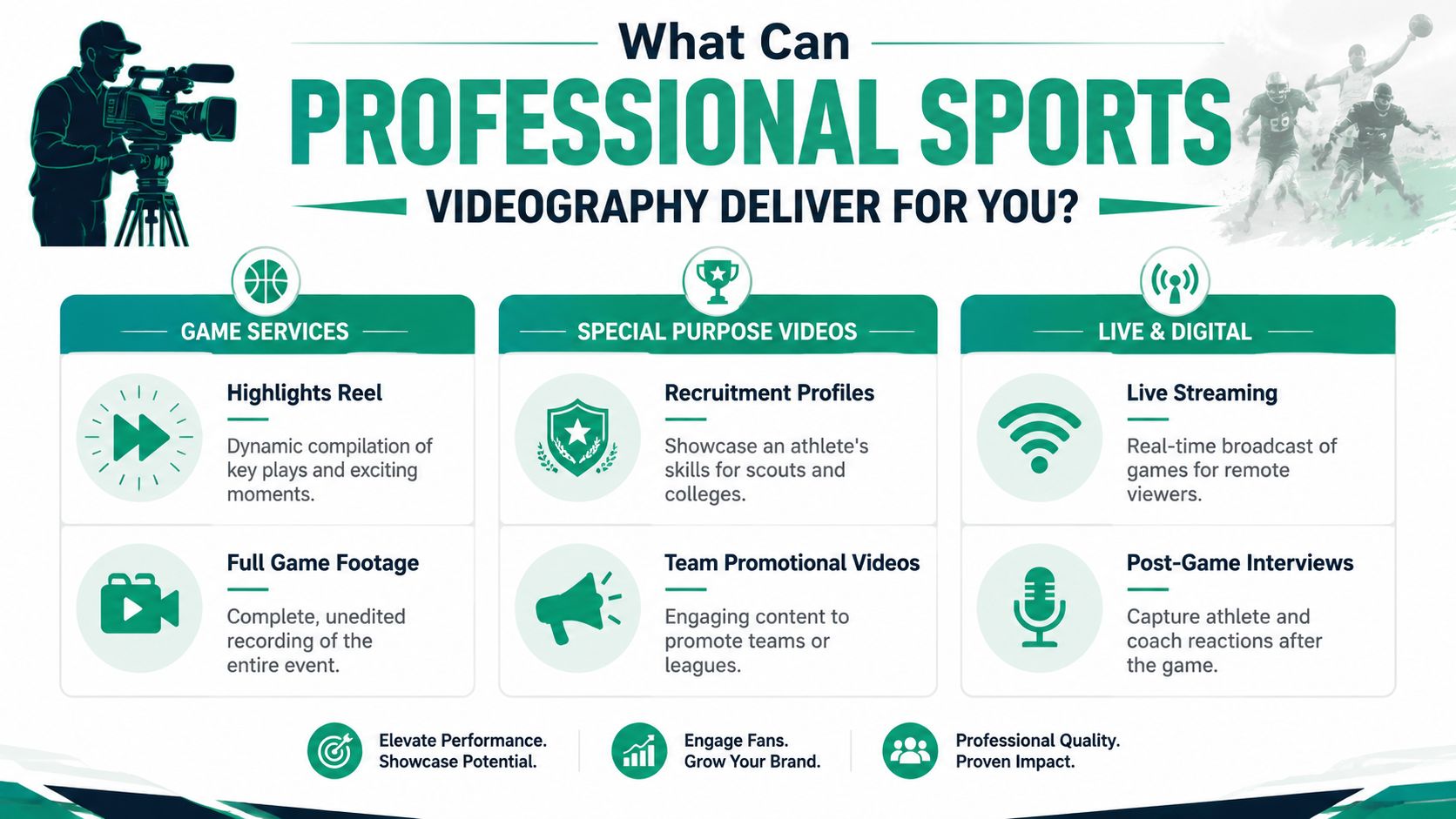
From Game Highlights to Live Streams What Can You Get
Most buyers ask for “sports video” as if it's one service. It isn't. Different outputs solve different problems, and if you order the wrong one, you'll pay for footage that doesn't match your goal.

The main service types
A highlight reel is selective. It's edited for attention span, pacing, and presentation. This is the package parents and athletes usually want when they're trying to showcase ability, not archive every minute.
A full game film is broader and less glamorous. Coaches and serious athletes often need the whole event, not just the best moments, because missed rotations, off-ball movement, and decision-making happen between the highlights.
Live streaming serves a different audience. It's for family members who can't attend, local fans, school communities, or clubs that want a broader digital presence.
Then there are supporting formats. Post-game interviews, short social clips, athlete profiles, and team promos all sit in a different lane from game documentation. If your team also wants social distribution, this guide to types of content for social media helps clarify where these video assets fit.
Sports Videography Service Comparison
| Service | Primary Goal | Best For | Typical Output |
|---|---|---|---|
| Highlight Reel | Showcase top plays | Athletes, parents, recruiting use | Short edited montage |
| Full Game Footage | Review the complete event | Coaches, teams, player development | Full recorded game |
| Live Streaming | Let remote viewers watch in real time | Families, schools, leagues | Live broadcast and replay |
| Recruitment Profile | Present an athlete clearly | Athletes pursuing school opportunities | Edited profile with selected footage |
| Team Promotional Video | Support visibility and promotion | Clubs, leagues, sports programs | Branded edited video |
| Post-Game Interviews | Capture reaction and context | Teams, schools, social channels | Short interview clips |
Pick the package by purpose
Here's the simple way to choose:
- If the goal is exposure: Get a highlight reel or athlete profile.
- If the goal is coaching: Get full game footage, and make sure the framing stays wide enough to read the play.
- If the goal is community access: Choose live streaming.
- If the goal is promotion: Ask for short-form edits, interviews, and team-branded cuts.
Don't let a videographer bundle everything into one vague package. Ask what each deliverable is for, who it's for, and how you'll receive it.
A parent and a team manager may hire the same company, but they should not order the same product.
Key Quality Signals to Look for in a Sports Videographer
A sports videographer is often judged by the sizzle reel. That's a mistake. A slick montage can hide weak fundamentals. You need to judge whether the person can capture fast action cleanly, consistently, and in a way that remains usable after the game.

Frame rate is not a small detail
Sports move fast. Frame rate decides whether that movement looks clean or messy. According to Texas SportShots on sports videography basics, professional sports coverage should be shot at a minimum of 60fps, and 120fps is recommended when slow-motion replay is expected. That extra data gives editors smoother slow motion without ugly artifacting.
If a videographer can't explain how they handle action speed, don't hire them for field or court sports.
What to inspect in a portfolio
Don't just ask, “Do you have examples?” Ask better questions.
- Tracking: Can they follow the ball and the athlete without hunting, drifting, or losing the play?
- Composition: Is the subject framed intentionally, or are clips cropped by panic zooming?
- Continuity: Do the edits make sense, or does the reel jump around with no flow?
- Audio: If interviews or ambient sound matter, is the audio clear enough to keep?
- Coverage: Do you see only close-up hero shots, or do you see full sequences that prove they can cover a game?
A strong sports shooter doesn't only capture the star moment. They capture the lead-up well enough that the moment makes sense.

A quick visual example helps here:
Reviews matter, but read them the right way
Don't chase star ratings alone. Look for comments about reliability, communication, delivery speed, and whether the final footage matched the client's actual need. Businesses that want a more organized way to collect and manage customer feedback often use services like Review Overhaul helps businesses get reviews, which is useful context when you're trying to tell whether a company takes its reputation process seriously.
You should also check whether the business is easy to find and clearly presented online. A provider that understands digital visibility usually makes it easier for you to verify legitimacy, and this guide on how to rank higher on Google Maps shows the kind of local search presence serious service businesses work toward.
Ask these questions before booking
- What frame rates do you shoot for game action and slow motion?
- Will you deliver full footage, edited highlights, or both?
- How do you handle poor lighting or bad weather?
- What does your editing process include?
- How will files be delivered and organized?
If they answer with buzzwords, keep looking. If they answer with process, you're getting closer.
What Should Sports Videography Cost
Pricing in this market is often handled badly. You search, click through a few providers, and end up filling out forms just to get basic numbers or package details. That's not your fault. It's a market problem.
T&D Sports Video's market observation notes that many sports videography results emphasize services but don't show upfront cost structure, which creates friction for youth leagues, coaches, and smaller organizations trying to compare options. That matches what buyers run into every day.
What you're actually paying for
The final quote usually depends on a handful of practical variables:
- Coverage time: A single match, a tournament day, or an extended event schedule.
- Crew setup: One operator or multiple camera positions.
- Editing load: A full game archive is one job. A polished recruitment reel is another.
- Delivery format: Raw footage, edited highlights, social cuts, or stream replay files.
- Complexity on site: Live streaming, interviews, graphics, or fast turnaround all increase workload.
That's why the cheapest quote is often misleading. One provider may be pricing basic capture. Another may be pricing a day of filming plus serious post-production.
Common pricing models you'll see
Some videographers charge hourly. That works if your schedule is simple and your needs may change.
Others build per-game packages. Those are easier for families and teams that want predictable scope.
Season coverage is often handled as a retainer or multi-game agreement, especially for clubs that need recurring content. If you're booking more than one event, ask whether they price each date separately or structure a broader package.
Ask for a written breakdown. If the quote lumps filming, editing, travel, graphics, and file delivery into one vague line item, you can't compare it fairly.
How to compare quotes without getting fooled
Don't ask only, “What's your rate?” Ask these instead:
- What deliverables are included?
- How much editing is included?
- Are revisions included?
- Will I receive full footage, edited footage, or both?
- How soon do I get the files?
A clear quote tells you what you're buying. A vague quote tells you you'll probably argue later.
Your Project Timeline From Kickoff to Delivery
Most hiring problems happen before the first clip is filmed. Expectations stay fuzzy, nobody defines the output, and delivery turns into a surprise. A clean project timeline fixes that.

Stage one starts with a short planning call
The first conversation should lock down the purpose of the footage. A team manager might need full-field coverage for review. A parent might want clips that support a player profile. A club director may need a mix of game film and promotional edits.
If the videographer doesn't ask about goals, audience, and delivery format, the process is already off track.
Game day should feel organized, not improvised
By the time the event starts, the shooter should know where to set up, what moments matter, and whether they're prioritizing broad tactical coverage or selective highlight capture. Good operators adjust in real time, but they don't arrive guessing.
After filming, the work shifts into post-production. Clips get sorted, reviewed, trimmed, and prepared for the right use. That matters because sports video no longer lives in one place. Hudl's platform reflects how sports video now supports coaching analysis, social distribution, and recruitment use, not just entertainment.
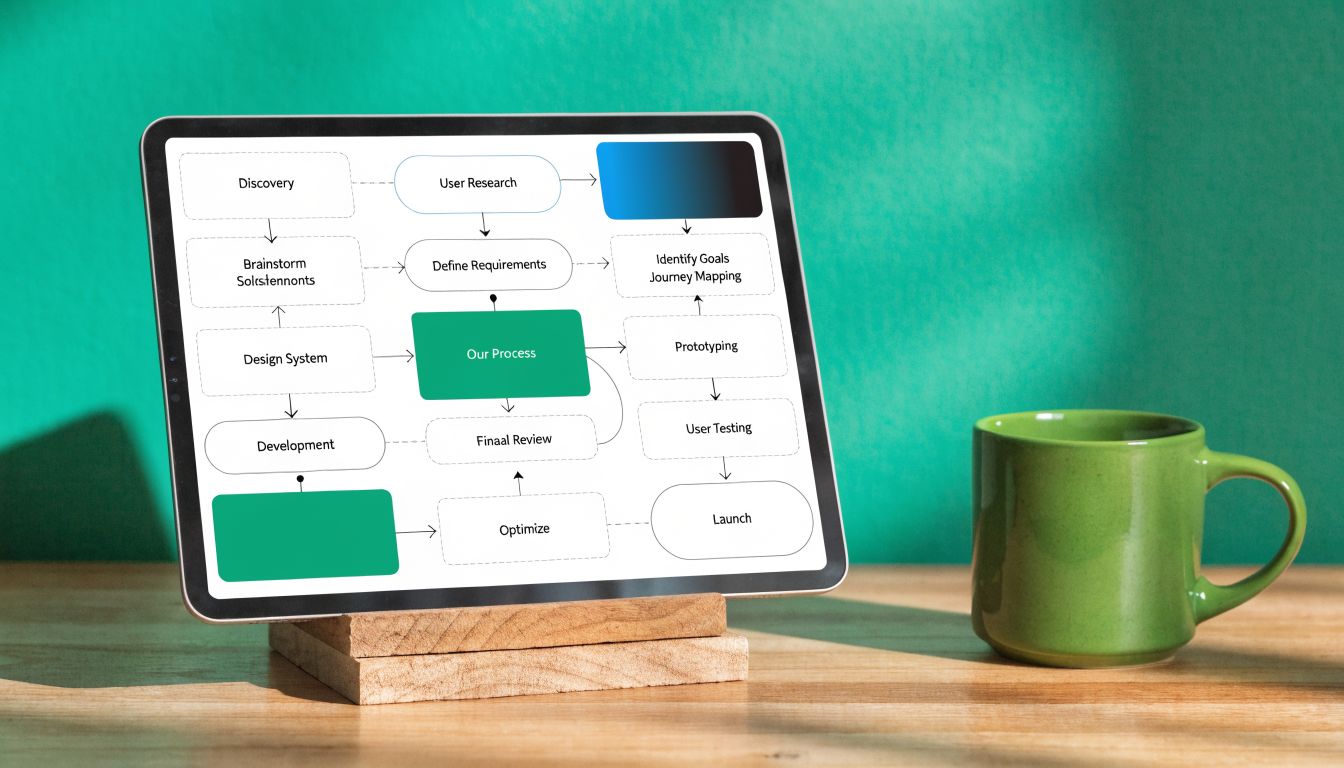
A normal workflow looks like this
- Booking and brief: Date, location, sport, goals, and expected deliverables are confirmed.
- Shoot day: The event is captured according to the agreed coverage style.
- Post-production: Footage is organized, edited, and prepared for the intended audience.
- Review and delivery: Files are sent in the agreed format, with revisions handled if included.
The best videographers make delivery simple. You shouldn't need a second meeting just to figure out which file is the final one.
What to ask before the shoot begins
Ask who your point of contact is. Ask when you'll receive proofs or final files. Ask whether the footage is being prepared for coaching platforms, social channels, or direct download.
That last point matters more now than it used to. The organizations getting the most value from sports video treat it as one asset with several uses. One game can feed coaching review, player promotion, and audience-facing content if the project is planned correctly from day one.
Capture Your Next Big Moment with Ascendly Marketing
If you're tired of guessing your way through search results for sports videography near me, use a stricter filter. Pick a provider that can explain the job clearly, define the output before the event, and deliver footage that serves a real purpose after the game.
That's the standard to hold.
Ascendly Marketing works with businesses and organizations that need video tied to a broader digital strategy, not random content for the sake of posting. If your team, sports program, or athlete needs video that supports promotion, recruitment visibility, or cross-platform distribution, that approach makes more sense than hiring someone who only thinks about camera operation.
For families preparing for busy event schedules, practical planning matters too. If tournament season is part of your calendar, this guide on preparing your player for tournaments is a useful companion resource before you book travel, gear, and coverage.
Local visibility also plays a role when people search for sports services, teams, and events nearby. If you want to understand how businesses strengthen that local presence, Ascendly's guide on how to optimize for local SEO a practical guide for SMBs is worth reading.
The right hire will ask smart questions, give you a clear scope, and treat your footage like something that needs to work after the event ends. That's what you should pay for. Not just someone on the sideline with a camera.
If you need a partner who can plan, produce, and package sports video with a clear business and content strategy behind it, contact Ascendly Marketing. Start with a conversation about your event, your audience, and the footage you need.