
Most LinkedIn advice still treats prospecting like a volume contest. Send more connection requests. Queue more automated messages. Push harder on activity, then hope a thin response rate turns into pipeline.
That approach breaks because LinkedIn isn't a cold database. It's a public professional environment where buyers can inspect your profile, your posts, your comments, and the way you approach people before they reply. On a platform used heavily for B2B lead generation, sloppiness is visible. So is relevance.
The better model for B2B lead generation on LinkedIn is a connected system. Your profile qualifies the right people. Your content lowers resistance. Your outreach starts warmer. Your paid campaigns capture demand without adding friction. Your CRM tells you which actions create sales conversations. That system is slower to set up than mass outreach, but it produces cleaner opportunities and far less waste.
The Flawed Logic of Modern LinkedIn Prospecting
The common mistake is simple. Teams assume more outreach means more pipeline.
On LinkedIn, that logic falls apart fast. A large connection count doesn't mean you built demand. It usually means you created a noisy list of weak relationships and gave your market a forgettable first impression. Buyers don't respond because you were active. They respond because your message matches their role, timing, and problem.
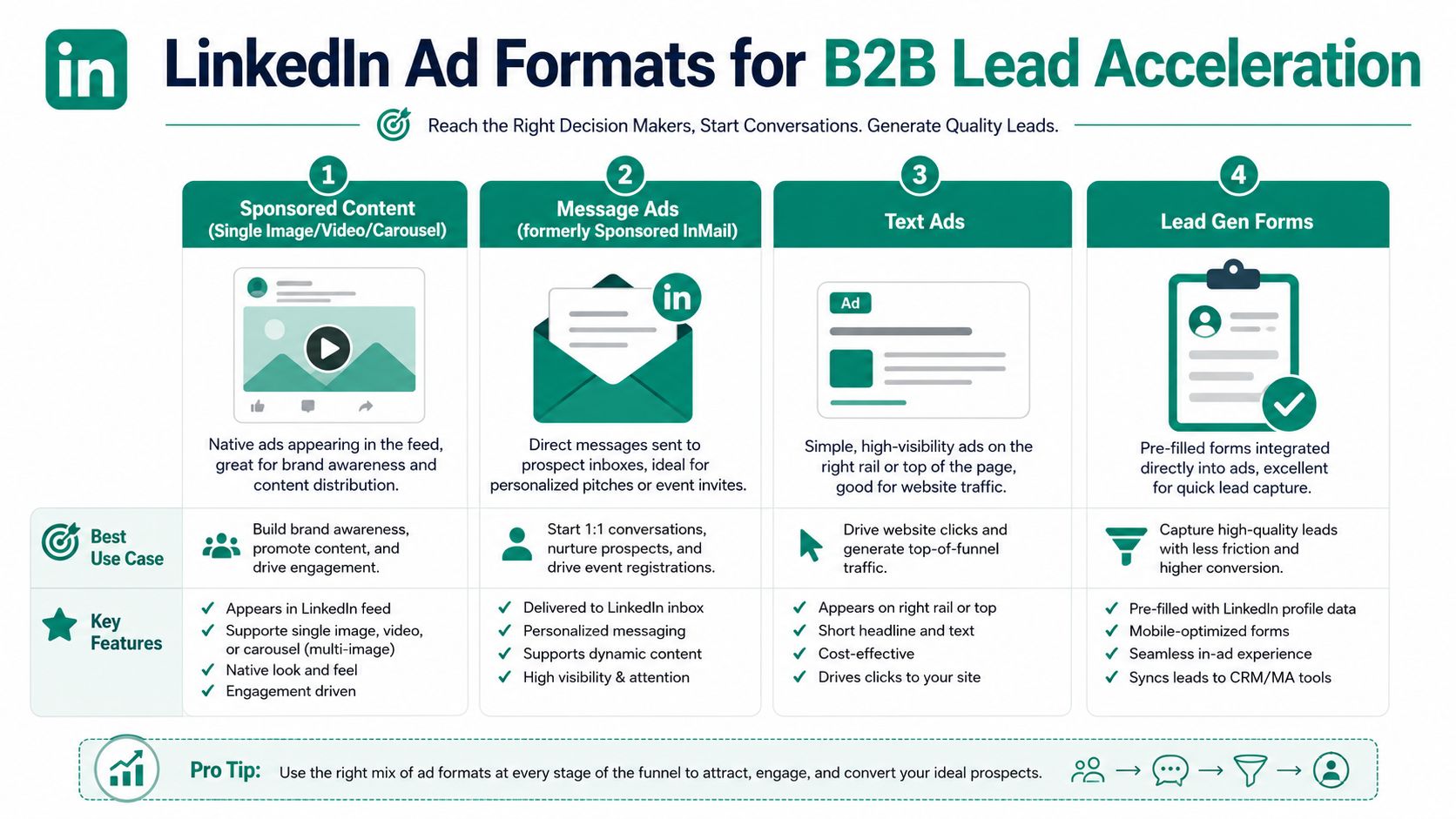
That matters even more because LinkedIn now sits at the center of B2B social acquisition. According to LinkedIn marketing data compiled by Brenton Way, 89% of B2B marketers use LinkedIn for lead generation, 62% say it produces leads for their business, and industry coverage reports that LinkedIn drives 80% of B2B social media leads plus 46% of B2B social website traffic.
Those numbers explain why bad prospecting habits are so expensive here. If LinkedIn is a primary pipeline channel, weak outreach doesn't just underperform. It contaminates one of the few places where your buyers are already in a business mindset.
Spray-and-pray prospecting usually fails before the first reply. The profile doesn't support the pitch, the offer is vague, and the message sounds interchangeable.
A better approach starts with narrower targeting and stronger context. Before sending anything, define who should hear from you, what signal tells you they're worth contacting, and what proof supports your claim. If you need a practical outside reference for that shift, these LinkedIn lead generation strategies are useful because they frame outreach as sequencing and qualification, not raw volume.
What doesn't work
- Mass connection requests: Volume without segmentation fills your network with people who were never likely to buy.
- Immediate pitch slaps: Asking for a meeting in the first touch tells the prospect you haven't earned attention.
- Profile mismatch: If your message promises strategic help but your profile reads like a resume, trust drops.
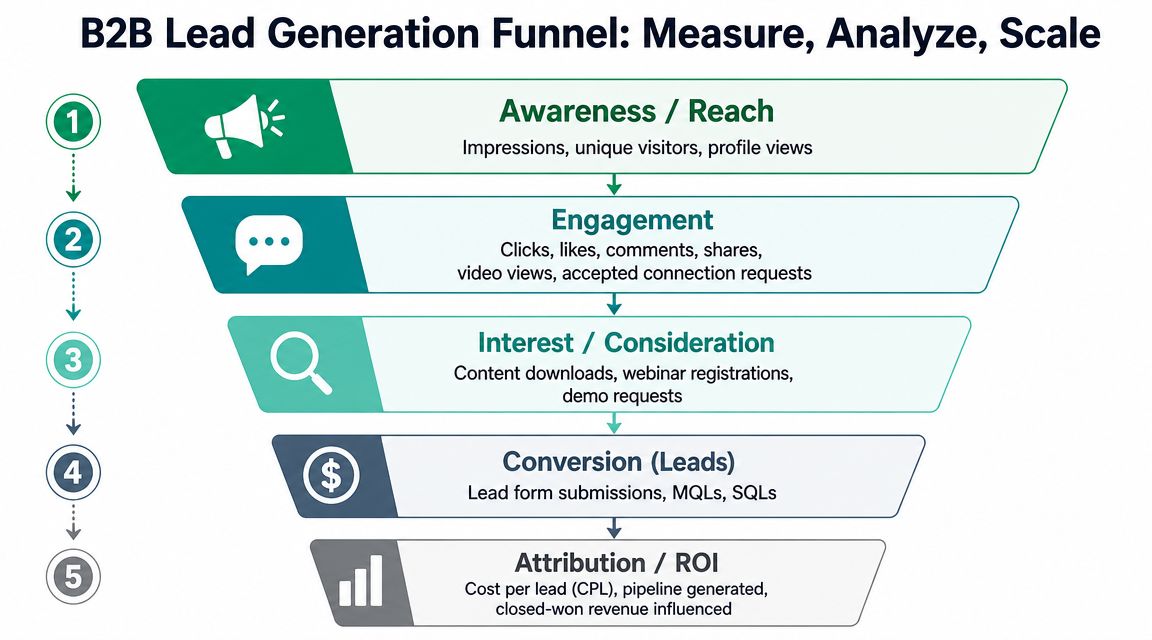
- Vanity metric obsession: Accepted requests and post likes don't equal qualified pipeline.
What does work
A smaller list. Better account fit. Sharper positioning. Real context in the first message.
That's less exciting than growth-hack advice, but it wins more often.
Build Your Unshakeable LinkedIn Foundation
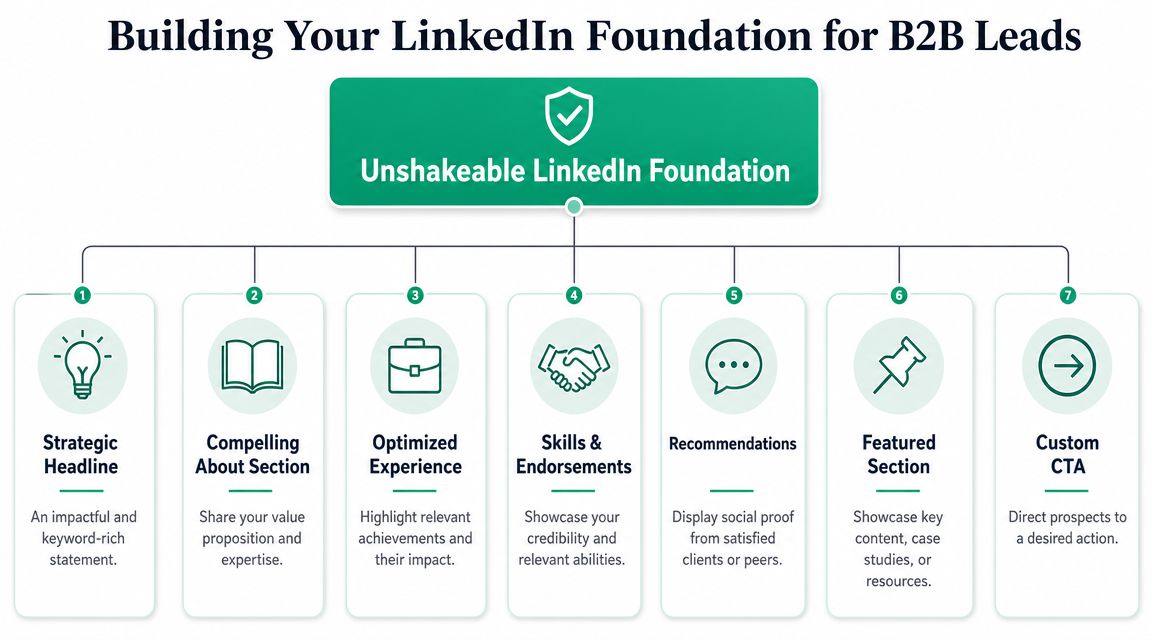
Before outreach, fix the asset every prospect will inspect. Your LinkedIn profile isn't a bio. It's a landing page with a built-in trust check.
Turn the profile into a qualification page
Most profiles explain a career history. Prospects care about whether you solve their kind of problem.
Use this audit:
- Headline: State who you help, what problem you solve, or what category you operate in. Skip vague labels like “growth expert.”
- About section: Open with the business problem you address. Then explain your approach, the situations where you fit well, and the next step a buyer should take.
- Experience section: Rewrite role descriptions around relevant work and business outcomes. Leave internal jargon out.
- Featured section: Add content that helps a buyer decide. Good options include a useful article, a short explainer, a webinar replay, or a clear service page.
- Custom call to action: Point people to one action, not five.
A profile should disqualify poor-fit traffic just as much as it attracts strong-fit traffic. If everyone can read it and think “this might be for me,” the positioning is too broad.
Practical rule: If your profile could belong to ten other consultants or agencies, it won't support outbound well.
Build an ICP that survives real outreach
A shallow ICP usually includes job title, company size, and industry. That's not enough. Two people with the same title can buy for completely different reasons.
A stronger ICP includes:
Role context
Who owns the problem? Who feels the pain first? Who signs off?Operational pain
What is slowing them down right now? Bad lead quality, weak follow-up, unclear attribution, poor conversion from campaign to CRM?Buying triggers
New funding, team expansion, a category shift, new product focus, leadership change, or visible hiring patterns.Risk concerns
What would make them reject your offer even if they need the help?Language patterns
What phrases do they use in posts, comments, job descriptions, and company updates?
That last point is where LinkedIn becomes unusually useful. Your prospects tell you how they frame their problems in public. Use their language back to them.
A lot of this overlaps with broader positioning work. If your brand message still feels muddy, this guide on what brand visibility means for SMBs helps clarify why consistent positioning affects conversion before any lead form or message gets involved.
The fast profile test
Ask three questions:
| Check | Good sign | Bad sign |
|---|---|---|
| Relevance | A buyer can tell who you help in seconds | The profile reads like a general CV |
| Proof | Featured content supports your offer | No evidence beyond claims |
| Action | One clear next step exists | Multiple disconnected asks |
If the profile fails any of those, don't scale outreach yet.
Develop Your Content and Authority Engine
Direct outreach works better when the prospect has already seen you think clearly in public.
That's why content on LinkedIn isn't a side project. It's the pre-suasion layer for outreach. A prospect may ignore your message today, then remember your name after seeing three sharp comments and two useful posts over the next month. That sequence changes the interaction from “Who is this?” to “I've seen this person around.”
Content that warms buyers instead of entertaining peers
You don't need to go viral. You need to become legible to the right accounts.
The best B2B content for LinkedIn usually falls into a few categories:
- Problem diagnosis posts: Explain why a common lead generation issue keeps happening and where teams misread it.
- Opinion posts: Take a clear position on a tactic, process, or tool. Strong buyers respond to conviction when it's backed by reasoning.
- Breakdowns of real work: Show how you evaluate funnel friction, messaging mismatch, handoff delays, or campaign setup errors.
- Useful comments: Smart commenting is underrated. Buyers notice concise, specific comments on posts they already read.
If your team needs a broader editorial structure, this article on a B2B content marketing strategy is a solid companion because it helps connect content topics to business goals instead of publishing for the sake of activity.
A practical cadence
Many teams fail because they set an unrealistic publishing plan, then disappear.
A workable rhythm looks more like this:
- One strong original post built from a real client-side observation
- One repurposed format, such as a short text version of a webinar point or sales call pattern
- Several comments each week on posts your ICP reads
- Light message follow-up to people who engaged in a meaningful way
That engine compounds because each asset does more than one job. A post becomes a talking point in outreach. A comment becomes name recognition. A recurring point in your content becomes a sharper CTA in ads.
Buyers rarely trust a cold message from someone who appears inactive, generic, or self-promotional. Content fixes that before the first outbound touch.
What to avoid
A lot of LinkedIn content creates noise rather than authority.
Skip these habits:
- Posting motivational filler with no operational value
- Recycling generic carousel advice from other creators
- Talking only about your service and never about the buyer's problem
- Chasing controversy that attracts the wrong audience
- Handing all thought leadership to someone who doesn't understand the work
For B2B lead generation on LinkedIn, authority isn't built by frequency alone. It's built by repeated proof that you understand the buyer's situation and can explain it better than most of the market.
Mastering Direct Outreach with Sales Navigator
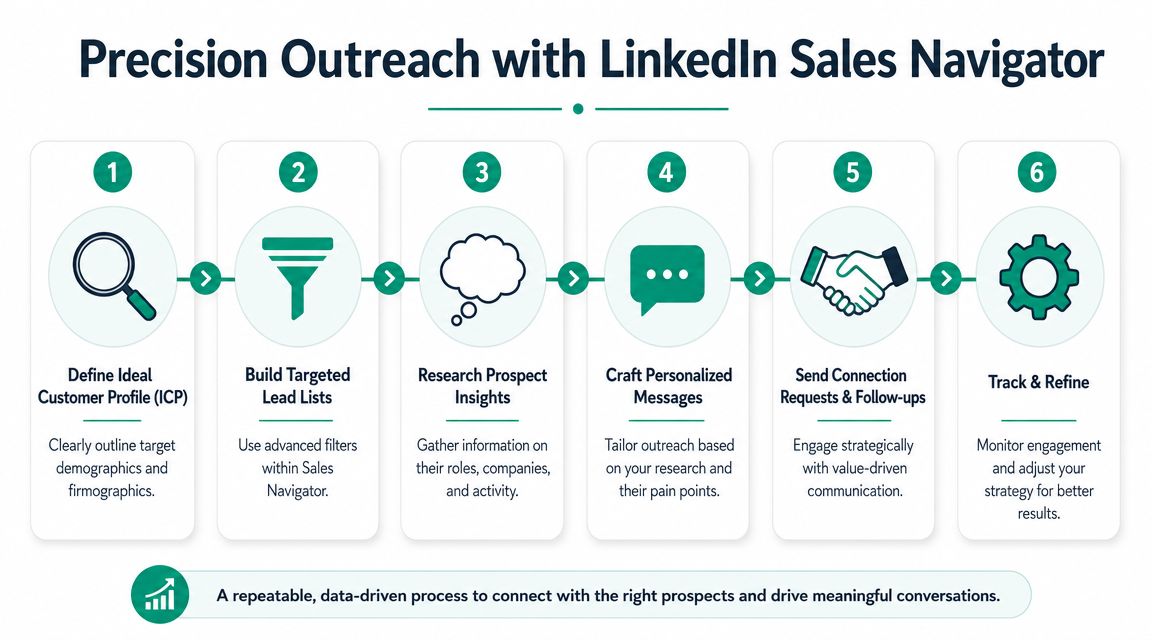
Sales Navigator is where discipline starts to matter. Without it, prospecting often becomes a random walk through search results. With it, you can build a lead list that reflects your ICP instead of your mood.
Build lists by problem, not just title
A weak list starts with job title and ends there. A stronger list layers in company type, likely urgency, and role relevance.
Use filters to narrow by items such as:
- Function and seniority: Helpful when titles vary across industries
- Company attributes: Size, industry, and growth stage
- Geography: Especially useful when sales coverage or regulations differ
- Signals from activity: Posted recently, changed role, or appeared in your orbit through engagement
Then tag leads by likely angle. One segment may care about lead quality. Another may care about handoff speed. Another may care about reporting.
That segmentation makes your message specific without forcing you to write every note from scratch.
A sequence that sounds like a person
Most outreach fails because every step asks for too much, too soon.
A cleaner sequence is four touches.
Connection request
Keep it short. Reference context if you have real context.
Example: “Saw your post on pipeline quality. We work on the same issue from a different angle. Thought it made sense to connect.”First follow-up
Don't pitch the full service. Start with observation.
Example: “Thanks for connecting. Noticed your team is pushing on demand gen and outbound at the same time. That's usually where attribution and lead routing start getting messy.”Value-add message
Offer a concrete idea, not a brochure.
Example: “One pattern I keep seeing is teams treating accepted leads and sales-ready leads as the same thing. That creates reporting optimism and pipeline frustration fast.”Break-up message
End politely and leave the door open.
Example: “I'll leave this here for now. If lead flow is already in good shape, no need to force a conversation.”
Here's a useful explainer before you build your own workflow: