

What counts as a useful lead source in B2B? A high form-fill count, or accounts your sales team will pursue?
That gap is where most lead generation programs break down. Teams keep testing channels, downloading playbooks, and copying whatever worked for a SaaS brand with a very different sales motion. Then they hand sales a pile of names with weak fit, weak timing, and no real buying signal. The result isn’t just disappointment. It’s wasted follow-up capacity.
The better question is simpler. Which B2B lead generation examples create conversations with the right accounts, at the right stage, in a format your team can follow up on without friction?
A lot of advice skips that part. It lists tactics without showing the operating model behind them. It also over-focuses on top-of-funnel activity, even though pipeline-focused guidance now pushes teams to exclude poor-fit accounts and prioritize buyer fit, intent, and sales readiness over raw lead volume, as discussed in Reach Marketing’s pipeline-focused lead generation guidance.
The ten examples below are practical plays, not trend pieces. Each one breaks down the what, the why, and the how, with trade-offs that matter once campaigns leave the slide deck and hit the market. Some of these plays are slow and compounding. Some are direct and fast. Some work well alone. Most work better when paired with another channel.
If you’re serious about attracting high-quality B2B leads, don’t ask which tactic is most popular. Ask which one matches your deal size, your sales cycle, and your team’s ability to follow up well.
1. Account-Based Marketing
ABM works when broad lead capture stops making sense. If your sales team closes a small set of high-value accounts each quarter, treating those accounts like a market of one is often more productive than chasing volume.
The strongest version of ABM isn’t just ad targeting. Sales and marketing build a shared target list, define the buying committee inside each account, and coordinate touchpoints so the prospect sees one coherent message instead of disconnected outreach.
What does this look like in practice?
A common B2B pattern is simple. Marketing builds account-specific landing pages, industry-specific content, and retargeting audiences. Sales follows with personalized outreach to named stakeholders. LinkedIn, email, direct outreach, and remarketing all point toward the same commercial problem.
That structure matters because buying committees don’t move in a straight line. One person clicks an ad, another joins a webinar, and someone else opens the follow-up email. ABM gives your team a way to connect those actions at the account level.
Practical rule: Measure account engagement and pipeline movement first. Lead counts can hide weak account selection.
What works and what doesn’t
ABM works best when the target list is narrow, the average deal value justifies research time, and sales can act quickly on engagement. It fails when teams call every named-account campaign “ABM” but still send generic messaging.
Use a short initial list. Ten to twenty accounts are enough to learn whether your positioning lands. Build messaging around account context, not personal trivia. “I saw your recent hiring post” isn’t personalization if the rest of the email could go to anyone.
A useful mini-framework:
- Choose accounts with intent: Prioritize companies showing relevant buying signals, active change, or known category need.
- Map the committee: Identify economic buyer, user buyer, technical evaluator, and likely blocker.
- Coordinate channel timing: Launch paid visibility and outbound follow-up in the same window.
- Judge the right outcome: Look for meetings, multi-stakeholder engagement, and sales acceptance.
If your team sells enterprise software, complex services, or long-contract retainers, this belongs near the top of your list of B2B lead generation examples.
A strong explainer on the ABM mindset is below.
2. Cold Email Outreach Campaigns
Cold email still works, but only when the campaign behaves like targeted prospecting instead of bulk distribution. Most failures come from weak list quality, weak offer quality, or both.
If you’re sending to a broad list with a generic pitch, the problem isn’t the channel. The problem is that the message gives the buyer no reason to care now.

The version that gets replies
A strong cold email starts with account selection. Pick a narrow segment, define one pain pattern, and write to that pattern in plain language. Skip the company history. Skip the feature list. Open with relevance.
The first email should feel easy to process. Short subject line. One problem. One point of view. One low-friction ask.
A practical sequence often looks like this:
- Email one: State the problem and why you’re reaching out now.
- Email two: Add a useful observation, example, or objection handler.
- Email three: Shift angle. Focus on a different use case or stakeholder concern.
- Email four: Close the loop politely instead of dragging the sequence out.
Trade-offs you need to accept
Cold email can create meetings quickly. It can also burn a domain fast if your targeting and infrastructure are sloppy. That’s why the operating details matter as much as the copy.
Warm up sending domains before scaling. Keep segmentation tight. Match the CTA to the buyer’s awareness level. A cold prospect rarely wants a “strategy call.” They may accept a brief conversation if the problem is clear enough.
Short beats clever. Buyers scan cold emails on busy days, between meetings, on mobile.
A real-world scenario: a software agency targets operations leaders at specialty manufacturers. Instead of pitching “custom development,” the outreach focuses on delayed quoting workflows and fragmented internal systems. That message is concrete. It gives the buyer something to react to. The agency can then route positive replies into specific follow-ups.
Cold email becomes much stronger when paired with LinkedIn profile views, light social engagement, and a fast human response once someone replies.
3. Content Marketing with SEO Optimization
What happens when buyers are already searching for the problem you solve, but your company never shows up?
Content marketing with SEO is one of the few B2B lead generation plays that can keep producing after the initial build. It works best when content is tied to buying intent, not traffic vanity. A pageview from a student, competitor, or casual researcher does not help the pipeline. A visit from someone comparing vendors, pricing models, migration paths, or compliance approaches can.

What this play is really for
Use SEO content when your buyers ask detailed questions before they talk to sales. That is common in SaaS, consulting, manufacturing, healthcare, cybersecurity, and other categories with long evaluation cycles.
The trade-off is simple. SEO content usually starts slower than outbound or paid acquisition. It also tends to produce stronger efficiency over time because a useful page can generate qualified visits for months or years if it keeps ranking and stays relevant.
That lag changes how teams should measure it.
If leadership expects a pipeline from a blank domain in 30 days, this channel will disappoint them. If the business can commit for multiple quarters, SEO content can become a steady source of demo requests, contact form submissions, and influenced opportunities.
Why some content programs generate traffic but not leads
The failure pattern is consistent. Teams publish broad educational posts, rank for loose informational terms, and then wonder why sales sees little value.
The fix is to build around commercial questions first.
Start with topics buyers search for when they are closer to a decision:
- implementation timelines
- software or vendor comparisons
- Pricing structure questions
- migration risks
- industry-specific compliance concerns
- Common mistakes that create cost or delay
- use-case pages for distinct buyer segments
Then give each content type a defined job:
- Pillar pages: cover a core solution area and target high-intent category terms
- Supporting articles: answer narrower questions and feed authority into pillar pages
- Proof assets: case studies, service pages, comparison pages, and integration pages convert evaluation-stage visitors
That structure matters because SEO should not act like a publishing calendar. It should work like a conversion path.
How to implement it without building a bloated content library
I usually start with a content map, not a keyword dump. List the core services or product lines, the buying questions around each one, and the objections sales hears in calls. That gives you a tighter set of pages than a generic SEO brief pulled from a tool.
From there, build clusters around revenue-adjacent themes. A B2B IT provider, for example, might create one cluster around cloud migration, another around security compliance, and a third around managed support costs. Each cluster should include an overview page, several question-specific articles, and at least one proof page tied to action.
For a practical framework, review this guide to SEO for B2B marketing.
A simple example makes the difference clear. A firm selling ERP implementation services will usually get more qualified lead value from pages on ERP rollout timelines, data migration risks, and vendor selection criteria than from broad posts about digital transformation trends. The search volume may be lower. The buyer’s intent is usually much better.
Suggested KPIs for this channel
Track metrics that connect content to the pipeline, not just visibility:
- organic conversions by page type
- demo requests or contact submissions from organic sessions
- rankings for high-intent keywords
- assisted conversions on proof and service pages
- sales-qualified leads influenced by organic entry pages
- time to first conversion from new content
One warning. Content-led lead generation rewards consistency and punishes half-built systems. Five disconnected blog posts rarely change the pipeline. A focused content engine, tied to search intent and commercial next steps, often does.
4. LinkedIn Lead Generation Campaigns
LinkedIn paid campaigns work best when the audience is hard to reach elsewhere and the offer matches professional intent. Buyers aren’t on LinkedIn to fill out random forms. They are there to assess peers, vendors, ideas, and changes in their market.
That makes the platform useful for precise targeting, but expensive when the message is vague.
When paid, LinkedIn is worth the cost
This channel makes sense for consulting firms, enterprise software vendors, recruiters, and specialized service providers selling to defined job titles. The targeting can be narrowed by industry, company size, seniority, and function. That’s valuable when your ideal buyers are a small slice of the market.
But the creative has to meet that precision. A generic ebook for “business leaders” usually underperforms. A tight offer for one audience, such as finance leaders navigating a reporting problem, gives the platform room to work.
Use native lead forms when speed matters. Use landing pages when message depth matters more than friction.
The playbook most teams miss
Run multiple audiences in parallel instead of stuffing everything into one campaign. Segment by industry or role, not both at once, if the budget is limited. That makes performance easier to interpret.
Then connect ad logic to follow-up logic:
- Top-of-funnel assets: Benchmark content, educational guides, short explainers.
- Mid-funnel assets: Webinars, comparison pages, pain-point landing pages.
- Bottom-funnel offers: Demos, consultations, custom audits.
The handoff matters as much as the click. If someone completes a lead form on LinkedIn, the first follow-up should reference the asset they requested and speak to the likely reason they cared.
A practical scenario: a cybersecurity vendor runs separate campaigns to IT directors in healthcare and finance. Same product category, different compliance pressure. Each audience gets different ad copy, a different landing page, and different SDR follow-up. That’s how LinkedIn becomes a qualified demand channel instead of an expensive awareness stream.
5. Webinar and Virtual Event Lead Generation
What makes a webinar produce pipeline instead of a list of weak hand-raisers?
The answer is usually the design around the event, not the event itself. Webinars generate leads when the topic matches a specific buying problem, the session captures intent signals, and follow-up changes based on what each attendee did.
That distinction matters. A registration shows curiosity. Time attended, poll responses, chat activity, and post-event clicks show whether sales should step in now or marketing should keep nurturing.
What this tactic looks like in practice
The strongest webinar programs run like a three-part system: audience selection, live qualification, and segmented follow-up. Teams that treat webinars as a one-off content asset usually get high registration volume and low sales value. Teams that treat them as a qualification engine get fewer leads, but better ones.
A useful example is a SaaS company selling workflow automation to operations leaders. Instead of hosting a broad product demo, it runs a session on reducing approval bottlenecks before quarter-end. The registrant list includes operations managers, RevOps leaders, and finance stakeholders. During the webinar, polls identify who is trying to replace manual approvals, who already has a tool in place, and who is still diagnosing the problem. That gives sales a reason to call some attendees immediately and a reason to leave others in nurture.
Why do webinars still work in B2B?
Webinars sit in a useful middle ground. They ask for more commitment than a checklist, but less than a demo request. That makes them strong for mid-funnel conversion, especially in markets where buyers need education before they will speak to sales.
They also create multiple assets from one production cycle. The live event drives registrations. The recording supports nurture. Short clips give SDRs relevant follow-up content. A transcript can support a related page, including supporting content for a paid search SEO strategy if you want the topic to keep attracting demand after the live session ends.
How to run webinars that help sales
Start with one audience and one operational problem. Narrow beats broad here.
A clean setup looks like this:
- Topic: Lead with a problem buyers already recognize, not a generic company overview.
- Speakers: Use a subject matter expert, customer, or practitioner who can teach, not just pitch.
- Registration page: State the outcome clearly. “How to cut onboarding delays” will usually outperform vague thought leadership.
- Live session: Use polls, Q&A, and chat prompts to capture buying-stage clues.
- Follow-up: Segment by behavior. No-show, partial attendee, full attendee, engaged attendee, and hand-raiser should not get the same sequence.
One trade-off is reach versus relevance. Broad topics fill the room faster. Narrow topics usually produce better meetings. If the pipeline is the goal, pick relevance.
Another trade-off is gated versus partner-led distribution. Running the webinar through your own list gives cleaner attribution. Running it with an industry partner can expand reach and credibility, but lead sharing rules, attendee access, and follow-up timing need to be agreed upon upfront.
KPIs that matter
Registration count is the weakest metric in this channel. Use it, but do not stop there.
Track:
- Registration-to-attendance rate
- Average watch time
- Poll participation and question volume
- Meetings booked by attendees
- Sales accepted leads by attendance segment
- Opportunity creation from the webinar cohort
Those numbers show whether the topic attracted the right people and whether your post-event workflow did its job.
If your team uses direct outreach to fill the room, LinkedIn can help, especially for smaller, named-account audiences. This UK guide on LinkedIn InMail is a useful reference for fitting InMail into webinar promotion without turning the invite into another generic outbound message.
6. Google Ads and PPC Lead Generation
PPC is the fastest way to test buyer intent against live demand. That speed is useful. It also exposes weak positioning very quickly.
If your offer is unclear, paid search won’t hide it. You’ll pay to learn that the market didn’t understand the page.
Where PPC earns its place
Google Ads works well when buyers search for a problem they already recognize. That includes vendor comparisons, service-specific queries, urgent technical issues, and niche commercial terms. It works less well when your category needs heavy education before the buyer can even name the problem.
That distinction shapes account structure. Separate campaigns by intent, not just by keyword theme. A searcher looking for “B2B CRM migration support” is in a different state than someone searching for a broad educational query.
One useful lesson from a failed channel mix
The Madison Marketing Group case study is often read as a content win, but it also highlights a PPC lesson. The client shifted away from underperforming HubSpot and Google Ads activity before the content-led program gained traction. That doesn’t mean paid search never works. It means paid traffic without the right offer, page, and conversion path can burn budget while content assets continue to build.
Use dedicated landing pages for each intent cluster. Tighten copy so the ad promise and page headline match exactly. Then judge success beyond the form fill. Sales acceptance matters more than cheap leads.
A practical buildout usually includes:
- High-intent search campaigns: Commercial keywords and service terms.
- Remarketing campaigns: Visitors who engaged but didn’t convert.
- Negative keyword management: Protect spend from weak-fit traffic.
- Sales feedback loops: Flag queries and pages that brought poor-fit leads.
For firms building this channel, paid search engine optimization services show how PPC and landing-page strategy often need to work together.
PPC belongs in your shortlist when you need speed, strong measurement, and message testing. It doesn’t belong there if your team still hasn’t defined what a qualified lead looks like.
7. Case Studies and Social Proof Lead Generation
What gets a skeptical B2B buyer to take the next call? Another claim on a service page, or proof that a company like theirs solved the same problem with your help?
Case studies work because they reduce perceived risk. They give prospects something concrete to evaluate. In practice, this channel rarely creates demand on its own. It strengthens demand already created by search, outbound, webinars, referrals, or paid campaigns.
The difference between a case study that gets read and one that gets used is specificity. Buyers want to see the situation, the constraint, the decision process, and the business result. A polished success story with no operational detail feels like sales collateral. A credible case study shows what changed, how long it took, and why the approach fit that client.
What strong proof looks like
Good social proof is close to the buyer’s reality. That can mean the same industry, company size, sales motion, tech stack, or buying problem. The closer the match, the easier it is for sales and marketing to use the asset in live conversations.
A strong case study usually answers four questions:
- What was the starting problem? State the business issue in plain language.
- What constraints shaped the work? Budget, timing, internal approvals, or messy data often matter as much as the tactic.
- What did the team do? Give the reader enough detail to understand the approach.
- What changed after implementation? Show outcomes over a clear timeframe.
That last point matters. Buyers trust progress they can follow more than dramatic before-and-after claims with no context.
How to turn proof into a lead generation play
Publish case studies where prospects already evaluate you. Put them beside service pages, pricing or comparison content, webinar follow-up emails, and outbound sequences for accounts that need more confidence before booking a meeting.
Match each story to a buying situation. A SaaS case study should support SaaS outreach. An enterprise implementation story belongs in late-stage sales follow-up, not buried in a general resource library. If the proof does not map to a specific segment, reps will not use it, and prospects will not see themselves in it.
One practical framework:
- Challenge: What was blocking growth, conversion, retention, or pipeline quality?
- Approach: The specific strategic or operational change.
- Outcome: The business result and timeframe, stated clearly.
- Why it transfers: Why a similar buyer should care.
For teams building this asset type more intentionally, these case study marketing examples and frameworks show how to package proof so it supports demand generation and sales enablement at the same time.
Buyers do not need a long list of generic testimonials. They need one credible example that makes your solution feel lower risk.
Among B2B lead generation examples, this one has a multiplier effect. It improves response rates in outreach, raises conversion on high-intent pages, and gives sales a better way to answer the question every serious prospect asks: “Have you done this for a company like ours?”
8. LinkedIn Organic Content and Thought Leadership
Organic LinkedIn is slower than paid LinkedIn and usually more credible. People don’t engage because a targeting setting found them. They engage because a person or company keeps publishing ideas worth noticing.
This channel is strongest when the company has a real point of view and people willing to show up consistently.
What good organic LinkedIn actually looks like
A founder comments on shifts in their industry. A consultant breaks down client-side mistakes without turning every post into a pitch. A team member shares patterns from calls, implementations, or campaign audits. Over time, prospects begin to recognize the voice.
That recognition matters more now because current guidance points toward more context-specific and community-native lead generation, while generic cold calling and spray-and-pray email continue to lose effectiveness, as discussed in Skrapp’s roundup of B2B lead generation strategies.
How to make it operational
Teams often fail here because they treat posting as the whole tactic. Posting is only the visible part. Distribution also includes commenting, direct engagement, profile positioning, and moving conversations into DMs when there’s a reason.
A practical operating model:
- Use personal profiles first: People get more attention than logo pages.
- Write from live experience: Posts drawn from actual client work tend to resonate more.
- Stay in one lane long enough: Repetition builds association.
- Respond fast: Comments and inbound messages are part of lead generation, not admin work.
One realistic scenario: an operations consultancy publishes weekly posts on process bottlenecks, failed software rollouts, and leadership misalignment during system change. Prospects start sharing the content internally. A few months later, inbound messages come from buyers who have read for weeks.
This isn’t the fastest play in the list. It is one of the cleanest ways to build familiarity before outreach starts.
9. Free Tools, Calculators, and Lead Magnets
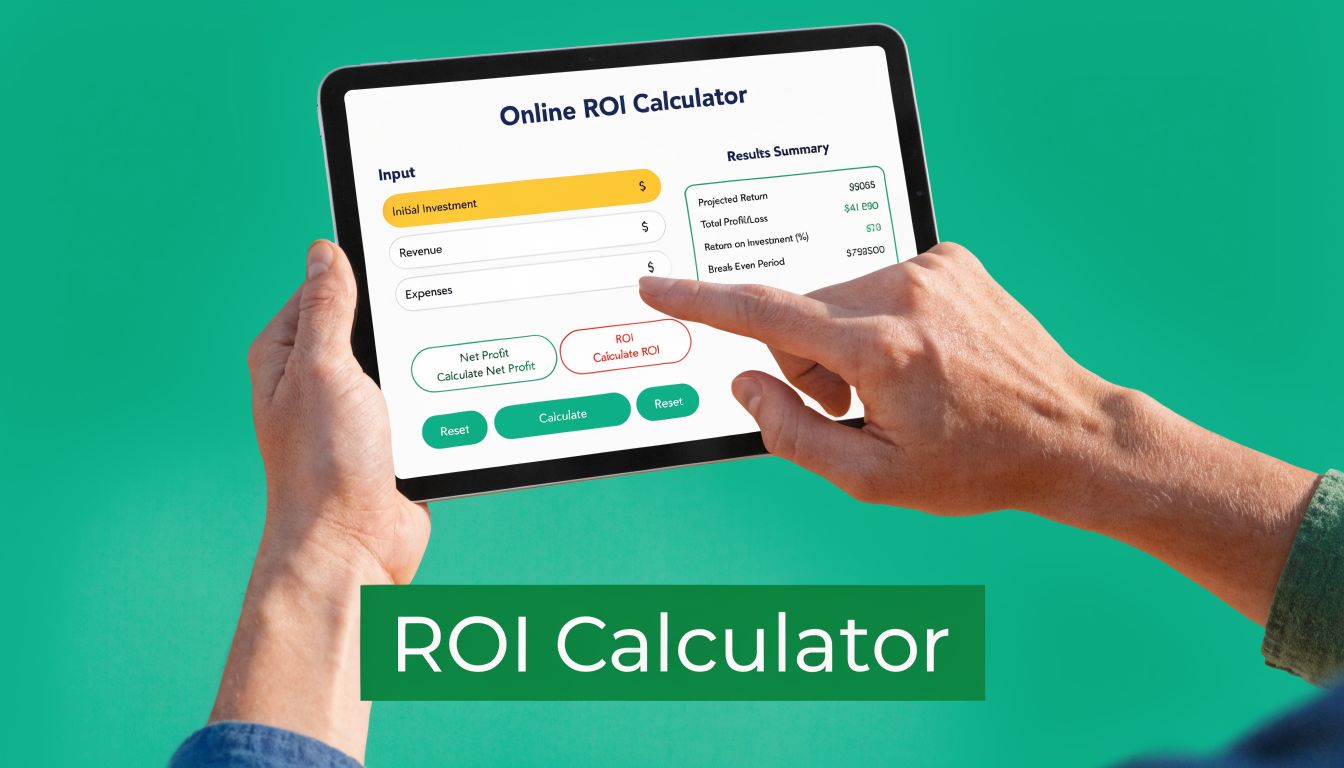
A useful free tool does two jobs at once. It gives the buyer the result they want, and it reveals what kind of help they may need next.
That’s why calculators, graders, estimators, and simple assessment tools can outperform static PDFs. The prospect gets an output tied to their own situation, not just general advice.
The best use case for this tactic
Free tools work well when buyers struggle to quantify a problem. ROI calculators, maturity assessments, and audit tools help them frame the business case internally. They also create a natural handoff to sales if the next step is positioned well.
The weak version is a fake tool that exists only to gate a form. Buyers can tell when the output is generic. If every user gets the same report, don’t call it a tool.
How to structure the experience
Keep the friction low at the start. Let users input enough information to get a meaningful result. Then decide where the gate belongs. Sometimes the preview can be visible, and the full report arrives by email. Sometimes the result itself can stay ungated, and the CTA offers a deeper consultation.
A good lead magnet tool usually includes:
- A clear promise: What the user will learn in plain terms.
- Useful output: A score, estimate, gap analysis, or recommendation.
- Segmenting value: Inputs that help your team understand fit and urgency.
- A logical next step: Demo, consultation, audit review, or related resource.
One practical example is a website audit or channel review used by a marketing firm. The buyer sees technical and messaging gaps, while the agency learns whether the prospect has the complexity, budget context, and urgency that fit its service model.
Among B2B lead generation examples, this one can serve both inbound and outbound. Sales can send the tool in a follow-up. Marketing can rank it in search or promote it through paid campaigns.
10. Email Marketing and Nurture Campaigns
What happens after a prospect shows interest but does not book a call?
For many B2B teams, that is where qualified demand slips away. A buyer downloads a guide, attends a webinar, visits the pricing page, or replies to outreach, then goes quiet. Email nurture keeps that interest active long enough for the account to move from curiosity to evaluation.
The strong version of this tactic is not a generic drip campaign. It is a behavior-based follow-up system tied to buying signals, sales handoff rules, and clear progression goals. That distinction matters because nurture can either create a pipeline or just add noise to the inbox.
What this tactic does well
Email works best in B2B when it answers the next question the buyer is likely to ask. That requires segmentation based on source, topic, role, and behavior.
A prospect who downloaded an early-stage guide needs education. A prospect who viewed pricing twice or clicked a case study needs proof, implementation detail, or a direct conversation with sales. Sending both people the same sequence lowers response rates and wastes the intent your other channels already generated.
This is also one of the few lead generation examples that improves the performance of everything around it. Paid traffic, webinars, outbound, SEO content, and lead magnets produce more revenue when nurture is built to continue the conversation instead of restarting it.
Why it works
B2B buying rarely happens on the first touch. Multiple stakeholders get involved. Budget timing changes. Internal priorities shift. Email gives your team a low-cost way to stay relevant during that gap without asking for a meeting in every message.
It also creates a controlled path to qualification.
In practice, the best programs connect marketing automation with CRM activity. If a lead revisits a bottom-of-funnel page, opens several product emails, or engages with a customer story, that should trigger a different sequence or alert sales to follow up. The gain comes from timing and relevance, not volume.
How to build a nurture flow that produces a pipeline
A useful nurture sequence usually has four parts:
- Delivery email: Send the requested asset or confirmation immediately.
- Context email: Add one practical point that helps the buyer use what they asked for.
- Proof email: Share a relevant customer example, objection answer, or implementation lesson.
- Decision email: Offer a next step tied to intent, such as a consultation, demo, or technical review.
The trade-off is speed versus precision. A simple sequence is faster to launch and better than no follow-up. A segmented nurture system takes more setup, more content, and cleaner CRM logic, but it produces better sales conversations because the message matches the buyer’s stage.
One approach I have seen work well is to map nurture by trigger, not just by asset. Webinar attendees get one path. Pricing-page visitors get another. Leads who engage with customer proof get a sequence built around risk reduction, rollout process, and expected outcomes. That structure is more work upfront, but it prevents the common failure mode where every lead gets the same five emails regardless of intent.
Mini playbook for implementation
Start with three trigger groups:
- Top-of-funnel engagement: Educational follow-up and problem framing
- Mid-funnel evaluation: Use cases, comparisons, and proof
- High-intent activity: Sales outreach, case studies, and decision support
Then define the handoff points. For example, repeated visits to service or pricing pages, high email engagement over a short window, or form fills for bottom-of-funnel assets can move a lead into direct sales follow-up.
Measure nurture on progression, not just opens and clicks. The KPIs that matter are:
- Lead-to-MQL or SQL progression
- Meetings booked from nurtured leads
- Opportunity creation rate
- Time from first conversion to sales conversation
- Revenue influenced by nurture touches
Many B2B teams overinvest in lead capture and underinvest in what happens next. Email nurture fixes that gap. Done well, it turns isolated campaign responses into a system that consistently creates a qualified pipeline.
10 B2B Lead Generation Strategies Compared
| Strategy | Implementation complexity | Resource requirements | Expected outcomes | Ideal use cases | Key advantages |
|---|---|---|---|---|---|
| Account-Based Marketing (ABM) | High, deep research and tailored campaigns | High, CRM, analytics, coordinated sales+marketing time | High-value account wins, higher deal size, measurable ROI | Enterprise & mid-market B2B with large deals | Very targeted personalization, better close and expansion rates |
| Cold Email Outreach Campaigns | Medium, sequence design, and list research | Low–Medium, copywriting, list tools, automation | Scalable direct responses, modest reply rates | SaaS, agencies, and consultants targeting specific prospects | Low cost per lead, direct access to decision-makers |
| Content Marketing with SEO Optimization | Medium–High, ongoing content and SEO work | Medium, writers, SEO tools, editorial calendar | Sustainable organic traffic, qualified inbound leads over time | B2B with moderate-to-long sales cycles seeking authority | Long-term compounding traffic, thought leadership |
| LinkedIn Lead Generation Campaigns | Medium, ad setup, and audience targeting | Medium–High, ad budget, creative, targeting expertise | High-quality leads, higher cost per lead | Enterprise B2B, professional services, executive targeting | Precise professional targeting, native lead capture forms |
| Webinar and Virtual Event Lead Generation | Medium–High, event planning and production | Medium, speakers, platform, promotion resources | Highly engaged leads, strong qualification, and reusable content | Complex solutions needing education, consultative sales | Deep engagement builds credibility and strong follow-up potential |
| Google Ads and PPC Lead Generation | Medium, continuous optimization and testing | Medium–High, ad spend, PPC specialists, landing pages | Immediate visibility, measurable cost-per-lead, scalable volume | Time-sensitive offers, high-intent keyword targeting | Fast results, granular measurement, easy scalability |
| Case Studies and Social Proof Lead Generation | Low–Medium, interview and content production | Low–Medium, client cooperation, design/writing resources | Improved trust and close rates, long-lived asset | Service firms, consultants, SaaS with proven outcomes | Strong credibility, tangible proof of ROI for prospects |
| LinkedIn Organic Content and Thought Leadership | Medium, consistent posting and engagement | Low, time for content creators, basic assets | Slow-building audience, inbound interest, amplified visibility | Founders, thought leaders, and agencies building reputation | Authentic relationships, no ad spend, compounding network effects |
| Free Tools, Calculators, and Lead Magnets | Medium, development, and UX design | Medium, dev/design, data maintenance, CRM integration | High conversion, self-qualified leads, valuable user data | SaaS, finance, agencies with quantifiable ROI propositions | Immediate value, qualifies prospects, evergreen lead source |
| Email Marketing and Nurture Campaigns | Medium, segmentation, and automation setup | Low–Medium, ESP, content, list hygiene | High ROI, nurtured leads, predictable pipeline progression | All B2B companies, especially those with longer sales cycles | Highly measurable, scalable, owns audience, and repeatable touchpoints |
Executing Your Lead Generation Strategy
The hard part isn’t finding more B2B lead generation examples. The hard part is deciding which ones fit your commercial model well enough to deserve real focus.
A company with a short sales cycle and a broad market may get traction from PPC, cold email, and useful lead magnets. A firm with larger deal sizes and more stakeholders may get better results from ABM, webinars, proof-heavy content, and disciplined nurture. A consultancy with strong internal expertise may gain more from SEO content and founder-led LinkedIn than from jumping straight into paid acquisition. Channel choice should follow the deal reality.
Start with one question. What signal tells your sales team a lead deserves attention? That answer should shape everything else. If sales only wants meeting-ready accounts, optimize for meetings. If multi-stakeholder engagement predicts closed business, track that. If pricing-page visits or event attendance indicate serious interest, build your reporting around those signals instead of raw lead counts.
The examples in this article also point to a second pattern. Tactics rarely win alone. The OEM trade-show campaign from MarketingSherpa worked because event marketing, direct mail, email, teleprospecting, and qualification were designed as one system. The Madison Marketing Group example worked because the team stayed with content long enough for traffic growth to turn into SQL growth over later quarters. The best-performing programs usually connect awareness, capture, qualification, and follow-up instead of hoping one channel does everything.
That means your implementation plan should stay small at first. Pick one primary engine and one supporting channel. For example:
- SEO content plus nurture email if your market searches actively, and your team can publish consistently
- Cold email plus LinkedIn organic support if you need direct pipeline creation in a defined niche
- Webinars plus case studies if education and proof drive your sales process
- PPC plus landing page optimization if demand exists and speed matters
- ABM plus sales coordination, if a narrow set of accounts can materially change revenue
Then review the friction points quickly. Are leads arriving with a weak fit? Is the message attracting curiosity but not intent? Is sales follow-up too slow? Is the offer too broad for the audience segment? Most channel problems are offer, targeting, or handoff problems.
One more rule helps: don’t scale a channel because it generated activity. Scale it because it produced qualified movement. That can mean accepted opportunities, better meetings, more engaged accounts, or cleaner late-stage progression. Activity metrics are still useful, but they aren’t the finish line.
If you want outside support building that system, Ascendly Marketing is one option for firms that need help across channels such as SEO, PPC, content, website optimization, outreach, and nurture. Execution usually improves when the same strategy is carried through the landing page, the offer, the follow-up, and even the way the team handles scheduling content across multiple platforms.
Which strategy should you implement first? Start with the one your team can run well for a full test cycle, not the one that sounds most impressive in a pitch deck.
If you want help turning these B2B lead generation examples into a working acquisition system, talk with Ascendly Marketing. Their team works across SEO, paid media, content, websites, and B2B outreach, which makes them a practical fit for companies that need both strategy and execution.