

A professional search engine marketing service is your ticket to the top of Google. It’s a paid advertising strategy, often called pay-per-click (PPC), that gets your business seen on search engine results pages (SERPs) almost instantly. Think of it as renting premium ad space right where your customers are looking, drawing in immediate, targeted traffic from people actively searching for what you sell.
Unpacking Your Digital Real Estate Strategy
Imagine your online presence is a piece of digital real estate. You’ve got two main ways to stake your claim: you can either build and own your property over time, or you can rent a prime location for instant visibility. That simple idea is the perfect way to understand how a professional search engine marketing service plugs into your growth plan.
Search Engine Optimization (SEO) is like building and owning your property. It’s the long game. You’re improving your website’s structure and content to earn a high rank in the organic (unpaid) search results. It takes time and consistent effort, but the payoff is a stable, long-term asset that generates traffic and builds genuine brand authority.
Search Engine Marketing (SEM), on the other hand, is like renting a highly visible storefront in the busiest part of town. You pay for the placement, and in return, you get immediate access to a flood of potential customers who are ready to buy. A professional service manages this "rental," making sure you get the best location for the best price.
To make this distinction crystal clear, let's break down the core differences between the two.
SEM vs SEO At A Glance
While both SEM and SEO aim to get your business in front of searchers, they operate on completely different timelines and principles. This table gives you a quick snapshot of how they stack up.
| Feature | Search Engine Marketing (SEM) | Search Engine Optimization (SEO) |
|---|---|---|
| Speed to Results | Immediate (within hours or days) | Gradual (months to a year) |
| Cost Model | Pay-per-click (PPC) | No direct payment to search engines |
| Placement on SERP | Top of the page (ad section) | Below the ads (organic results) |
| Traffic Type | Paid traffic | Organic traffic |
| Longevity | Traffic stops when you stop paying | Results are long-lasting and compound |
| Best For | Quick lead gen, product launches, testing | Building brand authority, long-term growth |
Understanding this table is key. You're not choosing one over the other; you're deciding how to blend them. A smart digital strategy almost always uses both, leveraging SEM's speed and SEO's sustainability for a powerful one-two punch.
The Immediate Impact of SEM
The whole point of any search engine marketing service is to drive tangible results, and fast. While SEO is a marathon, SEM is a sprint designed to capture demand right now. This approach is a game-changer for:
Generating Qualified Leads: SEM lets you target users with laser-focused keywords that signal high purchase intent, like "emergency plumber near me" or "buy running shoes online." This precision means your ad budget is spent on people who are actually likely to convert.
Boosting Brand Visibility: By appearing at the very top of the search results, your brand instantly gains credibility and mindshare. It doesn’t matter if you’re a new player in the market; you're right there next to the big names.
Driving Sales and Revenue: For ecommerce shops and service businesses, SEM creates a direct line from a search query to a sale. A well-managed campaign can deliver a measurable and immediate return on your ad spend.
This powerful mix of speed and precision is exactly why the SEM industry is exploding. The global search advertising market is on track to hit an incredible $483.5 billion by 2029. With over 68% of all website traffic starting from a search engine, investing in a search engine marketing service isn't just an option anymore—it's essential for grabbing your piece of the pie. You can explore more data on the importance of search visibility in digital marketing.
The Core Components Of A Powerful SEM Strategy
A powerful search engine marketing service is much more than just "boosting a post." Think of it as a high-performance engine, where a collection of precise, interconnected tactics work together to capture your ideal customer at the exact moment they’re searching. Each component plays a critical role in driving your business forward.
Understanding these individual parts demystifies the whole process. It shows you exactly how a professional agency generates a real return on your investment. From the dominant force of Google Ads to the strategic art of re-engaging past visitors, every element works in concert to get you results.
This diagram breaks down how the core pillars of search visibility fit together.
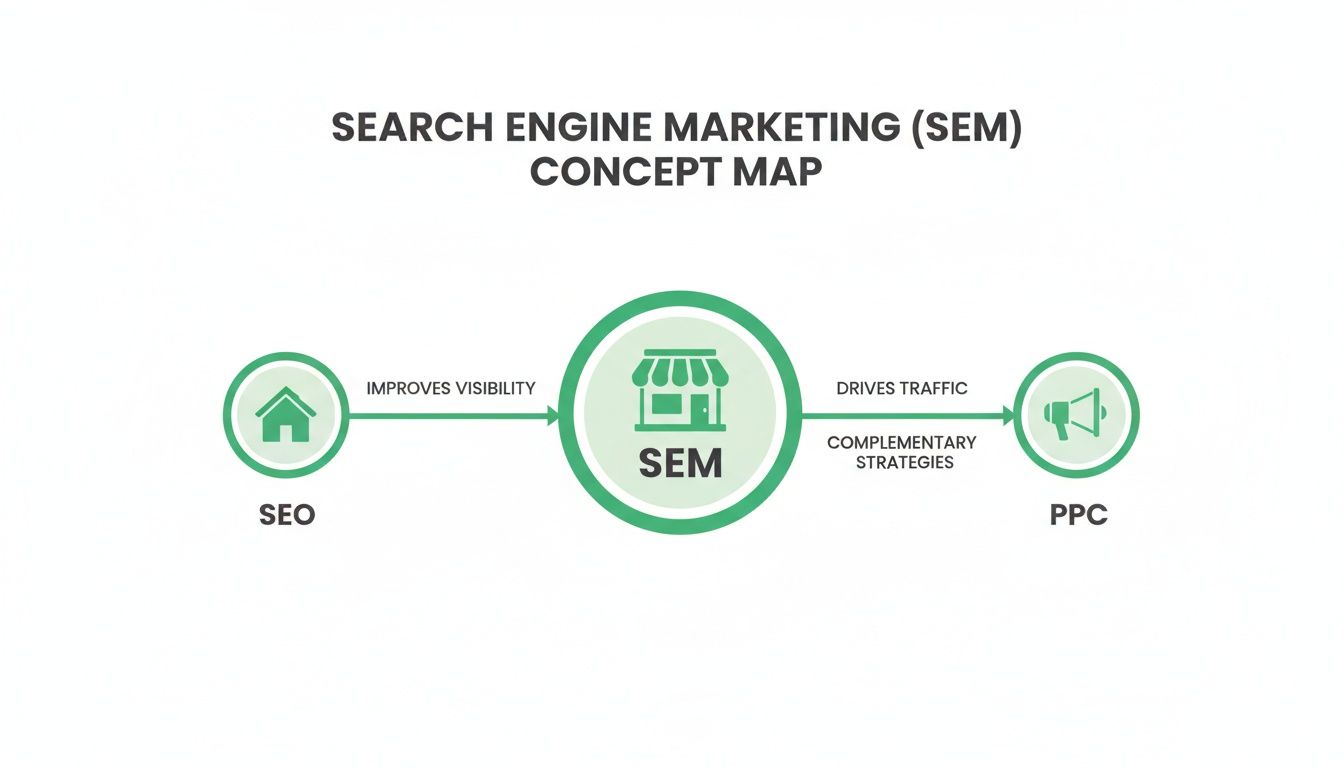
It clearly shows that paid tactics (PPC) and organic efforts (SEO) both fall under the broader SEM umbrella, working hand-in-hand to maximize your presence.
Google Ads: The Undisputed Champion
When you think of paid search, you’re almost certainly thinking of Google Ads. Its dominance is staggering. With an iron grip on 90.82% of the global search market share, Google is the undisputed king. This platform is the primary battleground where the vast majority of your potential customers are looking for solutions.
But success isn't just about outbidding everyone else. The Google Ads auction is a sophisticated marketplace that rewards relevance above all.
At its core, the Google Ads auction rewards ads that provide the best user experience. An agency's real skill lies in optimizing your Quality Score—a metric Google uses to rate the quality of your ads, keywords, and landing pages. A higher score means lower ad costs and better ad positions.
This is where a professional SEM service truly earns its keep. By crafting highly relevant ad copy, selecting precise keywords, and ensuring your landing page delivers on the ad's promise, they can dramatically lower your Cost Per Click (CPC). A local plumber with a high Quality Score, for instance, might pay far less per click than a competitor with a bigger budget but a less relevant ad. You can also explore our deep-dive guide to learn more about managing Google Ads campaigns.
Bing Ads: The Overlooked Opportunity
While Google gets all the headlines, ignoring Bing Ads is a common and costly mistake. Microsoft's search engine is the default on millions of Windows PCs and serves a dedicated, and often more affluent, user base.
- Less Competition: Fewer advertisers on Bing often translates to lower CPCs and a better Return on Ad Spend (ROAS) compared to the hyper-competitive Google environment.
- Unique Audience: Bing’s demographic skews older and more professional, making it a goldmine for businesses targeting B2B clients or high-end consumers.
- AI Integration: With powerful integrations like ChatGPT, Bing is quickly becoming a hub for sophisticated, AI-driven searches, creating brand-new opportunities for savvy advertisers.
Google Shopping: For Ecommerce Dominance
For any ecommerce business, Google Shopping isn’t just an option—it’s a necessity. These visually engaging product listings appear right at the top of the search results, complete with images, prices, and reviews. They grab the attention of shoppers who are ready to buy now.
Success here hinges on a perfectly optimized product feed, which is the data file that sends all your product info to Google. A skilled agency ensures this feed is flawless, structuring campaigns to highlight best-sellers, run promotions, and maximize visibility for your most profitable items.
Remarketing: The Art Of The Second Chance
Ever looked at a product online, only to see ads for it following you around the web? That’s remarketing, and it's one of the most effective tactics in the SEM toolkit.
The reality is, most visitors don't convert on their first visit. Remarketing gives you a second, third, and even fourth chance to win them over. By showing targeted ads specifically to people who have already visited your site, you stay top-of-mind and gently nudge them back to complete their purchase. For an online boutique, this could mean showing a shopper the exact pair of shoes they left in their cart—turning a missed opportunity into a sale.
How SEM Services Actually Fuel Business Growth
Let's cut through the technical jargon for a second. The real question is simple: what does a search engine marketing service do for your bottom line? The answer is it opens up a direct, measurable, and often immediate path to real business growth, no matter what industry you're in.
Think of it like opening a brand new, hyper-efficient sales channel that never sleeps. Whether you're a local plumber who needs the phone to ring, an ecommerce brand chasing more sales, or a B2B company hunting for qualified leads, SEM puts you right in front of customers the exact moment they’re looking for a solution.
Get Instant Market Visibility
Waiting for organic growth to kick in can feel painfully slow, especially when you're up against established players. A new startup, for instance, can use a sharp SEM campaign to show up at the top of Google on day one, going head-to-head with industry giants.
This isn't just about stroking your ego; it's about grabbing market share that would otherwise be completely out of reach. The same goes for established businesses launching new products or moving into new territories. Instead of a slow, expensive rollout, a professional search engine marketing service creates immediate awareness and feedback, turning a gamble into a calculated move.
The Power of Pinpoint Audience Targeting
Old-school advertising often feels like shouting into a void and hoping the right person hears you. SEM, on the other hand, is more like having a private conversation with your ideal customer. The targeting capabilities are incredibly precise, letting you connect with people based on:
- Demographics: Zero in on specific age groups, genders, and income levels.
- Geographic Location: Reach customers in a particular city, state, or even within a few miles of your shop.
- User Behavior: Reconnect with past website visitors (remarketing) or people who've shown interest in products like yours.
- Specific Search Intent: Target keywords that signal someone is ready to buy, like "emergency roof repair Houston" or "buy women's running shoes size 8."
This kind of precision means your marketing budget isn't wasted. It's spent talking directly to the people most likely to become your next customers.
Unlock a Clear Return on Your Investment
Maybe the most compelling reason to get behind SEM is how ridiculously measurable it is. Every click, every conversion, and every dollar spent is tracked. This gives you a crystal-clear picture of your return on investment (ROI). To really nail this, you need a solid grasp of marketing attribution to properly credit every touchpoint that led to a sale.
The data doesn't lie. The returns from search engine marketing are exceptional, and the SEO side often leads the pack. For instance, organic leads from SEO boast a 14.6% conversion rate—miles ahead of the 1.7% from traditional outbound methods. This is exactly why 70% of marketers say SEO drives more sales than PPC. For B2B, the numbers are just staggering: SaaS businesses report an average 702% ROI from their optimization efforts.
A professional SEM service turns your investment into trackable results—phone calls, form fills, and actual sales. It takes the guesswork out of marketing and replaces it with data-driven proof of growth. That makes it one of the most accountable and effective strategies you can have in your corner.
How To Measure The Success Of Your SEM Campaigns
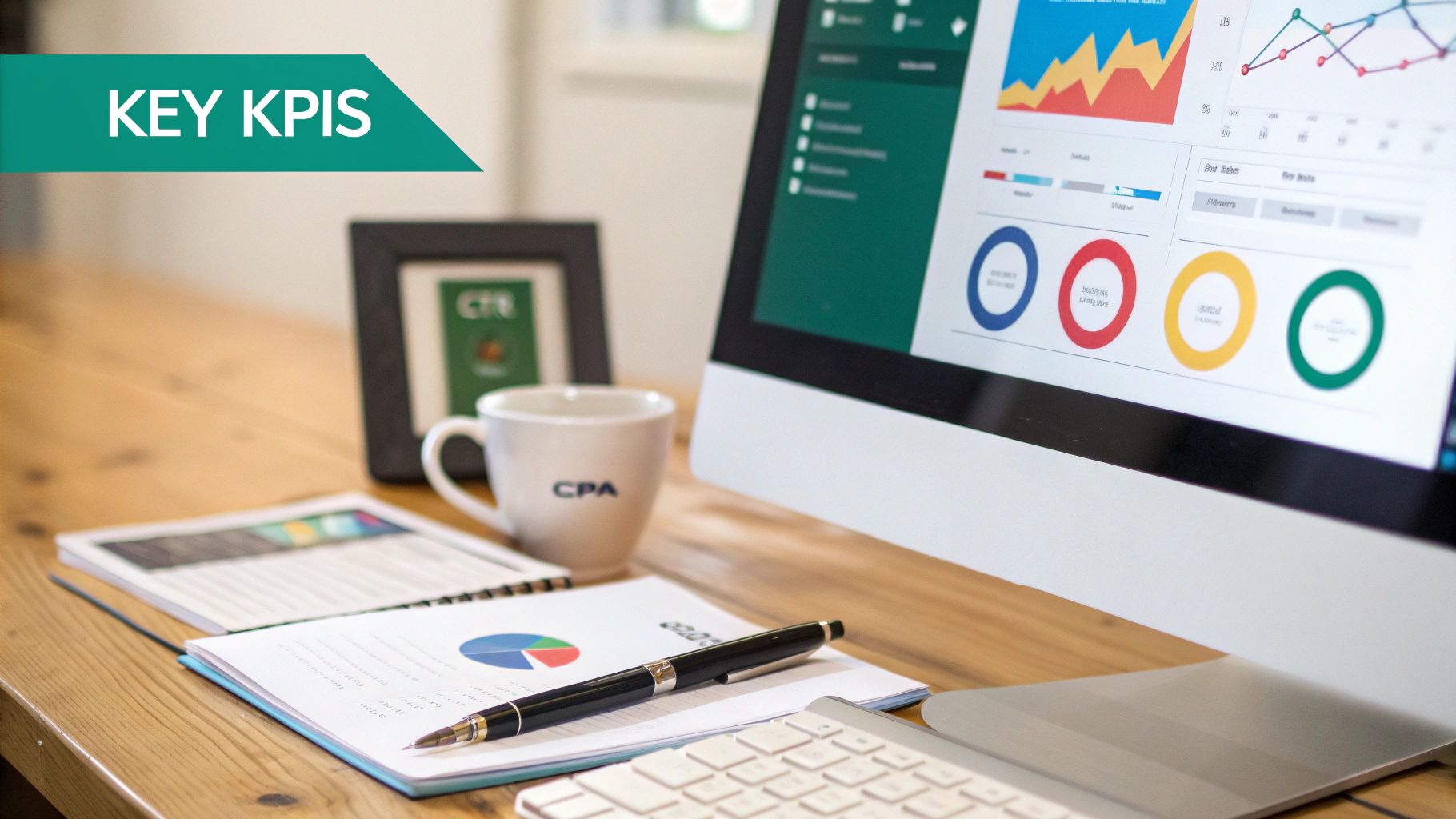
In marketing, if you can’t measure it, you can't improve it. This old saying is the absolute truth in the world of SEM. A professional search engine marketing service doesn’t just launch ads and hope for the best; they provide a clear, data-backed story of how your investment is paying off. It's about moving past vanity metrics like impressions and digging into the Key Performance Indicators (KPIs) that actually drive your business forward.
Think of your campaign data as the dashboard in your car. Each gauge and light tells you something vital about the health and performance of your marketing engine. Understanding these numbers is what empowers you to hold an agency accountable and see exactly how your ad spend is fueling real growth.
Decoding Your Primary SEM Metrics
Not all data is created equal. A skilled agency knows how to filter out the noise and focus on the numbers that directly connect ad performance to your business goals. Having a solid grasp of key performance marketing metrics is what separates a guessing game from a predictable growth strategy.
To make sense of it all, we've broken down the most important KPIs into a simple table. This is the data that tells the real story of your campaign's health and effectiveness.
Essential SEM KPIs And What They Mean
| KPI | What It Measures | Why It Matters |
|---|---|---|
| Click-Through Rate (CTR) | The percentage of people who see your ad and actually click on it. | A high CTR tells you the ad is relevant and compelling to your target audience. It's the first sign that your messaging is hitting the mark. |
| Conversion Rate | The percentage of clicks that result in a desired action (e.g., a sale, a form fill, a phone call). | This is arguably the most important metric. It shows how effectively your ads and landing page are turning clicks into actual business results. |
| Cost Per Acquisition (CPA) | The total cost you pay to acquire one new customer through your campaign. | A low and stable CPA is a strong sign of an efficient and profitable marketing funnel. This KPI keeps your customer acquisition costs in check. |
| Return on Ad Spend (ROAS) | The total revenue generated for every dollar spent on advertising. | This is the ultimate bottom-line metric. A ROAS of 4:1 means you're earning $4 in revenue for every $1 you invest, directly proving profitability. |
These metrics all work together. For instance, a high CTR but a low conversion rate often points to a problem. Your ad might be making a promise that your landing page doesn't deliver on, leading to a poor user experience and wasted ad spend. A good agency will spot this disconnect immediately and start testing solutions.
Transparent reporting is the cornerstone of a healthy agency partnership. It's not just about sending you a spreadsheet of numbers; it's about translating that data into a clear story of what's working, what isn't, and what steps we're taking next to get better results.
Moving Beyond Clicks To Business Impact
While clicks and conversions are fundamental, a truly sophisticated search engine marketing service ties performance directly to your bottom line. This is where you can clearly see how marketing spend translates into real revenue.
Focusing on financial KPIs like Cost Per Acquisition (CPA) and Return on Ad Spend (ROAS) is what separates a basic campaign from a strategic growth driver. An agency that obsessively works to lower your CPA and increase your ROAS is one that is genuinely aligned with your business's success. They're making every single dollar work harder for you.
How To Choose The Right SEM Agency Partner