

You launched a campaign, approved the ads, and watched the clicks come in. Then nothing useful happened. Leads were weak, sales were uneven, or the budget drained before the week ended. That pattern shows up across search, shopping, paid social, and video, and the root problem usually isn’t the platform.
It’s the build.
Strong PPC marketing examples are rarely just “good ads.” They’re systems. The keyword strategy matches the landing page. The audience definition matches the offer. The bid model fits the buying cycle. The creative says the next logical thing a buyer needs to hear, not the first thing the brand wants to say. When those pieces line up, campaigns become easier to scale. When they don’t, even solid traffic feels expensive.
That’s why I like studying campaigns from the inside out. The ad itself is often the least interesting part. Product feed structure, negative keywords, retargeting windows, geo controls, call tracking, CRM feedback, and landing page sequencing usually explain why one account compounds and another stalls.
If your campaigns are active but underwhelming, start with the mechanics behind them, not the surface. A good companion to this way of thinking is a strong conversion rate optimization playbook, because paid traffic only performs when the click has somewhere useful to land.
1. E-commerce Product Feed Campaigns Google Shopping
Shopping campaigns don’t win because the ad copy is clever. They win because the feed is clean, the product titles are useful, and the traffic lands on pages that remove friction fast.
A useful example comes from a premium flooring ecommerce account managed by a UK agency. Their mix of Google Shopping, retargeting, and A/B testing produced a 50% increase in online sales within three months and a 35% improvement in ROAS. That result wasn’t magic. It came from tighter audience segmentation, stronger testing, and better campaign control in a competitive retail category.
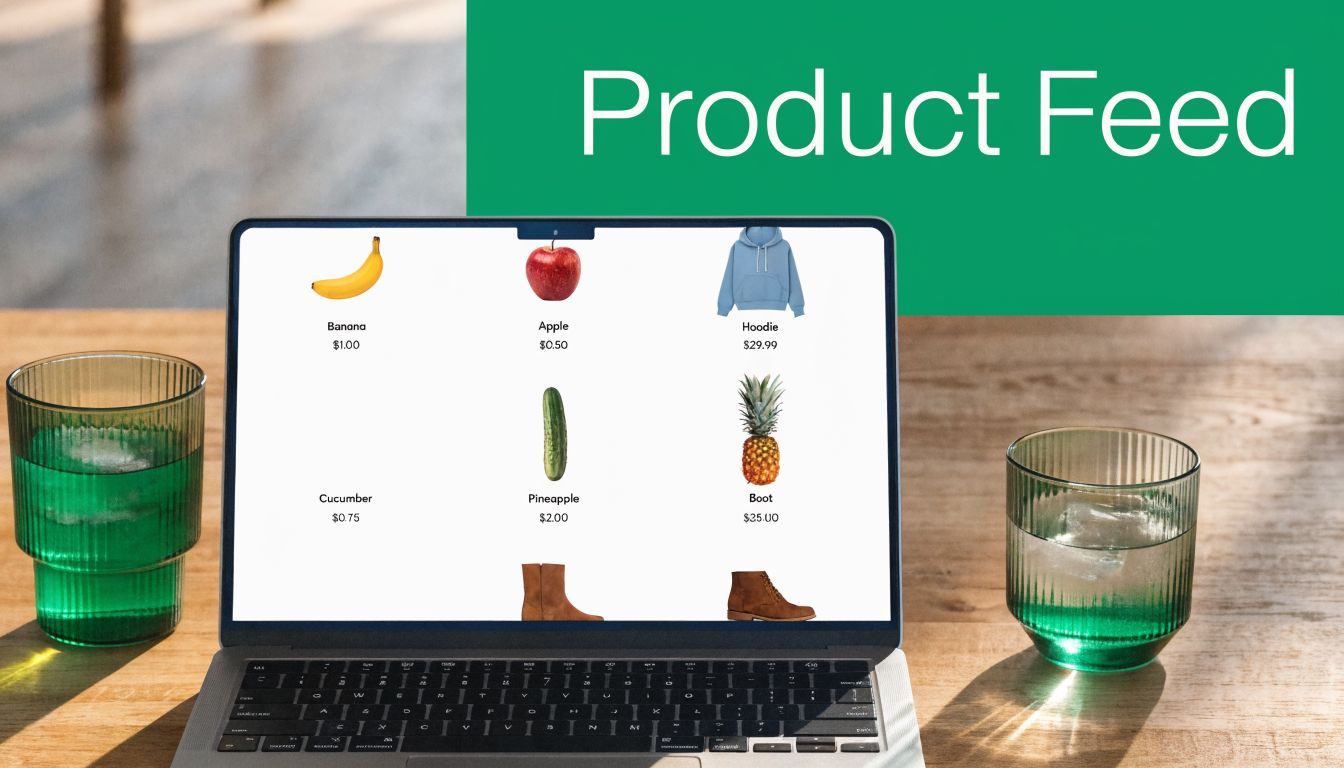
The pattern holds across home improvement, apparel, and electronics. Searchers who type exact product terms don’t need a brand manifesto. They need the right image, the right price, the right variant, and a landing page that confirms they’re in the right place.
What makes Shopping campaigns hold up
- Segment by margin: Split products by profitability, not just category. That gives you room to bid harder on products that can absorb paid acquisition.
- Use feed labels: Custom labels for seasonality, clearance, or top sellers make budget control simpler.
- Fix feed errors first: Bad stock data or stale pricing breaks trust before conversion optimization even starts.
- Filter waste early: Negative keywords matter in Shopping, especially when broad matching pulls in research traffic with weak buying intent.
Practical rule: In ecommerce PPC, the feed is the ad.
When a retailer asks where to start, I usually look at the catalog structure before touching bids. If the store also needs the wider channel mix, a stronger ecommerce marketing strategy helps, because Shopping performs better when email, remarketing, and on-site merchandising support it.
2. B2B Lead Generation Campaigns LinkedIn and Google Ads
B2B PPC breaks when teams try to force one campaign to do two jobs. LinkedIn is strong for getting in front of the right people. Google Search is strong for catching active demand. Those are different moments, and they need different messaging.
LinkedIn works best when the offer respects the platform. A CFO doesn’t want to click into a vague “learn more” page and sort out relevance later. They want proof that the ad understands the job, the company stage, and the problem. Search clicks need even less patience. If someone types a solution query, your page has seconds to prove fit.
A better split for B2B accounts
Run two tracks.
- Account-based campaigns: Tight audiences by title, seniority, industry, and named accounts
- Intent capture campaigns: Search terms tied to product, service, comparison, and pain-point queries
- Lead handling: Push both into the CRM with source detail intact so sales can judge lead quality, not just lead count
This matters even more for smaller B2B firms and local specialists. One underserved area in current PPC coverage is the way small and mid-sized B2B businesses and local service providers in niches like boutique law, niche medical, and industrial supply can build lower-cost lead generation programs instead of copying enterprise tactics. A 2025 industry analysis cited by Voy Media notes that boutique law firms can see 40-60% lower CPCs from untapped keywords, which reinforces a practical point: long-tail, lower-competition intent often beats broad vanity targeting for smaller budgets.
If you’re building this stack, map it to the sales process, not the ad platform. A broader framework for that sits inside these B2B lead generation tactics.
3. Local Service Ads Google LSA
Local Service Ads work differently from standard search campaigns because the lead arrives before the website earns the click. That changes what matters.
A local services campaign can have decent ad visibility and still fail because no one answers the phone, the booking team sounds rushed, or the service area is too wide to support quality jobs. In local PPC, response process is part of media performance.
Semify’s local campaign examples show the shape of a well-run operation. In one apartment rental campaign, they achieved a 55% CPL reduction and grew lead volume from 23 leads in July 2019 to 56 in October 2019 by improving keyword relevance and landing page alignment. Their salon campaign also used geo-targeting, call extensions, location bid adjustments, and negative keywords to tighten local intent.
Where LSAs usually win or lose
- Tight service radius: More area isn’t always better. Wider coverage often lowers lead quality.
- Fast response: If calls sit, the account drifts.
- Review quality: Weak reputation signals drag performance down quickly.
- Call tracking: You need to know which calls became appointments, not just which calls happened.
Slow follow-up will erase the advantage of high-intent local traffic.
That’s especially true for plumbers, HVAC companies, electricians, and locksmiths around places like The Woodlands, where urgency drives the search and the first competent response often gets the job.
4. YouTube Pre-roll and In-stream Advertising
Most YouTube campaigns fail in the first few seconds, not at the end. The opening frame either confirms relevance or invites the skip.
That’s why the best YouTube PPC marketing examples feel direct. A software demo gets to the interface fast. A home service brand shows the problem and the fix quickly. A product brand shows use, not just branding. You don’t have long to earn curiosity.
How strong YouTube campaigns are built
Start with the audience, but edit for the format. Retargeting a product viewer with a thirty-second explainer often works. Showing that same creative cold to a broad interest audience usually doesn’t. The stronger setup is message sequencing.
- Cold audience video: Short, visual, problem-first
- Warm audience video: More detail, more proof, clearer CTA
- Bottom-funnel retargeting: Demo, testimonial, or offer-focused creative
A lot of brands also forget that the landing page has to match the video promise. If the video says “see pricing,” don’t send traffic to a generic homepage. Send it to pricing. If the video says “book a consultation,” send it to a page built for that action.
I also like using YouTube as a qualifier. Some viewers won’t convert after one exposure, but they become stronger searchers later. That’s one reason video often performs better when measured alongside branded search lift and CRM progression rather than direct last-click alone.
5. Retargeting and Remarketing Campaigns Display and Video
Retargeting is where a lot of accounts waste money politely. They show the same ad to every past visitor and call it strategy.
That’s not enough. A homepage visitor, a cart abandoner, and a pricing-page visitor are not the same audience. Treating them the same creates mediocre creative and inflated frequency.
A remarketing structure that makes sense
Use behavior to drive the message.
- Cart abandoners: Product reminder, trust signals, friction removal
- Product viewers: Comparison, reviews, use case, availability
- Pricing-page visitors: Offer clarity, objection handling, sales contact
- Past converters: Cross-sell, replenishment, or upsell
The flooring ecommerce case mentioned earlier also used retargeting as part of the performance lift. That tracks with what experienced managers see in practice. Retargeting works best when it closes a specific gap in buyer hesitation rather than repeating generic brand ads.
Field note: Your best remarketing ad usually answers the question that stopped the first visit.
Dynamic remarketing deserves special attention in ecommerce. Showing the exact product viewed keeps the memory fresh and removes the step of rediscovery. In B2B, the equivalent is often content sequencing. Someone who visited a service page shouldn’t get a general awareness ad next. They should get proof, a comparison, or a next-step CTA.
Frequency control matters too. If the account can’t support creative rotation, cap exposure and keep audience windows honest.
6. Search Ads for Intent-Driven Keywords High-Volume B2B and E-commerce
A buyer searches “industrial barcode scanner supplier” at 10:14 a.m. Another searches “running shoes men size 11 sale” that same minute. Both are high intent. They should never see the same account structure, ad angle, or landing experience.
That is the core lesson in search. Intent sits inside the query, but profit comes from how tightly the campaign translates that query into message, offer, and page. High-volume search can scale fast in B2B and ecommerce, yet it also wastes money fast when teams group unlike terms together just to simplify management.
The strongest search accounts separate demand by buying stage and commercial value. A B2B advertiser usually needs one path for solution-aware searches, another for comparison terms, and another for late-stage pricing or demo queries. Ecommerce needs similar separation, but often by product type, margin tier, and promotional sensitivity. A generic “all non-brand search” bucket hides those differences and makes bidding less accurate.
What good search structure looks like in practice
- Split campaigns by intent class: Brand, competitor, category, problem-aware, and high-commercial terms need different bids and different copy.
- Match the ad to the query language: “ERP implementation partner” needs a different promise than “best ERP software for manufacturing.”
- Protect spend with negatives: Search term reviews usually expose research queries, job seekers, support searches, and adjacent traffic that looks relevant but rarely converts.
- Send traffic to the closest landing page: Product, category, pricing, demo, and comparison pages all serve different intents.
- Assign budgets by economics, not just volume: The highest-traffic keyword group is not always the highest-profit group.
For teams tightening that setup, these search engine marketing strategies for structuring intent-based campaigns are a useful reference point.
Trade-offs matter here. Exact and phrase match usually give better control, but broad match can find profitable variation if conversion tracking is clean and negatives are active. B2B teams often need tighter match types because lead quality varies sharply by query. Ecommerce advertisers can accept broader reach on large catalogs, but only if margin, inventory, and search term quality are monitored closely.
Ad copy also has to carry more weight than many accounts allow. In B2B, the click often depends on specificity. Mention implementation speed, certifications, integrations, or pricing model if those factors influence shortlist decisions. In ecommerce, the ad usually wins by reducing uncertainty fast. Shipping terms, returns, availability, and price point often do more work than brand language.
One more pattern shows up again and again. Search campaigns perform better when success is judged by the right KPI for the sales model. Ecommerce can optimize to revenue, margin, or new customer acquisition. B2B often needs to look past form fills and judge campaigns by qualified pipeline, booked meetings, or downstream cost per opportunity. That distinction changes which keywords deserve budget.
7. Facebook and Instagram Conversion Campaigns E-commerce and Mobile Apps
A familiar pattern shows up in Meta accounts. Sales flatten, the team raises spend, frequency climbs, and results get worse. In many cases, the problem is not audience size. It is message fatigue, weak event signals, or a creative angle that never matched buying intent in the first place.
That is why strong Facebook and Instagram conversion campaigns are built around the full system, not just the ad itself. The best examples in ecommerce and mobile apps tie one objective to a clear conversion event, pair it with creative built for that audience stage, and judge success with the KPI that matches the business model. For ecommerce, that usually means purchase volume, revenue, or return on ad spend. For apps, it may mean installs first, then trial starts, subscriptions, or in-app purchases once enough post-install data exists.
Creative usually does the heavy lifting here. Product demos, creator-style videos, before-and-after proof, unboxings, and direct offer-led statics often outperform polished brand assets because they answer the buyer’s next question fast. On Instagram, the first frame matters. On Facebook, the copy and offer often matter more than advertisers expect, especially for older audiences and higher-consideration products.
Three setup choices separate the campaigns that scale from the ones that stall:
- Creative built by funnel stage: Prospecting ads should introduce the problem, product, or outcome. Retargeting ads should handle objections, highlight reviews, or push urgency.
- Conversion event selection: Optimizing for add to cart can help a new store get volume, but purchase optimization usually produces better customer quality once enough data exists.
- Offer and landing page alignment: If the ad promises a bundle, free shipping, or a first-order discount, the landing page has to confirm that immediately or conversion rate drops.
Audience strategy still matters, but it matters differently than it did a few years ago. Broad targeting can work well for established ecommerce brands with enough conversion volume and strong creative testing. Smaller accounts, local retailers, and app campaigns with limited budgets often need more control. That can mean separating warm traffic, excluding recent buyers, building value-based lookalikes, or breaking out geo-specific campaigns for stores serving areas like The Woodlands.
One trade-off deserves more attention. Retargeting usually looks efficient in-platform, but it can absorb budget that should go to net-new customer acquisition. I like retargeting when it has a clear job, cart recovery, product viewers, trial abandoners, or recent site visitors, and a short attribution window that reflects reality. If every strong result comes from warm audiences, the campaign is harvesting demand instead of creating it.
A common optimization mistake is changing budget before changing creative. If click-through rate drops, thumb-stop rate weakens, or cost per purchase starts climbing while the offer and site stay the same, refresh the ad angles first. New hooks often recover performance faster than another round of audience changes.
8. Performance Max and Smart Shopping Campaigns
A store owner sees revenue hold steady, then notices search terms, placements, and audience insights getting harder to explain. That is the trade-off with Performance Max. It can expand reach and simplify campaign management, but it also reduces the visibility many advertisers rely on to diagnose waste, defend budget decisions, and spot where incremental growth originates.
For ecommerce brands, especially those already running Shopping with a solid feed, Performance Max often works best as a scaling layer, not a rescue plan. For lead generation, the bar is even higher. Weak conversion tracking, mixed lead quality, or broad goals can push the system toward cheap form fills instead of sales-qualified opportunities. Smart Shopping used to create a similar tension. Less manual work, less control. Performance Max inherited that same promise and the same risk.
Here’s a walkthrough worth watching before you build or audit one: