

You’re probably dealing with a familiar mess. Sales come in, but not predictably. One channel looks promising for a month, then stalls. Paid ads bring traffic, but margin gets thin fast. SEO feels like the right move, yet it’s hard to tell what deserves attention first. Meanwhile, every platform says you need to be everywhere.
That’s where most e-commerce marketing strategy work goes wrong. Store owners collect tactics instead of building an operating system. They launch Meta ads, send a few emails, post on social, tweak product pages, and hope the mix starts working. Sometimes it does for a while. Then the cracks show. Acquisition costs rise, low-margin products absorb budget, and reporting stays too shallow to explain what’s driving profit.
A workable strategy needs sequence, discipline, and a way to connect research to execution. The framework that consistently holds up is simple: discover, plan, execute, report. It forces better decisions early, tighter channel choices in the middle, and cleaner scaling later. That matters in a market where e-commerce is projected to account for 20.5% of worldwide retail sales in 2025, according to verified e-commerce marketing statistics.
Laying the Groundwork for Growth
Most wasted e-commerce spend starts before the first campaign launches. The problem usually isn’t bad creative. It’s weak discovery. If you don’t know which customer problem you solve best, which product angle stands apart, and which competitor gaps you can exploit, every ad and every landing page gets softer.
The first move is to stop describing your audience in broad labels. “Women aged 25 to 44” isn’t a buyer profile. Neither is “busy parents” or “outdoor enthusiasts.” Those are demographic buckets, not marketing inputs. You need working buyer personas that a strategist, copywriter, media buyer, and designer can all use without guessing.

Build personas from buying friction
A useful persona has four parts:
Trigger
What happened right before the customer started searching? A replacement need, a gift occasion, a recurring problem, a lifestyle change?Decision criteria
What do they compare first? Price, durability, ingredients, sizing clarity, delivery speed, setup time, compatibility?Purchase anxiety
What might stop the order? Poor reviews, vague photos, uncertain fit, return hassle, or concern that the product won’t solve the actual problem.Language
Which exact words do they use in reviews, support chats, search terms, and email replies?
That last point changes everything. Good e-commerce marketing strategy depends on message match. If buyers say “doesn’t hold up after washing,” your product page should address durability in plain language. If they say “hard to choose the right size,” your creative should reduce uncertainty before the click.
Practical rule: Don’t write copy from your brand vocabulary. Write from the customer’s complaint history.
Find unserved demand before competitors do
One of the most useful discovery methods is still underused. Analyze competitor gaps on Amazon, Shopify stores, and review-heavy marketplaces. The point isn’t to copy bestsellers. The point is to find unserved demand.
A documented approach from Analyzer Tools on identifying unserved demand on Amazon recommends looking for high search volume with low supply and studying weak reviews for missing features. That creates room for a more specialized offer and sharper marketing around a niche audience.
Start with these checks:
- Review complaints: Read the lowest-rated and mid-rated reviews first. Those often expose missing features, packaging issues, poor fit guidance, or weak use-case coverage.
- Long-tail search terms: Look for specific intent phrases. General category terms are crowded. Problem-driven searches reveal market gaps.
- Thin positioning: If several sellers offer similar products but none clearly own a use case, there’s your opening.
- Ignored micro-segments: Gift buyers, first-time users, sensitive-skin buyers, small-space households, and professional users often need different messaging even when they buy the same core product.
The goal isn’t novelty for its own sake. It’s relevance with less direct competition.
Turn research into a usable offer
Once you spot the gap, define your value proposition in one sentence. Not a slogan. A decision tool.
Use this structure:
- Who it’s for
- What problem it solves
- Why it’s a better fit than common alternatives
For example, “Designed for first-time home coffee users who want simple setup and easier cleaning than bulky multi-part machines” is stronger than “premium coffee gear for modern kitchens.”
If you want a broader planning reference after this discovery work, 10 E-commerce Growth Strategies offers a helpful outside view on growth levers that pair well with a research-first approach.
What solid discovery gives you
By the end of this phase, you should have:
- One primary buyer persona with a clear trigger, anxieties, and decision criteria
- One secondary persona that may need a different landing page or ad angle
- A list of competitor weaknesses pulled from reviews and category analysis
- A short list of long-tail opportunities tied to specific use cases
- A value proposition your team can apply across product pages, ads, and email
Without that foundation, channel strategy gets noisy. With it, every later decision gets easier. You know what to emphasize, what to ignore, and where your store can win without trying to outspend larger brands.
Choosing Your E-commerce Marketing Arsenal
Once the research is done, channel selection gets simpler. Not easy, but simpler. You’re no longer asking, “Which platform should we try?” You’re asking, “Which channel best fits this customer, this margin structure, and this stage of growth?”
That’s the difference between planning and dabbling.
SEO, paid search, social, email, and CRO don’t do the same job
The common mistake is treating channels as substitutes. They’re not. Each one solves a different part of the buying journey.
SEO captures demand that already exists. It pays off when your category has active search behavior, when shoppers compare products carefully, and when your store can support strong product, category, and informational content. According to Seoprofy’s e-commerce marketing statistics, organic search traffic drives 23.6% of all e-commerce orders, and 83% of online buyers use Google Search to check product reviews before purchasing. That makes SEO both a traffic channel and a trust channel.
Paid search works when intent is strong and speed matters. If someone searches with clear commercial intent, a well-built campaign can bring qualified traffic quickly. But paid search gets dangerous when you send clicks to weak pages or low-margin products.
Paid social is useful when the product needs visual explanation, lifestyle framing, or repeated exposure. It’s less about harvesting intent and more about creating it. That’s why creative fatigue hits so quickly. If your offer isn’t distinct, the ads blend in.
Email monetizes the traffic you already earned. It’s where abandoned cart recovery, replenishment reminders, post-purchase sequences, and launch campaigns should live. Stores that ignore email usually force paid channels to do too much.
CRO improves the value of every visitor. Better product pages, trust signals, cleaner navigation, stronger mobile UX, and fewer checkout obstacles raise the output of every acquisition source.
A weak store can make every channel look bad. A clear offer and clean page structure can make several channels work at once.
Use this table to decide where to start
| Channel | Time to Results | Primary Goal | Key Metric |
|---|---|---|---|
| SEO | Longer-term | Sustainable demand capture | Organic orders |
| Paid Search | Faster | High-intent acquisition | ROAS |
| Paid Social | Faster to medium | Demand generation and retargeting | Purchase conversion by campaign |
| Email Marketing | Medium once flows are built | Retention and recovery | Revenue per send or flow performance |
| Content Marketing | Longer-term | Trust and discovery | Assisted conversions |
| CRO | Ongoing | Increase conversion from existing traffic | Conversion rate |
This isn’t a ranking. It’s a fit test.
Match the channel to the business model
Some channel choices make sense only under certain conditions.
- Single-product or hero-product stores often do well with paid social, strong landing pages, and aggressive creative testing.
- Large catalog stores usually need SEO structure early because category depth creates search opportunity.
- Repeat-purchase products should build email and retention systems early, not as an afterthought.
- Higher-consideration products need content that handles objections before the click and after it.
Desktop still converts better than mobile according to the verified data, yet mobile dominates e-commerce usage. That means your store can’t treat mobile as a resized desktop experience. It needs simplified navigation, faster product understanding, and a checkout flow that removes hesitation quickly.
What works and what wastes time
Here’s the practical version.
SEO works when product taxonomy, internal links, collection pages, and supporting content all align with search behavior.
SEO stalls when stores publish random blog posts that don’t support transactional pages.
PPC works when campaign structure mirrors product economics.
PPC burns budget when all SKUs get equal attention regardless of margin.
Social works when creative speaks to a specific use case or objection.
Social weakens when ads rely on generic “shop now” messaging.
Email works when flows are segmented by behavior.
Email gets ignored when every subscriber receives the same promotions.
CRO works when changes are based on friction patterns.
CRO turns cosmetic when teams obsess over button colors and ignore product clarity.
If SEO is one of your priority channels, this guide on 10 e-commerce SEO best practices is a practical place to tighten the fundamentals.
Build a channel mix, not a channel dependency
One channel can get you moving. It won’t give you stability.
A stronger e-commerce marketing strategy usually looks like this in practice:
- SEO builds non-paid visibility and supports trust.
- Paid media accelerates testing and new customer acquisition.
- Email captures and retains value.
- CRO raises efficiency across the board.
- Content feeds search, social, and lifecycle messaging.
The plan stage isn’t about adding more channels. It’s about choosing the few that strengthen each other instead of competing for attention and budget.
Fueling Your Strategy with People and Pesos
A common e-commerce scenario looks like this. Sales flatten, ad costs rise, and the first reaction is to trim spend across the board. That usually creates a weaker version of the same problem. The better question is simpler. What does the business need to fund so it can find profitable demand, prove what works at the SKU level, and scale without guessing?
That is the point of the plan stage in Ascendly’s discover-plan-execute-report process. Budget and staffing are operating decisions, not admin work. They determine whether your strategy turns into a repeatable system or a pile of disconnected channel activity.

Allocate budget by business function
Platform-based budgeting sounds tidy, but it hides the actual job each dollar needs to do. A stronger model assigns budget by function first, then chooses channels inside each bucket.
Demand generation
Paid search, paid social, affiliate tests, creator partnerships, and marketplace programs belong here when the goal is acquiring qualified new visitors.Conversion improvement
Product page rewrites, merchandising changes, landing pages, UX fixes, testing tools, and checkout work sit here because they improve revenue from traffic you already paid for.Retention and margin recovery
Email, SMS, loyalty, replenishment campaigns, upsell flows, and post-purchase sequences protect contribution margin and raise customer value over time.Measurement and decision support
Analytics setup, feed management, attribution cleanup, dashboards, and reporting sit in this bucket. Underfund this area, and every later decision gets weaker.
This structure exposes trade-offs fast. If acquisition gets all the money, the brand becomes dependent on paid traffic. If retention gets ignored, the business keeps buying first orders and never improves blended efficiency. If measurement is missing, teams argue about channel performance without a clean way to resolve it.
Fund the current constraint first.
In practice, that means looking at the numbers in order. If traffic quality is strong but PDP conversion is poor, more media spend will just buy more low-yield sessions. If conversion is healthy but repeat purchase is weak, retention usually beats another top-of-funnel test. If your hero SKUs are profitable and the long tail is dragging down return, budget should shift toward feed segmentation, campaign exclusions, and merchandising decisions that protect margin.
Staff for the work, not the org chart
Hiring decisions break down for the same reason budget decisions do. Owners staff around titles instead of capability gaps.
An in-house hire works well when the business has a stable workload, clear priorities, and enough management capacity to coach that person properly. It also works best when the role is defined narrowly. One e-commerce lead can coordinate growth work. One person cannot run paid media, email, SEO, analytics, design, copy, and CRO well enough to scale a serious store.
Freelancers are a good fit when the strategy is already set, and you need execution in a specific lane. That might be Klaviyo flow builds, feed cleanup, creative production, or technical SEO fixes. Freelance support gets less efficient when someone still needs to decide priorities across channels and tie the work back to profitability.
An agency makes sense when the business needs coordinated specialists, tighter reporting, and a planning layer that connects channel choices to commercial goals. That model is useful when the brand is past the DIY stage but not ready to build a full internal team. The trade-off is management discipline. Agencies perform best when the client can share margin targets, inventory realities, and SKU priorities instead of asking for growth in the abstract.
For owners pressure-testing whether current spend is producing enough return, this guide on how to calculate marketing ROI for e-commerce decisions is a practical place to ground the conversation.
Use a simple decision filter
Before adding headcount or increasing media budget, ask four questions:
- What is the current bottleneck? Traffic, conversion, retention, reporting, or merchandising.
- Which SKUs can support more spend? Revenue alone is not enough. Margin, refund rate, and repeat purchase matter.
- Do you need a specialist or a coordinated team? The answer changes both cost and management load.
- Can you measure payback clearly? If reporting cannot separate branded demand, prospecting, and retention impact, scale will get messy fast.
A short explainer on budget discipline is useful here:
Good resourcing gives the business enough coverage to discover unserved demand, prioritize profitable SKUs, and improve the parts of the funnel that are holding back growth. That is how a marketing strategy becomes a durable e-commerce engine instead of a collection of campaigns.
Activating Your Go-To-Market Plan
Execution falls apart when too many things launch at once. A proper go-to-market plan has order. It also has restraint. You don’t need every campaign live in week one. You need the right pieces in the right sequence so each step improves the next.
A simple 90-day rollout works because it gives enough time to build the foundation, gather early signals, and make controlled adjustments before scaling spend.
Days 1 through 30
Start with the parts customers never notice directly but always feel.
Your team should configure platform tracking, connect ad accounts, clean up event measurement, organize product feeds, and check that email capture, cart tracking, and checkout reporting all work. At the same time, tighten product pages. Rewrite weak descriptions, improve image ordering, add clearer trust signals, and make sure mobile browsing feels simple.
Then publish the first layer of content. Focus on product pages, category pages, and a small set of support content tied to purchase questions.
Days 31 through 60
This is when selected channels go live.
Launch branded and high-intent paid search first if search demand exists. Start paid social with a small creative set built around different buying angles, not endless variations of the same message. Turn on email flows for welcome, abandoned cart, browse abandonment, and post-purchase follow-up.
Use content across channels. A review-focused article can support SEO, give email something useful to send, and provide social proof for ads. That reuse keeps the messaging consistent.
Don’t scale campaigns from early noise. Wait for patterns in audience quality, product interest, and conversion friction.
Days 61 through 90
Now you can make harder decisions.
Pause weak creatives. Reallocate budget toward stronger product groups. Expand on search terms, audiences, and email segments that show healthy behavior. Tighten landing pages based on session recordings, cart flow issues, and support questions.
A clean rollout usually follows this order:
Foundation first
Tracking, feed quality, product page clarity, mobile UX, and email infrastructure.Controlled launch
One or two paid channels, limited audiences, and a clear measurement plan.Test and refine
Offers, hooks, landing pages, subject lines, and retargeting windows.Scale selectively
Increase spend only where margin, conversion quality, and repeat behavior support it.Feed learnings back
Strong ad language belongs on product pages. Repeated objections should shape content. Support questions should reshape PDP copy.
Execution gets easier when every task has a place on the calendar. Teams stall when the work is technically correct but badly sequenced. The best-performing stores don’t do everything first. They do the right next thing.
The Science of Scaling Your E-commerce Brand
Growth gets misread all the time. Revenue rises, traffic spikes, and the team assumes the strategy is working. Then cash tightens, ad efficiency slips, and the business realizes too late that volume was hiding weak economics.
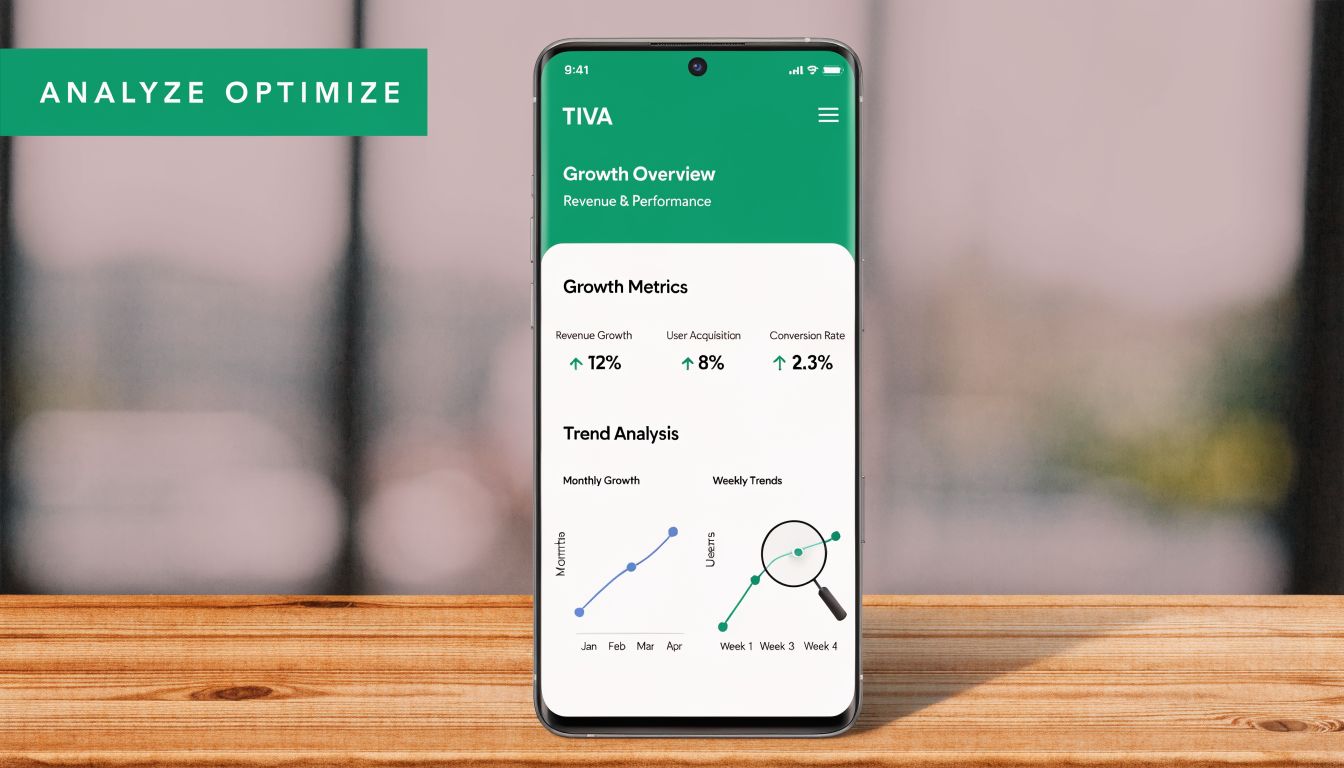
Scaling starts when you stop judging performance by top-line numbers alone. Traffic isn’t the score. Revenue isn’t the score either. Contribution after marketing, by product and by funnel stage, is what tells you whether growth is healthy.
SKU-level analysis changes the quality of decisions
One of the clearest frameworks for operational e-commerce analysis comes from Ecomm Breakthrough’s breakdown of the data points that predict e-commerce success or failure. The core idea is simple. Review product-level economics weekly, not just account-level campaign metrics.
Their verified guidance points to three metrics that matter most:
Gross margin per SKU
Revenue minus product cost and fulfillment cost.Ad-attributed ROAS
With a benchmark of above 4x for scalability in that framework.Contribution margin after marketing
With a target above 30% for seven-figure growth in that same framework.
The same source states that e-commerce has an 80% overall failure rate and ties much of that to weak product-level monitoring. It also notes that the top 20% of SKUs often drive 80% of profits, and that over-advertising low-margin items can cause 40% to 60% profit erosion. Those aren’t abstract warnings. They describe what happens when stores optimize account performance while ignoring product reality.
Look at products in tiers, not as one catalog
A useful weekly review sorts products into groups.
| Tier | What it means | Action |
|---|---|---|
| Core profit drivers | Strong margin and healthy ad efficiency | Protect budget and expand carefully |
| Conversion assists | May not lead margin directly but help basket building | Pair with better-margin offers |
| Margin risks | Sales happen but economics are weak | Rework pricing, offers, or media exposure |
| Budget drains | Low velocity or poor return | Cut spend or remove from active promotion |
Many stores eventually realize this truth: a product can generate orders and still damage the business. Another may look modest in volume but deliver the healthiest profit.
Diagnostic question: Which SKUs would you still push if ad costs rose tomorrow? That list usually reveals your real business, not the one your dashboard headline suggests.
Funnel metrics tell you where scaling breaks
A second lens comes from the five-phase e-commerce funnel model outlined in Salesforce’s commerce metrics resource. That framework separates performance into awareness, acquisition, conversion, retention, and advocacy.
Their verified benchmarks include several practical thresholds:
- Top performers achieve 2.5% to 3.5% conversion rates, compared with an industry average of 1% to 2%
- CLV: CAC below 3:1 spells trouble
- CPA below $50 is listed as a U.S. e-commerce benchmark in that framework
- Add-to-cart rate of 8% to 12% signals healthy interest
- Checkout conversion below 50% points to friction
- Global cart abandonment sits at 70%
- NPS above 50 is used as an advocacy marker
Those numbers are useful only if you assign them to the right questions. If awareness is strong but acquisition is inefficient, your targeting or offer is off. If add-to-cart is healthy but checkout completion is weak, your friction sits at the end of the journey, not the beginning.
Build a reporting loop that changes action
A report should answer four things clearly:
- Which products produced profit after marketing
- Which channels attracted the most valuable customers
- Where the funnel leaked
- What gets changed next week
That last point matters most. Reporting without action is archiving.
For stores working on the conversion side of this loop, improving e-commerce conversion rates usually starts with clearer product understanding, stronger review placement, reduced checkout friction, and tighter mobile UX.
If you want an outside perspective on systematizing scale, this proven framework to scale an e-commerce business is a useful complement to product-level and funnel-level review.
What scaling actually looks like
Real scaling is repetitive. Teams review SKU performance, cut weak spend, strengthen high-margin offers, improve weak funnel stages, and repeat. They don’t chase every spike. They protect contribution, preserve learning speed, and keep reporting close to action.
That’s what the report phase is for. Not a monthly recap. A decision engine.
Your Top E-commerce Marketing Questions Answered
The questions owners ask at this stage usually point to one of three operational problems. They are unsure where to focus first, unsure how to sequence investment, or unsure what deserves more budget. Those are not content problems. They are decision problems, and the right answer depends on margin structure, catalog depth, demand pattern, and how quickly the business needs cash flow.
At Ascendly, we handle this through the same discover, plan, execute, report process used across the rest of the growth system. Discover shows where demand already exists and where the market is still underserved. Plan narrows the channel mix and offer strategy. Execute turns that into campaigns, landing pages, email flows, and merchandising changes. Report decides what stays, what gets cut, and which SKUs can scale without hurting profit.
Early channel selection is a common sticking point. Small e-commerce brands usually need fewer moving parts, not more. Start with one or two acquisition channels you can measure cleanly, then support them with retention and conversion work. A store that tries to run paid social, search, SEO, influencer, affiliate, SMS, and email at once usually gets scattered results, slow learning, and weak accountability.
The SEO-versus-paid question also gets framed too narrowly. The better question is which channel fits the store’s current bottleneck. If product pages are weak, tracking is unreliable, or positioning is unclear, paid traffic will expose those flaws fast and make them expensive. If the catalog lines up with clear search intent and the site can convert demand, SEO deserves attention early because it builds an asset that keeps producing after the ad spend pauses. Paid media is often the faster testing engine. SEO is often the stronger compounding engine. The right sequence depends on how quickly the brand needs revenue and how strong the site is today.
Conversion rate improvement follows the same logic. Teams often chase visual changes because they are easy to ship, but the bigger gains usually come from product understanding and buying confidence. Stronger product page headlines, better image sequencing, clearer sizing or use-case details, stronger review placement, and fewer checkout obstacles usually beat cosmetic redesigns. If visitors do not understand the product or trust the offer, more traffic just increases waste.
Budget allocation should stay tied to SKU economics.
A product should earn more ad budget only after it clears a practical test. Margin has to support acquisition. Conversion rate has to hold under more traffic. Repeat purchase behavior or cross-sell value has to justify the customer acquisition cost when the first order margin is tight. Revenue alone is a weak filter. I would rather scale a product with clean contribution and stable demand than a bestseller that looks strong in-platform but leaves little room after fulfillment, discounts, and media cost.
Review cadence creates another point of confusion. Daily checks make sense when campaigns are new, budgets are changing, or tracking needs validation. Weekly reviews are better for product-level performance, channel quality, and creative decisions. Monthly review is where patterns become clear across retention, customer quality, and seasonal demand shifts. The mistake is using one cadence for every decision. Good operators match the review window to the type of decision being made.
When strategy breaks, the cause is usually predictable. The brand sounds interchangeable, so traffic does not convert. Traffic gets purchased before the site, and offers are ready, so acquisition cost climbs. Reporting stays too high level, so the team celebrates revenue while weak SKUs absorb budget and profitable pockets of demand go underfunded.
That is why a strong e-commerce marketing strategy works like an operating system, not a list of channels. It has to show where profit comes from at the SKU level, where demand is still being missed, and what the team should change next. If your store needs that level of structure, Ascendly Marketing can help you map the work through discovery, plan, execute, and report, then turn that strategy into measurable action across SEO, paid media, email, CRO, and web design.