

TL;DR:
- Most brands ignore consumers’ desire for personalized offers, which harms revenue and retention.
- Effective personalization uses segmentation, behavioral data, and AI to deliver timely, relevant messages.
- Focusing on segment-level strategies with automation provides SMBs with impactful, trustworthy results.
Customers are sending a clear signal, and most brands are ignoring it. 71% of consumers want personalized offers, yet fewer than half of brands consistently deliver them because of data silos, disconnected tech stacks, and a lack of clear strategy. For small and medium-sized businesses, that gap is not just a missed opportunity. It is a direct hit to revenue, customer retention, and competitive positioning. Personalized marketing closes that gap by making every campaign feel relevant, timely, and genuinely useful to the people receiving it.
Table of Contents
- What does personalized marketing actually mean?
- Why personalization drives higher engagement and sales
- Common obstacles to personalization for SMBs
- How AI and automation make personalization practical
- What most SMBs miss about personalization
- Take your personalized marketing further with Ascendly
- Frequently asked questions
Key Takeaways
| Point | Details |
|---|---|
| Personalization gaps | Most brands fail to meet consumer expectations for personalized experiences and lose potential sales. |
| Impact on sales | Personalized strategies drive massively higher engagement and revenue compared to generic marketing. |
| Scaling challenges | Data silos and scaling hurdles are common but can be overcome with modern tools and segment-level strategies. |
| AI advantage | AI and automation cut marketing costs and make effective personalization possible for SMBs. |
| Avoid over-personalization | Segment-level personalization achieves better results and avoids customer fatigue and privacy issues. |
What does personalized marketing actually mean?
Personalization in marketing is not about using someone’s first name in a subject line. That is a surface-level tactic from a decade ago. True personalization means delivering the right message, to the right person, at the right time, based on who they are and what they actually do.
At its most basic level, personalization starts with segmentation. You group your audience by shared characteristics and tailor your messaging for each group. An outdoor gear brand might send one email campaign to hikers and a completely different one to cyclists. Neither message needs to be custom-built for each individual reader, but each one speaks directly to a specific need.
From there, personalization scales upward. Behavioral-level personalization uses what customers actually do, such as pages they visit, products they browse, and purchases they make, to inform what they see next. A customer who repeatedly visits your pricing page but has not converted might trigger a follow-up offer. A returning buyer might receive a curated recommendation based on their order history.
At the most sophisticated level, real-time AI-driven personalization adjusts content dynamically as users interact with your website, app, or ads. This is where you see tools like product recommendation engines, dynamic landing pages, and behavior-triggered automation sequences do their best work.
The key levels of personalization to understand are:
- Demographic personalization: Segment by age, location, gender, or job title
- Behavioral personalization: Respond to browsing history, purchase activity, and content engagement
- Real-time personalization: Dynamically adapt content, offers, or recommendations as behavior happens
- Predictive personalization: Use AI to anticipate future needs based on patterns
Pro Tip: If you are just getting started, skip the pressure to build individual personalization right away. Segment-level targeting is faster to set up, easier to test, and often just as effective. Master personalized email marketing tips at the segment level first, then build toward more granular approaches as your data matures.
Why personalization drives higher engagement and sales
With the definition set, let’s look at the tangible impact that personalization can have on your business outcomes. The numbers are hard to ignore.
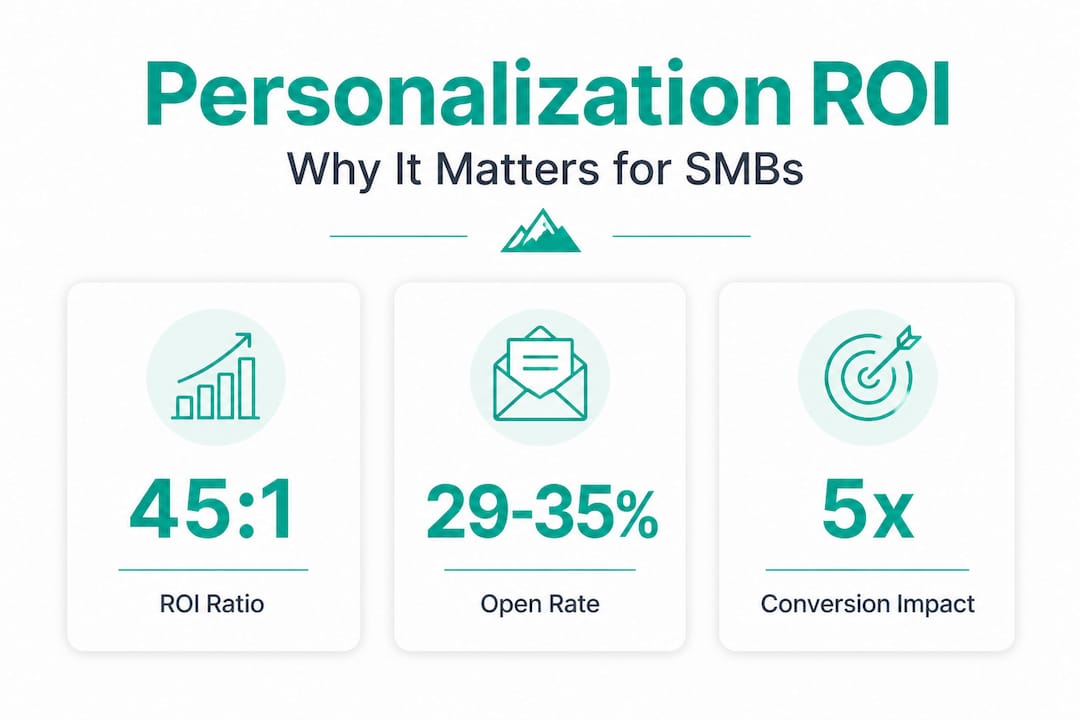
“Personalized emails achieve 6x higher transaction rates compared to generic broadcasts. SMB ecommerce case studies have recorded 156% revenue lifts and 45:1 ROI from AI-driven personalization campaigns.”
Let that sink in. A 45:1 return on investment means that for every $1 you spend, you get $45 back. That is not a one-off anomaly. Across documented personalization case studies, businesses that invest in targeted, behavior-driven campaigns consistently outperform those running generic, one-size-fits-all messaging.
Here is a simple comparison to frame what personalized versus generic campaigns actually look like in practice:
| Metric | Generic campaign | Personalized campaign |
|---|---|---|
| Email open rate | 15-20% | 29-35% |
| Click-through rate | 2-3% | 5-10% |
| Transaction rate | ~1% | Up to 6x higher |
| Revenue per email | Low | Significantly elevated |
| Customer retention | Average | Notably higher |
The logic behind those numbers is straightforward. When someone receives a message that reflects their actual interests and buying behavior, it feels relevant. Relevant content earns attention. Attention leads to clicks. Clicks convert.
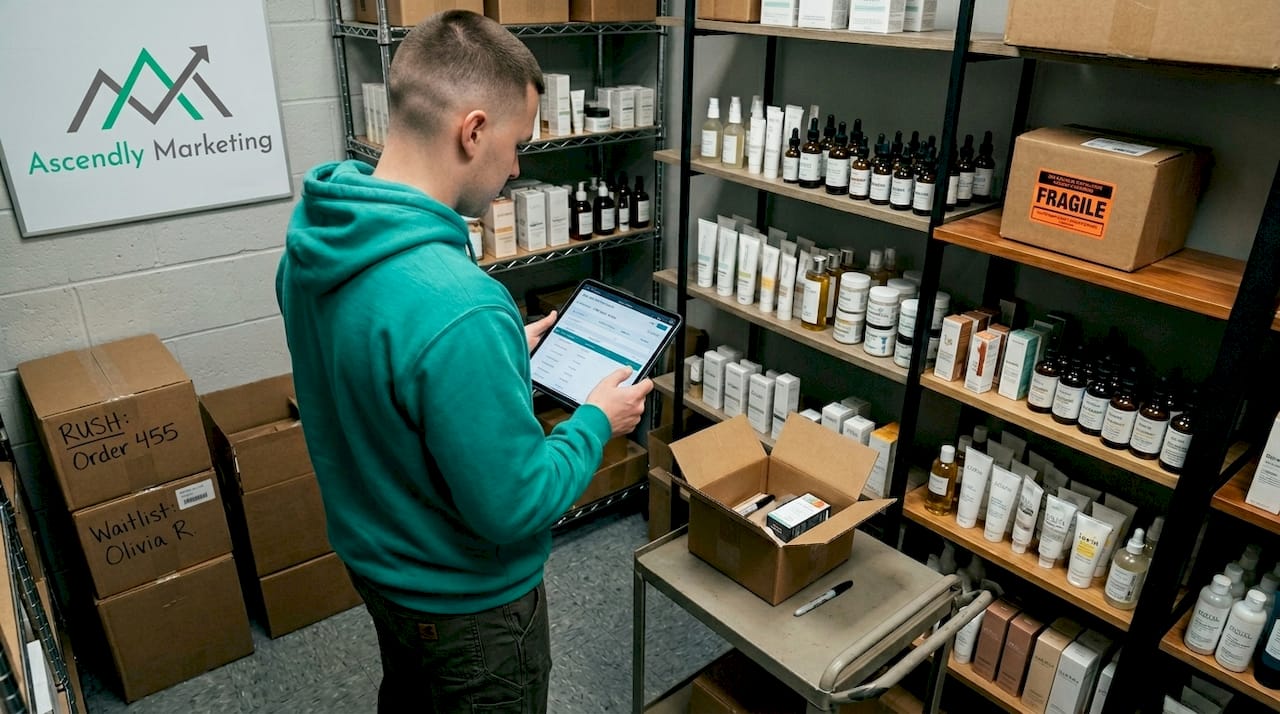
Consider a real-world SMB scenario: a small skincare brand that segments its list into “anti-aging” buyers versus “acne treatment” buyers. Instead of blasting the same newsletter, they send specific product recommendations and how-to content tailored to each group. Their click-through rates double almost immediately. Not because they spent more money. Because they sent smarter messages.
Another example: a local restaurant group sends automated birthday offers to customers within their loyalty program. Open rates on those emails exceed 50%, because people actually want to read something that feels like it was written for them. Check out these email campaign examples to see how these approaches play out in actual campaigns, and use this email marketing guide if you want a step-by-step framework for building your own.
Common obstacles to personalization for SMBs
Understanding the massive upside, it is important to recognize what is holding SMBs back. Because the gap between knowing personalization works and actually executing it is real, and most businesses hit the same walls.
The biggest challenge is data silos. When your email platform, CRM, website analytics, and social ad accounts all live in separate systems that do not talk to each other, building a complete picture of your customer is nearly impossible. You might know someone opened your last email, but you have no idea they abandoned a cart on your website the same day.
Common obstacles SMBs run into include:
- Fragmented data across platforms with no central source of truth
- Limited internal bandwidth to build, test, and optimize campaigns
- Privacy regulations like GDPR and CCPA that restrict how demographic data can be used
- Budget constraints that make enterprise-level personalization tools inaccessible
- Lack of expertise in segmentation strategy and automation logic
It is also worth noting that privacy shifts are fundamentally changing which data matters most. As third-party cookies disappear and regulations tighten, first-party behavioral data is becoming the gold standard. What customers actually do on your website, in your emails, and inside your app is far more valuable and far more compliant than demographic assumptions.
| Obstacle | Impact level | Practical workaround |
|---|---|---|
| Data silos | High | Consolidate data into a CRM with integrations |
| Privacy regulations | Medium-High | Shift to first-party behavioral data collection |
| Limited team capacity | High | Use automation to scale without adding headcount |
| Budget limitations | Medium | Start with affordable tools like Mailchimp or Klaviyo |
| Lack of strategy | High | Follow a tested AI personalization guide |
Understanding your marketing analytics is a necessary first step before any personalization effort scales effectively. You need clean data before you can use it.
Pro Tip: Avoid the trap of trying to personalize everything at once. Attempting to build hyper-individual experiences before your data infrastructure is ready leads to errors, inconsistencies, and customer frustration. Focus on segment vs. individual personalization and choose the approach that matches your current data maturity.
How AI and automation make personalization practical
Finally, let’s demystify how technology is transforming personalization from a headache into an SMB advantage. The good news is that AI-powered tools have made sophisticated personalization accessible without requiring a data science team.
One of the most compelling arguments for AI-driven personalization is the cost benefit. AI personalization reduces paid media waste by 10 to 30%, and businesses using AI-driven personalization tools report 15 to 25% lower customer churn rates. Lower churn means more retained revenue without spending more on acquisition. That math matters enormously for small businesses running on tighter margins.
Here is a straightforward process for getting AI and automation working for your personalization strategy:
- Audit your current data. Identify what customer information you already have in your CRM, email tool, and website analytics. Clean it up before you build on top of it.
- Define your audience segments. Start with two or three clearly differentiated groups based on behavior, purchase history, or stage in the buying journey.
- Choose the right automation tool. Platforms like Klaviyo, HubSpot, and ActiveCampaign are all built with SMBs in mind and offer AI-driven segmentation features.
- Build trigger-based campaigns. Set up automated sequences that fire based on specific actions, like browsing a product category, abandoning a cart, or reaching a purchase milestone.
- Test and iterate. Run A/B tests on subject lines, content formats, and send timing. Let your data tell you what is working, not your gut.
- Measure ROI at the campaign level. Use your marketing ROI calculation process to identify which automations are genuinely paying off and which ones need adjustment.
Common automated personalization campaigns that deliver results for SMBs include:
- Abandoned cart email sequences with product-specific messaging
- Post-purchase upsell and cross-sell recommendations
- Re-engagement emails triggered by customer inactivity
- Behavior-based dynamic website content for returning visitors
- Retargeting ads personalized by browsing history and product interest
AI is also reshaping SEO strategy for small businesses, which connects personalized content strategy with organic search performance in powerful new ways. When your content is relevant and personalized to distinct audience segments, it also tends to rank better because it answers specific questions more precisely.
Pro Tip: Automation is not a “set it and forget it” solution. Review your automated sequences at least quarterly. Customer behavior shifts, products change, and messaging that worked six months ago might feel stale today. Treat automation as a living system that needs regular attention, not a fire-and-move-on campaign.
What most SMBs miss about personalization
Here is where we want to say something most marketing articles skip: the SMBs that win at personalization are almost never the ones trying to do the most.
We have worked with businesses that spent months trying to build perfectly individualized experiences, chasing a 1:1 personalization model they saw written up in enterprise case studies. What happened? The campaigns launched late, the data quality was inconsistent, and the results were underwhelming. Meanwhile, their competitors running clean, well-segmented campaigns with reliable automation were quietly doubling their email revenue.
The uncomfortable truth is that segment-level personalization frequently outperforms individual personalization when data is imperfect, which it almost always is for SMBs. Working with incomplete or messy customer data and trying to personalize at the individual level leads to embarrassing errors. Sending someone a recommendation for a product they already own, or addressing them by the wrong name, or triggering a birthday email on the wrong date, destroys trust faster than any generic campaign could.
There is also a very real risk of over-personalization. When customers feel like you know too much about their behavior, especially details they did not consciously share with you, it crosses from “helpful” into “creepy.” That line is closer than most marketers expect. The backlash from invasive personalization is swift and memorable. Customers do not just unsubscribe. They actively distrust your brand.
The better mindset for most SMBs is to build personalization that feels thoughtful, not intrusive. Thoughtful personalization is based on intent signals customers explicitly give you: what they searched, what they bought, what they opted into. Intrusive personalization is based on inferred data that customers do not realize you have.
Done is better than perfect here. A well-structured email sequence built on three smart segments and triggered by clear behavioral signals will outperform a half-finished AI personalization engine every single time. Use our AI guide for SMBs as a practical reference point for scaling smartly without overcomplicating your approach.
Take your personalized marketing further with Ascendly
Personalization works. The data confirms it, the case studies prove it, and the businesses implementing even basic behavioral segmentation are seeing meaningful gains in engagement and revenue. But knowing the strategy is only half the battle. Execution is where most SMBs stall.
At Ascendly Marketing, we help small and medium-sized businesses turn personalization from a concept into a working system. Our team specializes in integrating your data sources, building automation sequences that actually convert, and optimizing campaigns based on real performance metrics. Whether you are starting from scratch or looking to level up an existing strategy, our digital marketing services are built around what works for businesses your size. Explore our digital strategy for SMBs or start with a consultation to find out exactly where personalization can move the needle for your business today.
Frequently asked questions
How does personalized marketing improve customer engagement?
Personalized marketing targets individual needs and interests, which means recipients receive content they actually care about, resulting in higher open rates, clicks, and purchases. Consumers actively want personalized experiences, and brands that deliver them earn stronger long-term loyalty.
Is personalization possible for small businesses with limited resources?
Absolutely. Automation and AI tools make it possible to deliver personalized campaigns without a large team or enterprise-level budget. AI personalization tools reduce paid media waste by up to 30% and lower churn, meaning they pay for themselves quickly.
What types of data are most useful for personalization?
Behavioral data, such as purchase history, website activity, and email engagement, is your most reliable starting point. Privacy regulations now push marketers toward first-party behavioral data over demographic assumptions, making it both the smarter and more compliant choice.
Can over-personalization hurt marketing performance?
Yes, significantly. When personalization feels invasive or overly targeted, customers disengage or lose trust in your brand. Segment-level strategies often outperform individual personalization, especially when your data is incomplete, and they carry far less risk of creating a negative customer experience.