
You publish solid content, tighten up your service pages, and fix the technical issues. Rankings still stall. A competitor with weaker copy and a stronger backlink profile keeps outranking you.
At that point, most businesses start looking at link-building SEO companies. That search gets expensive fast if you evaluate the wrong things. Slick sales decks, inflated authority metrics, and vague promises about outreach volume are easy to buy and hard to verify. The real question is simpler. How does the agency get links, which pages will those links support, and what business outcome should that work improve?
Poor agency selection creates two problems. First, you waste months on placements that look impressive in a report but do nothing for rankings or revenue. Second, you can inherit risky links from weak sites, paid networks, or irrelevant pages that create cleanup work later.
You also need context before comparing vendors. Some agencies sell links as a standalone deliverable. Others build links as one part of a broader growth program that includes content, CRO, PR, and strategy. If you need help connecting backlinks to pipeline or revenue, start by understanding what a digital marketing agency actually does and whether you want a specialist vendor or a full-service partner.
That difference drives everything. Pricing. Reporting. Content requirements. Speed. Risk.
This list is useful because it is not just a directory. Each company here represents a different model. The smarter way to choose is to compare those models, test their claims, and rule out agencies that hide process, overpromise results, or treat relevance like an afterthought.
If you are still sorting out terms like what dofollow backlinks are, treat that as a hiring filter too. A good partner explains the work in plain English, shows you where links come from, and gives you a clear reason each placement matters.
1. Ascendly Marketing

If you don’t want a narrow link vendor, start with Ascendly Marketing. This is the strongest fit for companies that need links as part of a broader growth program, not as a disconnected monthly deliverable. That distinction matters because links rarely fix weak positioning, weak pages, or weak conversion paths on their own.
Ascendly’s model is practical. The agency combines website design, SEO, PPC, social media, content marketing, PR, video production, email campaigns, cold-email lead generation, and conversion work under one roof. For small and mid-sized businesses, e-commerce brands, B2B teams, startups, and franchisors, that setup solves a common problem. You don’t have one partner writing content, another buying ads, and a third building links with no shared plan.
Why Ascendly stands out
Ascendly uses a clear process: discover, plan, execute, report. That sounds simple because it should be. Businesses hiring link-building SEO companies need clarity on who is doing the work, what assets are required, which pages are being supported, and how progress will be reported.
The agency also positions itself as hands-on and consultative rather than productized. That’s a better model when your backlink strategy needs to support bigger commercial goals like lead generation, local market growth, B2B outreach, or e-commerce revenue.
A few details make Ascendly easier to trust than agencies that only talk in abstractions:
- Integrated execution: Website strategy, SEO, paid media, content, and outreach can be aligned around the same pages and offers.
- Broad client fit: The agency works across e-commerce, B2B, local services, startups, and franchise businesses.
- Transparent workflow: You get a consultation first, then a scoped proposal instead of a mystery package.
- Documented accountability: Reporting is part of the process, not an afterthought.
If you’re comparing full-service agencies, read Ascendly’s own explanation of what a digital marketing agency does and check whether the scope matches what your business needs.
Practical rule: Hire a full-service agency when backlinks are only one part of the problem. If your website, content, offers, or conversion flow are weak, a link-only vendor won’t solve the real issue.
Best fit and tradeoffs
Ascendly makes sense when you need strategic alignment more than link volume. A B2B company that needs authority plus qualified lead generation will likely get more value here than from a per-link marketplace. The same goes for a local or regional business that needs SEO, paid traffic, and a stronger site, all moving together.
The tradeoff is straightforward. Pricing isn’t published, so you’ll need a consultation to get real budget clarity. Very large enterprise buyers should also verify scale and workflow requirements before signing.
For most SMB and lower mid-market teams, though, this is the cleanest option on the list if you want one accountable partner instead of several disconnected vendors.
2. uSERP
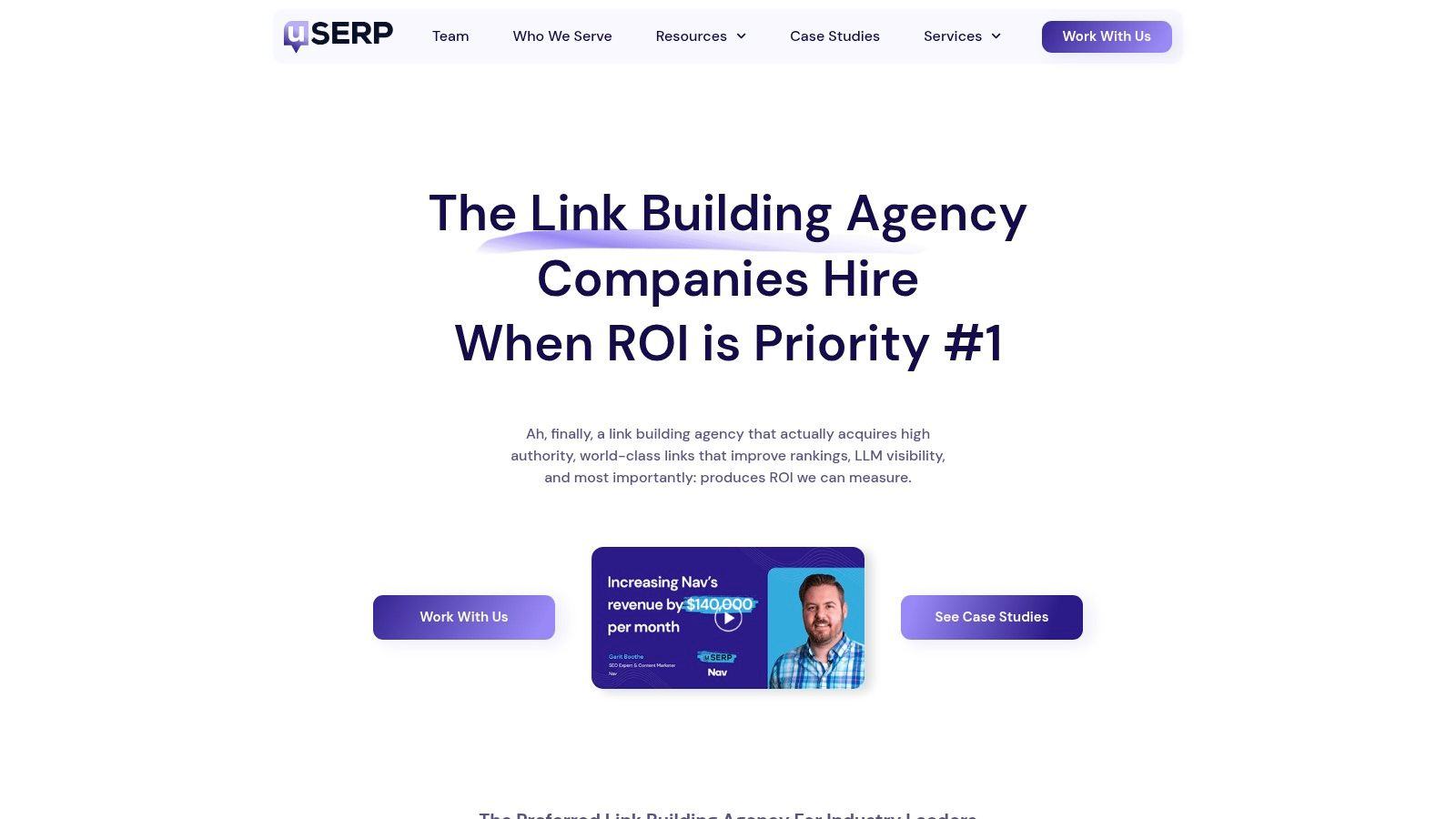
uSERP is for companies that already know what they want from link acquisition. You’re not looking for broad digital marketing support. You want authority placements, a structured process, and a team that’s comfortable working in competitive verticals like SaaS and fintech.
That focus shows up in the agency’s positioning. uSERP leans into high-authority editorial placements, white-hat outreach, and recurring monthly programs rather than one-off link orders. If your internal team already has a solid site, clear target pages, and commercial content worth promoting, that’s a workable setup.
Where uSERP fits best
Some buyers need flexibility. Others need process discipline. uSERP is built for the second group.
Its productized package structure helps businesses compare deliverables before they get on a call. That’s useful if you’ve spent too much time talking to agencies that keep everything vague until late in the sales process. It also helps if your leadership team wants a cleaner procurement process with visible scope and a regular reporting cadence.
The main strength here is operational clarity:
- Package-based engagement: Better for teams that want defined deliverables and less custom ambiguity.
- Authority-first placements: Useful when your priority is trust and competitive positioning.
- Strategy support: Higher tiers include stronger planning inputs rather than just outreach fulfillment.
Companies exploring off-page SEO services will recognize this as a more specialized version of that broader category. uSERP is narrower, more authority-focused, and less suited to businesses that still need help fixing core SEO fundamentals.
Buy from uSERP if your pages are already worth ranking and your team needs stronger external signals to support them.
What to watch
This isn’t a low-budget option. It’s also not designed for businesses that want ad hoc link orders without a broader strategy. If you only need occasional support, the model will feel heavy.
Use uSERP when your internal marketing team can collaborate, supply inputs, and stay consistent over time. Don’t use it as a shortcut around weak content or a thin website.
3. Siege Media
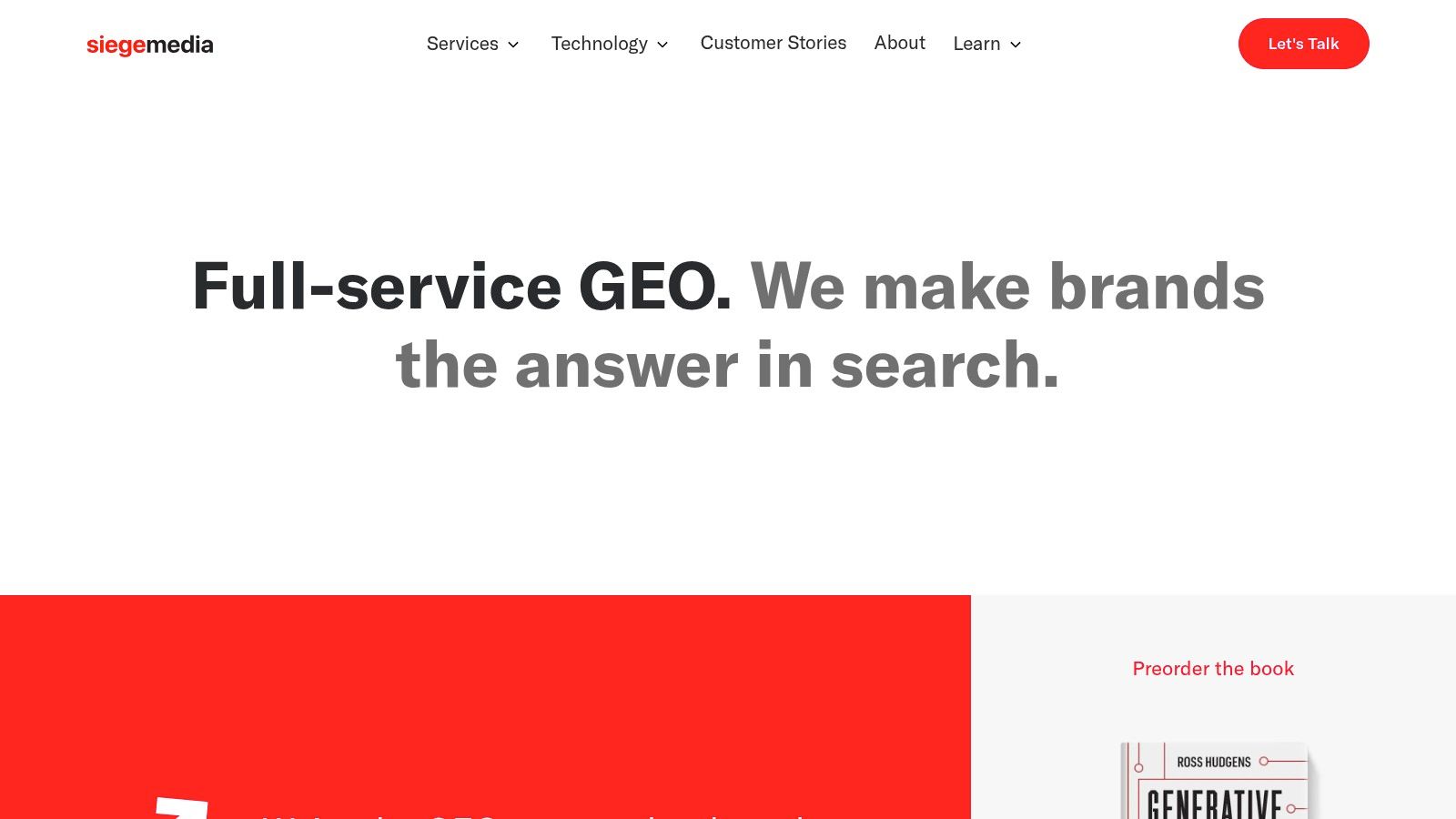
Siege Media sits in a different lane. This is a content and digital PR firm that earns links through campaigns, stories, data-led assets, and brand-safe editorial outreach. If your team keeps asking for “better backlinks” but what you really need is stronger visibility around the brand, Siege is one of the more logical options.
This matters more now because many businesses still evaluate link-building SEO companies as if backlinks exist in isolation. They don’t. Industry coverage has started to frame link building as useful for both traditional search and AI-driven answer platforms, with some agencies shifting toward digital PR and citation-oriented placements rather than simple backlink output. That shift is outlined in a 2026 strategic comparison of link-building services.
What Siege Media is buying you
Siege is a fit when your team wants editorial quality and broader brand visibility, not just more referring domains. The operating assumption is simple. A well-designed campaign can earn links, mentions, and citations at the same time.
That makes Siege a strong match for:
- Established brands: Teams that care about publisher quality and reputation.
- Content-led growth programs: Companies willing to invest in assets that deserve coverage.
- AI visibility goals: Brands that want mentions and authority signals beyond standard SERP competition.
If your company is still building basic service pages, this isn’t the first move. If you already have a real content engine and need links at a higher quality bar, Siege becomes much more attractive.
The tradeoff
You need budget, collaboration, and patience. This isn’t a catalog service where you pick a link tier and check out. Campaign-driven PR takes inputs, approvals, and working assets.
For smaller firms, especially those still validating search as a growth channel, small business SEO services are often the better starting point. For upper mid-market and enterprise brands, Siege makes more sense when authority, editorial standards, and PR quality are paramount.
4. Page One Power
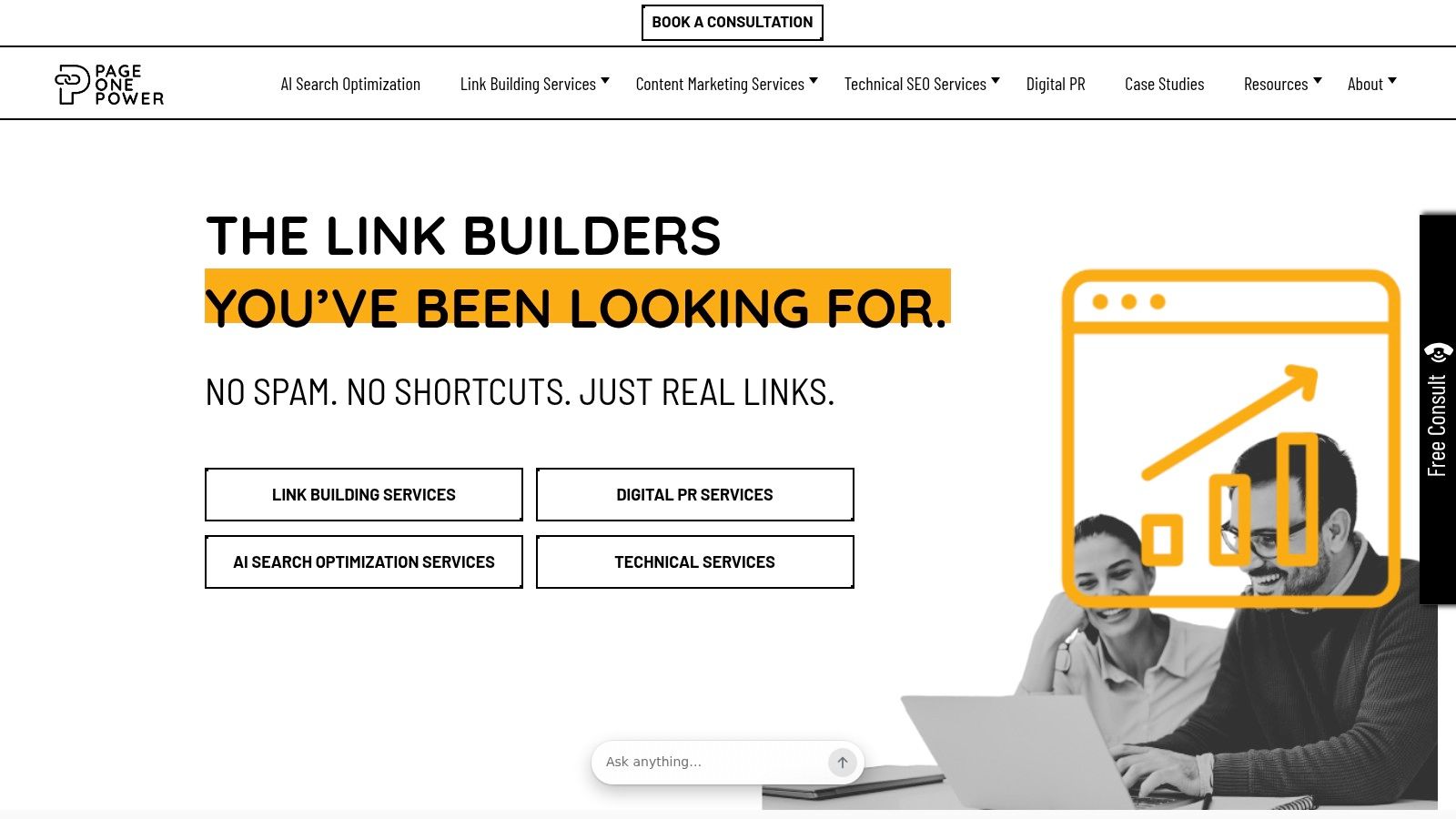
Your SEO lead wants links that help a page rank. Your CFO wants to know why one agency charges more for fewer placements. That is where Page One Power becomes easy to assess.
This agency sells custom outreach built around relevance. That means manual prospecting, niche research, outreach to real sites, and placements tied to the topic and target page. If you are tired of vendors pitching DR screenshots while dodging questions about topical fit, Page One Power deserves a serious look.
What you are really buying
You are not buying cheap volume. You are buying process control.
Page One Power is a stronger fit for companies that want to know how prospects are chosen, why a page is being promoted, and whether the final placement makes sense in context. That matters because a relevant link on a credible niche site often does more for a specific commercial page than a random mention on a bigger domain with no topical connection.
This is also one of the clearer examples of how to evaluate a link-building company. Ask whether the agency can explain its prospecting standards, outreach methods, and quality bar in plain English. Page One Power’s model gives them a fair chance to answer those questions well.
Best fit
Page One Power works best for buyers who care about fit over flash.
- In-house SEO teams: Good for companies that want collaboration on target pages, anchor direction, and campaign priorities.
- Niche businesses: Better suited to categories where industry relevance matters more than publisher name recognition.
- Agencies needing fulfillment: White-label support helps firms that need execution without building an outreach team internally.
What to check before you sign
Custom outreach only works if your site and target pages are ready. If the page is weak, the pitch is weak. If the asset has no clear value, outreach gets harder, and results slow down.
Ask direct questions:
- How do they define a qualified prospect?
- How much of the outreach is manual?
- What does reporting include?
- How long before you should expect placements?
- What happens if your niche has a limited prospect pool?
Those answers will tell you more than a sales deck.
The tradeoff
Page One Power usually makes less sense for buyers looking for a quick test or a high link count at a low monthly spend. Their model takes time, and the longer commitment can frustrate teams that want instant proof.
That is not a flaw. It is a signal.
If your business wants a partner that treats link building like targeted outreach instead of productized inventory, Page One Power is one of the better options on this list. If you want speed, scale, and loose relevance standards, look elsewhere.
5. Stellar SEO
Stellar SEO fits a common buying scenario. Your team already believes link building matters, but you have not settled the operating model. Do you want to buy individual placements with clear deliverables, or do you want an agency to run outreach, planning, and execution for you? Stellar gives you both options, which makes it easier to judge whether the company matches your internal capabilities.
That matters more than a polished sales pitch.
A lot of link-building companies force you into one model and call it strategy. Stellar is more useful than that. If you already have SEO leadership, the per-link option can fill execution gaps. If you need help choosing pages, setting anchor direction, and managing outreach, the managed service is the better fit.
Why Stellar SEO stands out
The practical advantage here is buying clarity. Stellar is more upfront than many agencies about how campaigns are structured and what different service levels look like. That helps you screen them faster.
It also gives you a simple test for evaluating any link-building partner. If an agency avoids direct pricing conversations, stays fuzzy on deliverables, or promises cheap volume without explaining prospect quality, skip them. As noted earlier, quality link acquisition is expensive. Low prices usually mean weaker sites, recycled lists, or loose editorial standards.
Best fit
Stellar works best for businesses that want flexibility but can still make disciplined decisions.
- Per-link buyers: Best for teams with an SEO lead who already knows which pages need support and why.
- Managed campaign buyers: A better fit for companies that want one partner handling strategy, outreach, and reporting.
- Agencies and resellers: White-label support helps firms that need delivery capacity without hiring and training an internal outreach team.
This is a good middle option for companies that have outgrown cheap marketplaces but do not need a full digital PR machine.
What to check before you sign
The dual model is useful, but it creates a risk. Buyers often choose the lighter option because it looks simpler, then end up with links that do not support a clear ranking goal.
Ask direct questions before you commit:
- How do they qualify sites for relevance and traffic quality?
- Can they explain why each target page deserves links now?
- How much control will you have over anchor guidance?
- What reporting do you get for per-link work versus managed campaigns?
- What happens if placements come from sites you would not want associated with your brand?
Those answers will tell you whether Stellar is being used as a tactical vendor or a real partner.
The tradeoff
Stellar is a strong option if you know what you are buying.
The pay-per-link route breaks down fast when the client has no page strategy, no link priorities, and no ranking logic behind the campaign. In that case, managed service is the safer choice. Businesses that want someone to challenge bad assumptions, not just fulfill orders, should insist on that level of involvement from the start.
6. LinkGraph
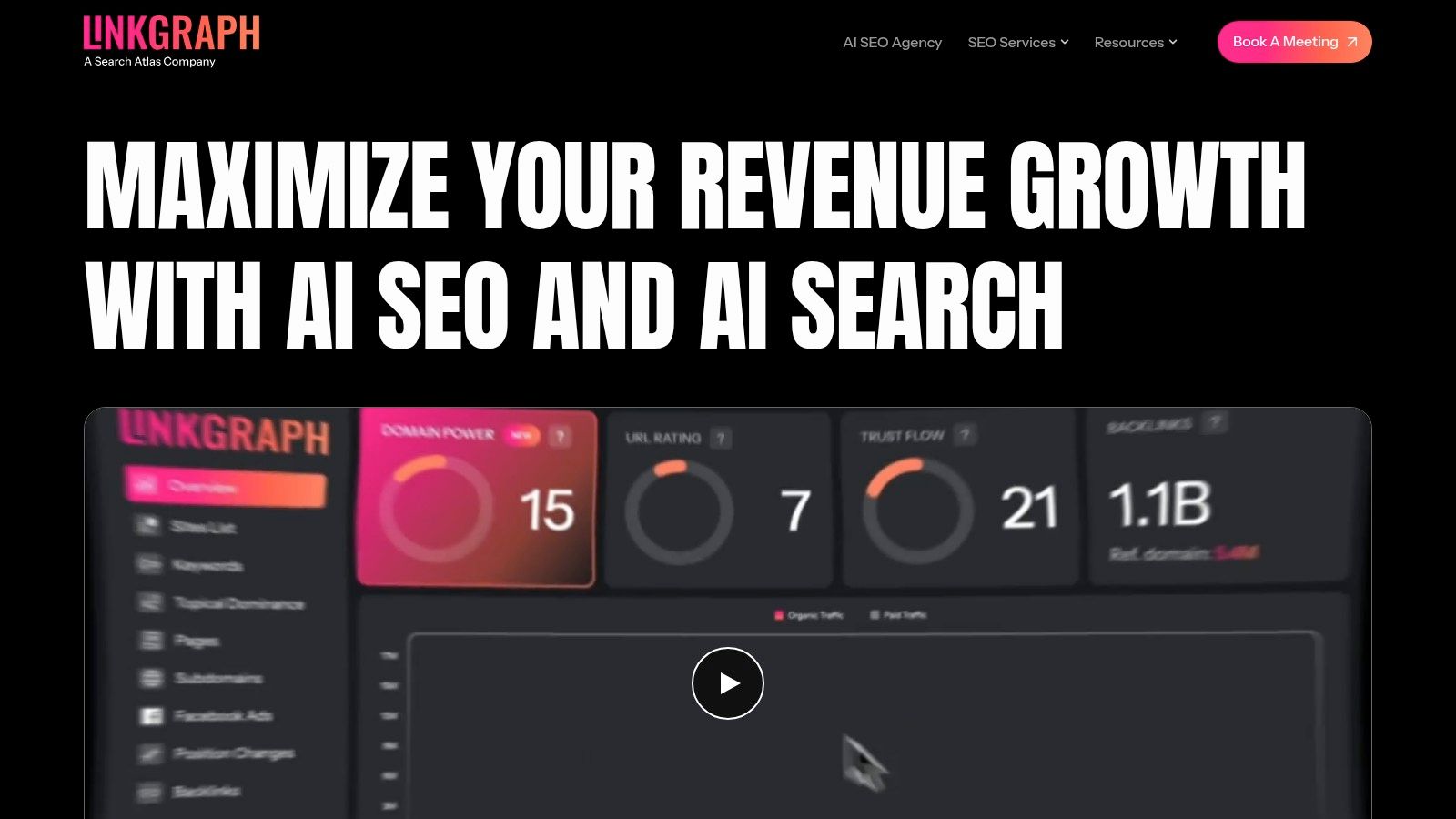
LinkGraph is for companies that want service delivery plus a software layer. That’s the pitch. Managed link building, digital PR, prospecting, analytics, and broader search operations tied together through its platform stack.
This setup appeals to brands that don’t want an agency working in a black box. If your team prefers workflows, dashboards, and platform-assisted oversight, LinkGraph has a more operational feel than a boutique outreach shop.
What makes LinkGraph different
The agency sits at the intersection of service and software. That changes the buying decision. You’re not only choosing outreach capability. You’re also deciding whether platform-enabled visibility, monitoring, and process support matter to your team.
That can be useful for multi-location brands, e-commerce teams, and larger B2B companies that need more than a handful of backlinks each month. It also aligns with the growing overlap between classic SEO, citations, digital PR, and AI visibility programs.
Independent directories show how large and fragmented this space has become. Semrush’s directory lists 888 link-building companies worldwide, and Clutch’s ranking pages surface many specialist agencies with different positioning around manual outreach, editorial placements, and white-hat acquisition. That broader market view is summarized on Clutch’s link-building agency category page.
Best fit
LinkGraph is a sensible choice if you want breadth:
- Managed outreach and PR
- Software-assisted prospecting and analytics
- Local SEO and citation support
- Support for broader authority-building workflows
If your internal team wants one vendor to cover several adjacent functions, this can reduce operational sprawl.
The more locations, teams, and stakeholders you have, the more useful process visibility becomes.
Where it may be too much
Very small businesses may not need this much infrastructure. If you’re only trying to build authority for a handful of core pages, the platform angle may add complexity without adding enough value.
For larger organizations, though, the blend of services and software is a real differentiator.
7. The HOTH
The HOTH works for buyers who want speed, menu-based options, and easy ordering. It has a large self-serve catalog, supports managed programs, and offers different types of link products, content, and local citation services. For agencies, resellers, and SMBs that need fulfillment flexibility, that’s attractive.
This is the most marketplace-like option on the list. That can be a strength or a weakness depending on how disciplined your buying process is.
When The HOTH makes sense
The HOTH is useful when you need simple procurement. You can review services, compare tiers, and move quickly. That’s better than long custom sales cycles if your team already understands what you need and just wants execution capacity.
The model also fits white-label partners and agencies that need scalable production support without building everything in-house.
A practical use case looks like this:
- Need one-off support: Buy specific services without committing to a large campaign.
- Need breadth: Combine links, content, and local support in one vendor relationship.
- Need scalability: Use the catalog to support repeatable delivery.
The real risk with self-serve providers
Package variety creates choice, but it also puts more burden on the buyer. Not every tier will match your quality standard. Some packages may be fine for one business and a poor fit for another.
That’s why evaluation discipline matters. Industry roundups note that buyers struggle to judge quality, transparency, and specialization before purchasing, especially when services range from bespoke outreach to white-label and packaged offerings. That problem is discussed in Senthil’s roundup of link-building agencies around the world.
If you use The HOTH, inspect target sites carefully and don’t confuse convenience with strategy.
Top 7 Link-Building SEO Companies Comparison
| Agency | Implementation complexity | Resource requirements | Expected outcomes | Ideal use cases | Key advantages |
|---|---|---|---|---|---|
| Ascendly Marketing | Moderate–high (multi-channel integrated programs) | Custom project budgets, ongoing collaboration | Measurable traffic, leads, conversions | SMBs, e-commerce, B2B, local services, startups | Full-service integration, multidisciplinary team, transparent reporting |
| uSERP | Low–medium (productized link acquisition) | Monthly minimums, content for outreach | High-authority editorial links, improved page authority | SaaS, fintech, growth-stage brands | Published tiers, DR60+ focus, KPI dashboards |
| Siege Media | High (data-driven PR campaigns at scale) | Large budgets, extensive content/PR inputs | Large-scale earned media, top-tier editorial links, AI visibility | Enterprise and upper-mid brands seeking brand-safe coverage | Big media footprint, newsroom-style storytelling, proven case studies |
| Page One Power | Medium (manual, relevance-first outreach) | Six-month commitments, hands-on collaboration | Niche-relevant editorial links, steady link gains | Brands prioritizing topical relevance and close collaboration | Relevance-first approach, transparent quotas, experienced team |
| Stellar SEO | Flexible (per-link or managed options) | Published pricing bands, strategy planning required | Scalable link building with site-quality screening | Regulated/competitive niches, agencies needing flexibility | Clear public pricing, flexible engagement models, white-label options |
| LinkGraph | High (service + platform-enabled workflows) | Custom proposals, platform adoption, mid–enterprise budgets | Enterprise-grade links, analytics, local & AI/LLM visibility | Brands wanting service+software and multi-location support | Integrated tech + services, outreach orchestration, broad service breadth |
| The HOTH | Low–medium (self-serve + managed) | Variable budgets, quick onboarding, asset submission | Fast fulfillment, mixed-quality link placements, scalable reselling | SMBs and agencies needing fast, scalable orders or white-labeling | Large self-serve catalog, transparent examples, easy scalability |
Your Decision Checklist: How to Hire the Right Agency
You’re on a sales call. One agency promises authority links at scale. Another talks about digital PR. A third shows a catalog with fixed prices and fast turnaround. All of them call it link building. Those are different delivery models, and hiring gets easier once you judge the model before the pitch.
Use the shortlist that way. Ascendly Marketing fits companies that need one partner across SEO, content, paid media, site performance, and lead generation. uSERP suits brands that want recurring authority-focused campaigns. Siege Media is a fit for content and PR-led link acquisition. Page One Power is the choice for manual, relevance-first outreach. Stellar SEO offers flexible buying and white-label options. LinkGraph combines agency execution with software. The HOTH is built for speed, volume, and simple ordering.
Start with the proposal.
If it spends more time on domain metrics than on target pages, outreach methods, editorial standards, and reporting, slow the process down and ask better questions. A serious proposal should show which pages they plan to build links to, what kinds of sites they pursue, how they judge relevance, how they handle outreach, what they report each month, and what they need from your team to produce results.
Then match the agency to your stage, not to the nicest sales deck.
- If your SEO foundation is weak, hire a broader growth partner. Links alone will not fix bad pages, weak content, or conversion issues.
- If your content is solid but your authority is lagging, hire a specialist outreach agency with a repeatable placement process.
- If your brand needs press, mentions, and broader visibility: hire a digital PR firm.
- If your team wants simple procurement and fast fulfillment, use a catalog provider, then review placement quality yourself.
As noted earlier, outsourcing link building is common. The challenge is separating process-driven firms from inventory resellers. One builds placements through targeting, outreach, and editorial judgment. The other sells access to a list.
Ask direct questions on every call:
- Show sample placements: ask for live examples in or near your niche, not a logo wall.
- Explain outreach: ask whether they pitch publishers manually, use existing relationships, or pull from inventory.
- Define relevance: ask how they decide a site is a fit for your target page.
- Clarify reporting: ask if they report live URLs, target pages, anchor usage, and placement context.
- State exclusions: ask which tactics they will not use.
A second filter is category fit. Report Card’s agency roundup breaks providers into relevance-first outreach, content-driven digital PR, and integrated SEO/PR models in its top link-building companies roundup. Use that framing to compare how an agency operates, not just what it charges.
If you run an agency, apply the same standard to your vendor bench. Your clients care about trust, clarity, and measurable value. This guide on how to get SEO clients is useful because it shows how buyers evaluate service businesses before they sign.
Your final decision should feel boring. Clear process. Clear fit. Clear reporting. Hire the agency that answers hard questions without hiding behind jargon.
If you want one partner that can handle backlinks, SEO, website performance, paid media, content, and lead generation without splitting strategy across multiple vendors, talk to Ascendly Marketing. Their consultative process is built for businesses that want accountable execution, clear reporting, and marketing that supports revenue instead of vanity metrics.