
TL;DR:
- Content creators in 2026 serve as strategists, combining creative media production with data analysis to achieve measurable brand outcomes. Brands now prioritize engagement quality and community relevance over follower counts, emphasizing long-term relationships and conversion metrics. Building structured, indexable content and owned audiences is essential for lasting impact and AI discoverability in the evolving digital landscape.
Content creators are defined as professionals who produce blogs, videos, social posts, and multimedia assets that connect brands with audiences while tracking engagement metrics to measure and refine impact. The role of content creators has expanded far beyond writing captions or filming product demos. Today, creators function as strategists, analysts, and community architects who sit at the intersection of storytelling and data. Platforms like TikTok, YouTube, and Instagram have raised audience expectations, and brands now rely on creators to deliver not just reach but measurable business outcomes. Understanding what this role actually demands in 2026 is the first step toward doing it well.
What does the role of content creators actually involve?
Content creators combine creative media production with analyzing digital engagement metrics to connect consumers with brands. That definition sounds clean, but the daily reality is considerably more complex. A creator working with a brand in 2026 is simultaneously a producer, editor, data analyst, and community manager, often within the same workday.
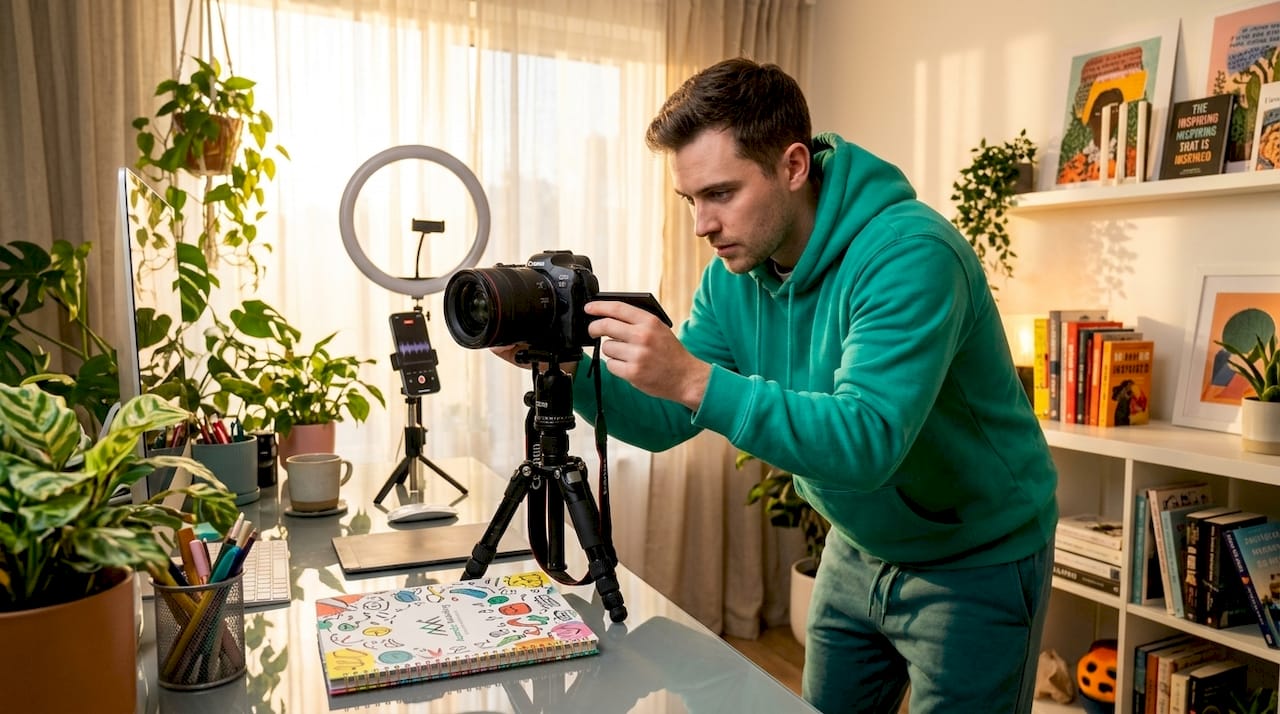
The creative side of the job covers ideation, scripting, filming or writing, editing, and publishing across multiple platforms. Each platform demands a different format. A YouTube tutorial requires a different structure than a TikTok clip or a LinkedIn article. Creators who produce multimedia content also manage editorial calendars, monitor trends, and coordinate with brand teams to stay on message without losing their authentic voice.
The analytical side is equally demanding. Creators track views, watch time, click-through rates, saves, and shares to understand what resonates. They use dashboards inside YouTube Studio, Meta Business Suite, and third-party tools to identify patterns and adjust their content strategy accordingly. Creators transform audience data into both media and strategic decisions, tightly coupling creativity with analytics. That coupling is what separates a hobbyist from a professional.
Operational responsibilities round out the picture. Scheduling posts, managing content rights, handling brand collaboration agreements, and organizing attribution workflows are all part of the job. Creators who ignore these operational layers often find themselves in legal gray areas or lose brand partnerships due to disorganized delivery.
Pro Tip: Build a simple content operations document that tracks every asset you produce, the platform it lives on, the rights status, and the performance metrics. Tools like Notion or Airtable make this manageable even for solo creators.
How are brands shifting expectations beyond follower counts?
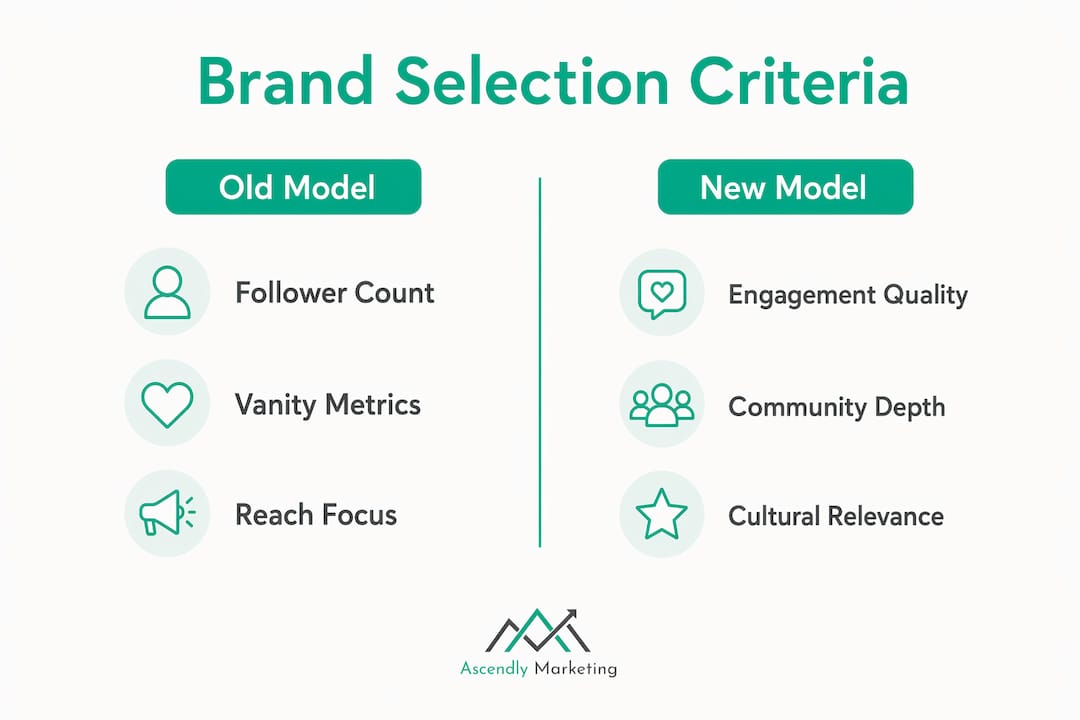
Brands increasingly select creators based on engagement quality, community depth, and cultural relevance rather than follower counts alone. This shift is one of the most significant changes in creator marketing over the past three years. A creator with 50,000 highly engaged followers in a specific niche can outperform a creator with 2 million passive followers on conversion metrics.
The reason is trust. Audiences follow niche creators because they genuinely value their perspective. When that creator recommends a product, the recommendation carries weight. Viral content, by contrast, often reaches people who have no prior relationship with the creator and no reason to act on what they see. Brand marketing values community relevance over viral popularity, and that shift is reshaping how partnerships are structured and priced.
The table below illustrates how brand selection criteria have evolved.
| Selection factor | Old model (pre-2023) | New model (2026) |
|---|---|---|
| Primary metric | Total follower count | Engagement rate and community depth |
| Content value | Reach and impressions | Conversions and audience trust |
| Partnership length | One-off campaigns | Long-term ambassador relationships |
| Performance measure | Social platform metrics | Revenue attribution and sales data |
Brands amplify creator content with paid promotion and demand measurable business outcomes beyond social metrics. This means creators need to understand how their content fits into a broader digital sales funnel, not just how it performs on a single platform. Creators who can speak the language of conversion rates and revenue attribution are the ones landing the most valuable brand deals in 2026.
What strategies build a repeatable and monetizable content system?
The 2026 creator model emphasizes building a repeatable publishing system that converts trust into monetizable outcomes. Chasing viral hits is a losing strategy for long-term income. The creators generating sustainable revenue are the ones who treat content creation as a system, not a series of one-off bets.
Here is the framework that works:
Define your niche with precision. “Fitness” is not a niche. “Strength training for women over 40” is. The tighter your focus, the more your audience trusts that you understand their specific situation. Niche clarity also makes brand partnerships easier to pitch and easier to price.
Build a publishing schedule you can actually sustain. Consistency beats frequency. Publishing three high-quality pieces per week for a year outperforms publishing daily for a month and then burning out. Use a content calendar in tools like CoSchedule or Trello to plan at least two weeks.
Analyze what performs and double down. Review your analytics every two weeks. Identify which formats, topics, and posting times generate the most engagement and conversions. Then produce more of what works rather than experimenting endlessly with formats that underperform.
Diversify your income streams. Monetization for creators in 2026 centers on trust-based income from multiple streams, including affiliate marketing, brand deals, platform payouts, owned products, and services. Relying on a single revenue source, such as YouTube ad revenue, leaves creators exposed to algorithm changes and platform policy shifts.
Build an owned audience. An email list or a private community on platforms like Circle or Substack gives you direct access to your audience regardless of what any social platform decides to do with its algorithm. This is the most underutilized asset in most creators’ businesses.
Pro Tip: Treat your content like a product portfolio. Some pieces are designed for discovery (SEO articles, YouTube tutorials), some for conversion (email sequences, product demos), and some for retention (community posts, newsletters). Knowing which role each piece plays makes your system far more intentional.
You can find practical content creation ideas for building this kind of system across different formats and platforms.
How is AI reshaping the impact of content creators in search?
Creators power AI training through content and audience feedback loops, representing a critical segment of internet-dependent jobs. This is not a future trend. It is happening now, and it changes what content creators need to produce and how they need to structure it.
Generative engine optimization, known as GEO, is the practice of structuring content so that AI systems like ChatGPT, Perplexity, and Google’s AI Overviews can find, cite, and surface it in generated answers. GEO is reshaping discovery, requiring newsroom-style framing and multi-channel syndication. Creators who only publish on social platforms are invisible to these systems. Creators who publish structured, indexed, and citable content on their own websites or through editorial outlets are the ones appearing in AI-generated answers.
The table below shows how content formats differ in AI discoverability.
| Content format | AI discoverability | Longevity | Brand authority signal |
|---|---|---|---|
| TikTok video | Low | Days to weeks | Low |
| Instagram Reel | Low | Days | Low |
| YouTube video (with transcript) | Medium | Months | Medium |
| SEO blog post | High | Years | High |
| Structured editorial article | Very high | Years | Very high |
AI-driven search rewards creators who produce structured, indexable, and credible content, yielding durable authority beyond social feeds. For digital marketers, this means the importance of content creators now extends to shaping how a brand appears in AI-generated answers, not just in social feeds or traditional search results. Creators who understand SEO and content discoverability are becoming strategic assets rather than tactical execution resources.
The practical implication is clear. Creators need to think like journalists and editors, not just social media personalities. That means writing with clear structure, citing sources, using descriptive headings, and publishing content that lives on indexable URLs rather than disappearing into a feed after 48 hours.
Key takeaways
The role of content creators in 2026 is defined by the combination of creative production, analytical decision-making, and structured content strategy that drives measurable brand outcomes across both social and AI-powered discovery channels.
| Point | Details |
|---|---|
| Creators are strategists, not just producers | Effective creators analyze engagement data and adjust strategy, not just publish content. |
| Engagement quality beats follower count | Brands now prioritize community depth and conversion rates over raw audience size. |
| Repeatable systems drive sustainable income | Consistent publishing, niche focus, and diversified revenue streams outperform viral tactics. |
| AI discoverability requires structured content | SEO articles and editorial content appear in AI-generated answers; social posts do not. |
| Operational skills protect creator-brand relationships | Rights management and attribution workflows are non-negotiable for long-term partnerships. |
What I’ve learned about building creator impact that actually lasts
At Ascendly Marketing, we have worked with content creators and brand marketing teams since 2013, and the single biggest mistake we see is treating content creation as a volume game. More posts, more platforms, more formats. The creators who burn out fastest are almost always the ones optimizing for output rather than outcomes.
The creators who build lasting impact do something different. They pick a lane, get genuinely good at serving a specific audience, and build infrastructure around that focus. They use analytics not to chase trends but to understand what their specific audience actually responds to. They treat brand partnerships as long-term relationships rather than one-time transactions.
The AI shift is real, and it matters more than most creators realize. Social media automation tools can help manage publishing workflows, but no tool replaces the judgment required to produce content that earns citations in AI-generated answers. That requires genuine expertise, clear structure, and a commitment to publishing content that lives beyond the feed.
Our honest observation after years of working in this space: the creators who will define the next decade are the ones building owned audiences, producing structured content, and measuring their work against business outcomes rather than vanity metrics. Virality is a lottery. A well-built content system is a business.
— Ascendly
How Ascendly Marketing supports your content strategy

Building a content system that drives real business results requires more than a publishing schedule. At Ascendly Marketing, we help content creators and digital marketers build strategies that connect creative production with measurable outcomes. Our team covers content marketing, SEO, social media management, and paid advertising, all designed to make your content work harder across every channel, including AI-powered search. Whether you are a solo creator building your brand or a marketing team looking to scale content impact, our digital marketing services are built to deliver results you can measure. Explore how we approach content strategy and see what a focused, data-driven content program can do for your growth.
FAQ
What is the role of content creators in digital marketing?
Content creators produce blogs, videos, social posts, and multimedia assets that connect brands with audiences while tracking engagement metrics to measure impact. Their role extends to audience analysis, brand alignment, and increasingly, shaping brand visibility in AI-powered search results.
What are the core content creator responsibilities in 2026?
Core responsibilities include ideation, multimedia production, editing, scheduling, performance analysis, and rights management. Creators also optimize content for platform-specific algorithms and structure materials for AI discoverability through generative engine optimization.
How do you become a content creator with a sustainable income?
Building sustainable income requires defining a precise niche, maintaining a consistent publishing schedule, and diversifying revenue across affiliate marketing, brand deals, platform payouts, and owned products or services. Relying on a single income stream leaves creators exposed to platform changes.
Why do brands care more about engagement than follower counts now?
Brands have found that creators with smaller, highly engaged audiences generate stronger conversion rates and more credible recommendations than creators with large but passive followings. Community depth and cultural relevance now drive partnership selection and pricing.
How does AI search change the importance of content creators?
AI systems like ChatGPT and Perplexity cite structured, indexed content rather than social posts, meaning creators who publish SEO-optimized articles and editorial content gain durable visibility in AI-generated answers. Creators who only publish on social platforms are largely invisible to these discovery systems.