

You search your business name and see the problem immediately. A one-star review sits near the top. A forum thread shows up next. Then an old complaint on a directory you forgot existed. Most owners react in one of two ways. They either fire off angry replies or they freeze and hope the issue fades on its own.
Both responses make the situation worse.
Online reputation repair works when you treat it like incident response. You assess what’s visible, decide what can be removed, strengthen what you control, and keep measuring until the search results and review profiles stop working against you. The work is part customer service, part SEO, part content strategy, and part discipline. For ongoing business review monitoring and response support, explore Ascendly’s online reputation management services.
Conducting Your Initial Reputation Triage
The first bad result usually isn’t the whole problem. It’s the first one you noticed.
A local service business owner once described the moment well: the review wasn’t what rattled him. The shock came from realizing that a prospect would probably see the same thing before ever calling. That’s the right instinct. Between 31.9% and 35% of consumers have decided against doing business with a company based on a single negative review, and around 74% of potential customers won’t proceed with a purchase if they encounter negative content on the first page of search results, according to online reputation statistics compiled here.
Start with search, not feelings
Open an incognito browser. Search for:
- Your brand name plus common variations and misspellings
- Your product or service names
- Your founder or executive names
- Brand plus review, brand plus complaint, and brand plus scam
Do the same on Google Maps, Google Business Profile, Yelp, Facebook, LinkedIn, Reddit, YouTube, and any industry directory where customers leave comments.
Don’t argue with what you find yet. Log it first.
Build a working inventory
Use a spreadsheet or Airtable. Each row should include the page title, URL, platform, whether the content is positive, neutral, or negative, whether you control it, and whether it ranks for a branded search. Add screenshots. If a listing changes later, you’ll want the original record.
Sort what you find into three buckets:
Immediate commercial risk
Pages that rank on page one for your brand, especially reviews and complaint threads.Reputational drag
Old, low-quality directory pages, unanswered reviews, abandoned social profiles, and inaccurate listings.Background noise
Content that exists but doesn’t rank or influence buyers much right now.
Practical rule: If a negative asset ranks for your business name and a prospect can see it before contacting you, treat it as a sales problem, not a branding problem.
Identify the source before you pick the tactic
Not all negative content works the same way. A legitimate unhappy customer review needs one response. A false accusation on a forum needs another. A news article won’t be handled like a Google review. A ripoff site, an ex-employee post, and a Reddit thread each require different playbooks.
Ask four questions for every item:
- Who published it
- Why it exists
- Whether platform rules might support removal
- Whether the underlying issue is still happening
That last question matters more than most owners want to admit. If the complaint is accurate, online reputation repair starts inside the business. Fix the service failure, billing issue, delivery problem, or communication gap. If you don’t, you’ll spend money suppressing one result while new ones keep appearing.
The Content Removal and Mitigation Playbook
Most businesses jump straight to suppression because it feels productive. Build some pages, post on social media, publish a press release, and hope the bad result drops. That approach is incomplete. Start with removal when removal is realistic. Use suppression when removal isn’t available.
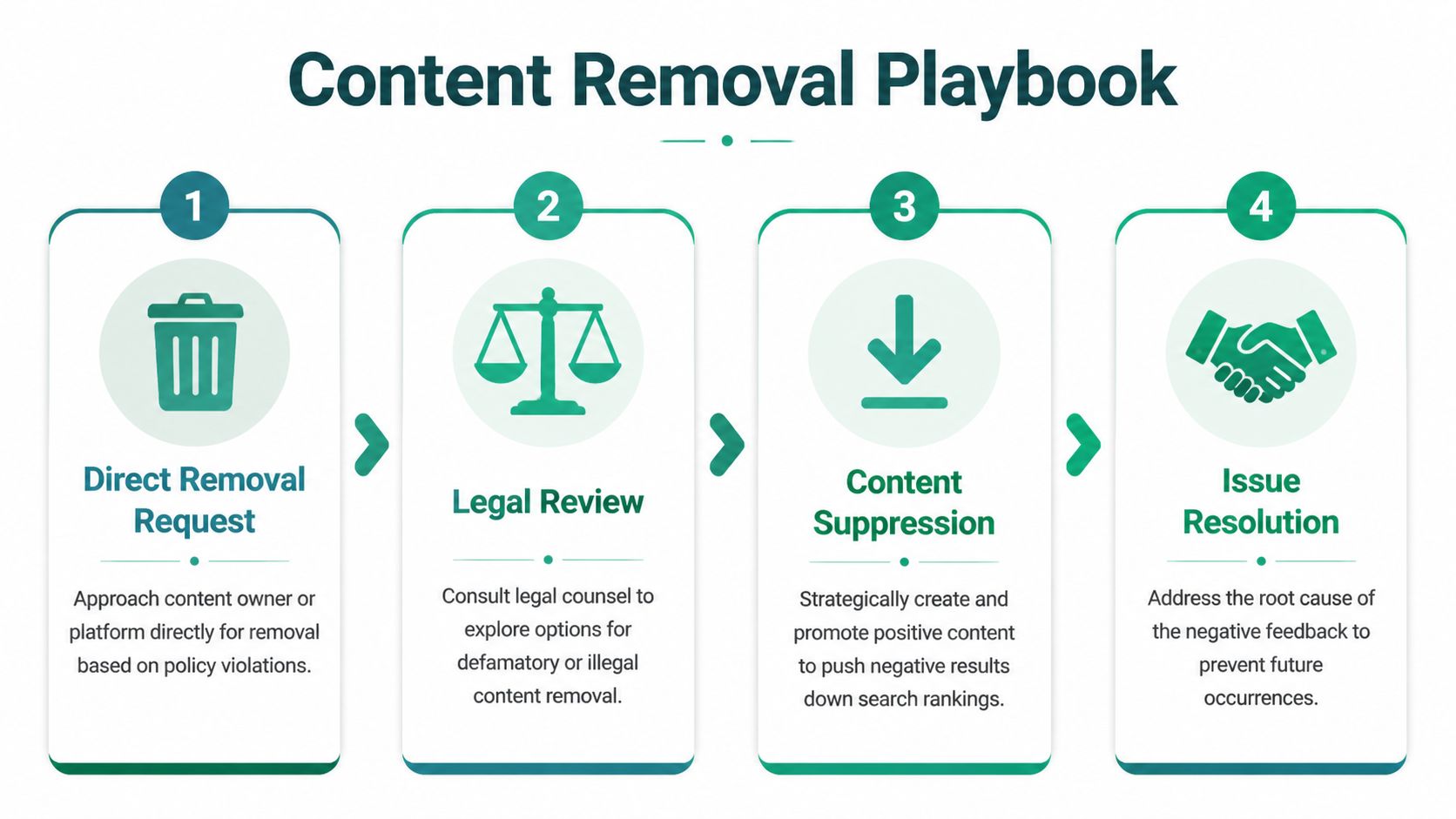
Online reputation repair specialists use a tiered removal strategy. The sequence is direct outreach, legal assistance, technical removal, and then content suppression. Case data cited in this analysis of reputation repair methodology shows that approximately 25% of negative content can be removed within a four-week timeframe when a multi-layered process is used.
Direct outreach first
This is the cheapest path and often the fastest.
If the issue is a review, respond professionally in public, then try to resolve it offline. If the content sits on a small blog, forum, or local directory, contact the owner or moderator. Keep the message short. Point to the specific problem. If there’s a factual error, document it. If there’s a privacy issue or a terms violation, cite the platform rule.
What works:
- Specific requests that identify the exact URL
- Proof such as screenshots, invoices, timestamps, or platform policy references
- Calm tone that gives the publisher a clean path to cooperate
What fails:
- Threats in the first email
- Long emotional explanations
- Copy-paste legal language sent without context
Move to legal review when the content crosses the line
Some content isn’t just unpleasant. It may be defamatory, impersonating, invasive, or unlawful. That’s when counsel should review it. Legal help is not a first move for every bad review, but it becomes necessary when false statements create real commercial damage or when a publisher refuses to remove clearly improper material.
If you operate in or deal with Israeli law, navigating Israeli business defamation is a useful reference point for understanding how these disputes are framed.
Here’s the trade-off. Lawyers can increase pressure, but they can also escalate conflict if the content is merely negative rather than unlawful. Use legal pressure where the facts support it.
Use platform and technical removal where policy applies
Search engines, review sites, and hosts each have separate rules. Your removal request should match the actual violation. Don’t ask a platform to remove content because it’s unfair. Ask because it breaks a stated policy.
Good candidates for platform review include:
- Impersonation
- Doxxing or exposing personal information
- Fake reviews
- Harassment
- Clear terms-of-service violations
When the issue is a search result rather than the page itself, a specialized process may be needed. A practical overview of those tactics appears in this guide to removing negative search results.
Removal requests fail when the argument is emotional. They succeed more often when the request maps cleanly to a policy.
Suppression is the fallback and the long game
If a review is legitimate or a news article won’t come down, you push it lower with stronger assets. That means branded pages, social profiles, executive bios, service pages, press mentions, and supporting content that deserves to rank.
Suppression isn’t hiding the truth. It’s making sure a single old complaint doesn’t define your brand forever.
Repairing Your SEO and Review Profiles
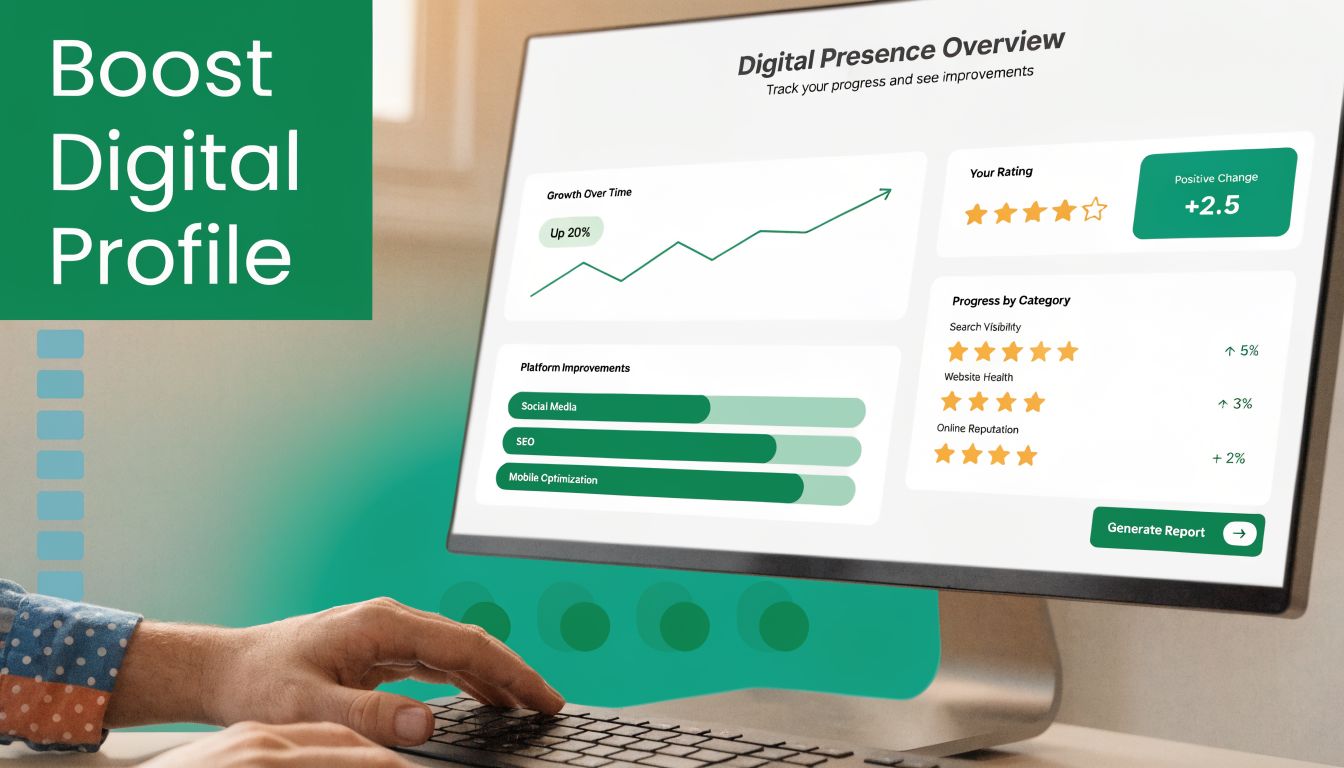
Once removal work is underway, strengthen the properties you already own. This effort often determines whether many repair campaigns either gain traction or stall. If your website is weak, your profiles are incomplete, and your review pages look abandoned, negative content has too much room to rank.
Tighten your branded search footprint
Search your company name and ask a blunt question: Do your own assets dominate the page?
If they don’t, fix the basics first:
Homepage signals
Your business name should appear clearly in the title tag, homepage heading, meta description, and footer details.Profile consistency
Google Business Profile, LinkedIn, Facebook, YouTube, and directory listings should use the same business name, category, and contact details.Entity clarity
Publish an About page, leadership bios, contact page, and location details that remove ambiguity about who you are.Indexable assets
Build or improve branded pages that can rank, including testimonial pages, case study pages, FAQ pages, and media mentions.
A thin site won’t defend your reputation. A well-structured one can.
Clean up your review operations
Many owners treat reviews as customer service leftovers. That’s a mistake. Review platforms are public conversion pages.
Respond to every review, but don’t use the same script each time. Thank satisfied customers with a specific reference to their experience. For negative reviews, acknowledge the issue, avoid arguing facts in public, and offer a direct contact path. Never post a defensive essay. Prospects read the tone more than the details.
Then build a review request system. Ask recent satisfied customers while the experience is still fresh. Use email, SMS, or a post-service follow-up page. Make it easy. One click to the review platform is better than three.
A practical framework for that process appears in these strategies to boost your Google reviews.
A review profile looks healthier when recent, specific, credible feedback outweighs old complaints. That doesn’t happen by accident. Staff have to ask, and the request has to be part of the workflow.
Strengthen the pages that already have authority
Don’t only create new assets. Improve the ones that already rank.
| Asset | What to improve |
|---|---|
| Google Business Profile | Business description, service details, photos, Q&A, regular review responses |
| LinkedIn company page | Clear company summary, updated branding, leadership links, recent posts |
| About page | Leadership credibility, process details, trust signals, contact information |
| Directory listings | Accurate categories, business hours, descriptions, and duplicate cleanup |
This video gives a useful visual perspective on reputation-focused digital presence work:
Deploying Proactive Content and PR Strategies
A repaired reputation stays fragile if all you did was answer reviews and clean up profiles. You need fresh assets that tell a stronger story than the negative material ever did.
Online reputation repair then stops being defensive and becomes durable.
According to research on the business impact of online reputation, a one-star increase in a Yelp rating can correlate with a 5-9% revenue increase; only 17% of companies actively manage their reputation, and 57% of consumers will only buy from businesses with four or more stars. That creates a simple business case. If competitors aren’t managing this well, consistent reputation work becomes an advantage, not just a cleanup exercise.

Publish assets that can rank and persuade
Not all positive content helps. Thin announcements and empty brand posts rarely move search results.
The assets that do help usually have one of these jobs:
Credibility pages
Leadership bios, certifications if verified, process pages, service explainers, and detailed About content.Proof pages
Customer stories, project breakdowns, testimonial pages, and review roundups using real customer language.Third-party mentions
Podcast appearances, guest articles, interviews, trade publication quotes, association listings, and local press coverage.Current updates
Hiring news, product changes, community involvement, FAQs, and issue-response pages when a public concern needs a formal answer.
Build for branded search first
When people search your business name, you’re not competing on generic SEO alone. You’re competing for control of a very specific set of results. That changes the content plan.
Write content around your brand, leadership, services, and market expertise. Create pages that answer the exact searches a skeptical buyer will make after seeing a complaint. If someone searches your brand plus “reviews,” your site should have enough relevant, trustworthy pages to compete for that attention.
Use PR with restraint
Press outreach helps when there’s a real story. It hurts when the pitch is forced.
A few examples of PR angles that work in reputation rebuilding:
- A substantive business update that changes how the market sees you
- Expert commentary from a founder or executive on an industry issue
- A useful local or trade story tied to customer impact
- A transparent response when a public issue needs context and accountability
What doesn’t work is blasting generic press releases onto low-quality syndication sites and pretending that counts as authority.
Publish fewer pieces. Make each one capable of ranking, being cited, or changing a prospect’s perception.
Treat social channels as distribution, not storage
Social media helps when it amplifies strong assets. It does little when it’s just a graveyard of sporadic promotional posts.
Use your channels to distribute reviews, customer wins, process improvements, team expertise, FAQs, and media mentions. Keep the cadence steady. A dormant profile sends the wrong signal during a reputation recovery.
Establishing Your Ongoing Monitoring System
A repaired reputation can slip fast when nobody owns monitoring. The tools matter, but the process matters more. You need alerts, clear responsibility, and a short response path.
Track more than your company name
Set up Google Alerts for your brand, product names, senior staff names, and common brand-plus-problem searches. Then add platform-native checks for Google Business Profile, Yelp, Facebook, Reddit, LinkedIn, YouTube, and key review directories in your industry.
Paid tools can pull more mentions into one place and help with sentiment tagging, but a smaller business can still build a workable system with simple inputs if someone reviews them.
Use a keyword list that includes:
- Core branded terms such as your business name and common misspellings
- Executive names if founders or sales leaders appear in search
- Complaint modifiers such as review, scam, complaint, refund, late, or lawsuit
- Product and service names that customers mention without using your company name
Assign a real owner
Monitoring fails when it’s “everyone’s job.” Put one person in charge of checking alerts, logging findings, and triggering the next step. That person doesn’t need to write every response or handle legal review. They do need authority to escalate quickly.
A simple protocol works well:
- Log the mention
- Classify the risk
- Assign the response owner
- Set a deadline
- Record the outcome
Build response lanes before the next issue
Not every mention deserves the same treatment. A delayed-shipping complaint goes to customer service. A fake review goes to the platform for reporting. A journalist’s inquiry goes to leadership or PR. A possible defamation issue goes to counsel.
That separation keeps small problems small.
When monitoring works, you stop discovering reputation issues by accident and start catching them while they’re still manageable.
Measuring Recovery and Proving ROI
A reputation campaign feels messy when you don’t measure it. Owners then fall back on vague impressions. Search looks “better.” Reviews feel “less bad.” That’s not enough. Track specific changes and connect them to commercial outcomes.
The common benchmark cited by reputation professionals is that repair campaigns often take 3-6 months, but the better approach is to focus on measurable outcomes rather than promises, as discussed in this review of reputation repair ROI and timelines.
Use a small dashboard, not a giant report
Track a short list of indicators every month:
Search result mix
Which branded page-one results are positive, neutral, or negative?Review profile movement
Average rating trend, review recency, response coverage, and unresolved complaint patterns.Owned asset performance
Visibility of your website, profile pages, and new branded content.Business outcomes
Organic traffic quality, lead quality, sales conversations, and conversion rate shifts.
If you need a practical model for packaging these numbers clearly, this overview of what SEO reporting should include is useful.
Separate reputation metrics from business metrics
A lot of teams mix these and lose the signal.
| Type | Examples |
|---|---|
| Reputation metrics | Negative result positions, review response coverage, branded SERP quality, profile completeness |
| Business metrics | Lead quality, close rate trends, conversion behavior, sales feedback from prospects |
You need both. Reputation metrics show whether the cleanup is working in public. Business metrics show whether the cleanup is changing buyer behavior.
Judge progress by direction and durability
One removed review doesn’t equal recovery. One new article doesn’t equal authority. Recovery becomes real when positive and neutral assets hold their positions, review profiles look active and credible, and sales teams stop hearing the same objections from prospects.
That’s also why overpromised timelines are a problem. Some assets move quickly. Others don’t. The campaign is working when the public picture keeps improving and stays improved.
Key Questions on Reputation Repair
How long does online reputation repair take
Minor issues can stabilize quickly. Harder cases take longer, especially when strong domains or legitimate reviews are involved. A practical planning range often starts in months, not days. If someone promises instant cleanup, they’re usually selling hope.
When should you handle it in-house?
Keep it in-house when the issue is limited, the facts are clear, and your team can do three things well: respond to reviews, improve your profiles, and publish credible branded content consistently.
Bring in outside help when search results are involved, multiple platforms are active, or the internal team can’t coordinate SEO, PR, review management, and removal requests.
When does legal help make sense?
Use legal review when the content appears false, defamatory, invasive, or in violation of law or platform policy. Don’t send legal threats over every harsh opinion. That usually backfires.
Can anyone guarantee removal?
No credible practitioner should guarantee permanent removal of all negative content. Some material can be removed. Some can be suppressed. Some will remain and need to be out-ranked, contextualized, or offset with stronger proof.
Decision Matrix DIY vs. Agency vs. Legal Help
| Scenario | DIY Approach | Agency Role | Legal Role |
|---|---|---|---|
| A few recent negative reviews on major platforms | Respond, resolve customer issues, request new reviews from satisfied customers | Improve review strategy, profile optimization, response workflow | Usually not needed |
| Negative search results from blogs, forums, or directories | Document, request removal, strengthen owned assets | Manage suppression, content plan, outreach, branded search strategy | Review if false statements or violations exist |
| Widespread search visibility problem across several platforms | Usually too complex for a small internal team | Coordinate audit, removal paths, SEO, PR, and reporting | Support on specific unlawful content |
| Defamatory or privacy-violating content | Preserve evidence and avoid public escalation | Support documentation and parallel visibility work | Lead removal effort and formal action |
| Ongoing reputation drift with no clear crisis | Build internal monitoring and review habits | Create long-term content and reporting system | Not needed unless a specific dispute arises |
If your business needs a structured recovery plan instead of scattered tactics, Ascendly Marketing can help you connect reputation repair with SEO, content, reporting, and lead generation so the work improves visibility and supports revenue goals at the same time.