

TL;DR:
- Audience targeting involves dividing potential customers into specific groups based on shared traits and delivering personalized messages to each. Small and medium-sized businesses benefit by reducing waste and improving campaign efficiency through precise segmentation and validation. Building audience strategies with ongoing data analysis and adapting to privacy changes ensures more effective marketing outcomes.
Audience targeting is defined as the practice of dividing a broad pool of potential customers into specific groups based on shared demographics, behaviors, interests, and purchase intent, then delivering personalized marketing messages to each group. Targeted marketing works because it replaces guesswork with precision. 71% of consumers expect brands to personalize their interactions, and 76% feel frustrated when personalization is missing. That frustration translates directly into lost sales. Poor targeting also drains budgets: 23% of open web programmatic ad spend is wasted on irrelevant placements, totaling roughly $20 billion annually. For small to medium-sized businesses with limited budgets, that waste is not acceptable.
What is audience targeting, and why does it matter for SMBs?
Audience targeting is the structured process of identifying who your best customers are, grouping them by shared traits, and reaching each group with messages built specifically for them. The industry also calls this practice audience segmentation combined with targeting activation. Segmentation is the analysis step. Targeting is the action step. Both are required for campaigns that convert.
The business case is straightforward. When you show the right message to the right person, your cost per acquisition drops and your return on ad spend rises. When you show the wrong message to everyone, you pay full price for partial results. Personalized marketing consistently outperforms generic broadcast campaigns across every major digital channel.
For SMBs, the importance of audience targeting goes beyond efficiency. It levels the playing field. A small business with a well-defined audience and a focused message can outperform a larger competitor running unfocused campaigns at scale. Precision beats volume when budgets are tight.
What are the core segmentation categories used in audience targeting?
Five core targeting types form the foundation of any audience segmentation strategy: demographic, psychographic, behavioral, geographic, and contextual. Each type captures a different dimension of your customer, and combining them produces far more accurate segments than using any single type alone.

| Segmentation type | What it captures | Common marketing application |
|---|---|---|
| Demographic | Age, gender, income, education | Facebook Ads age and income filters |
| Psychographic | Values, interests, lifestyle | Content marketing and brand storytelling |
| Behavioral | Purchase history, browsing patterns | Retargeting and email nurture sequences |
| Geographic | Country, city, zip code | Local PPC campaigns and map listings |
| Contextual | Page content, search query | Display ads matched to article topics |
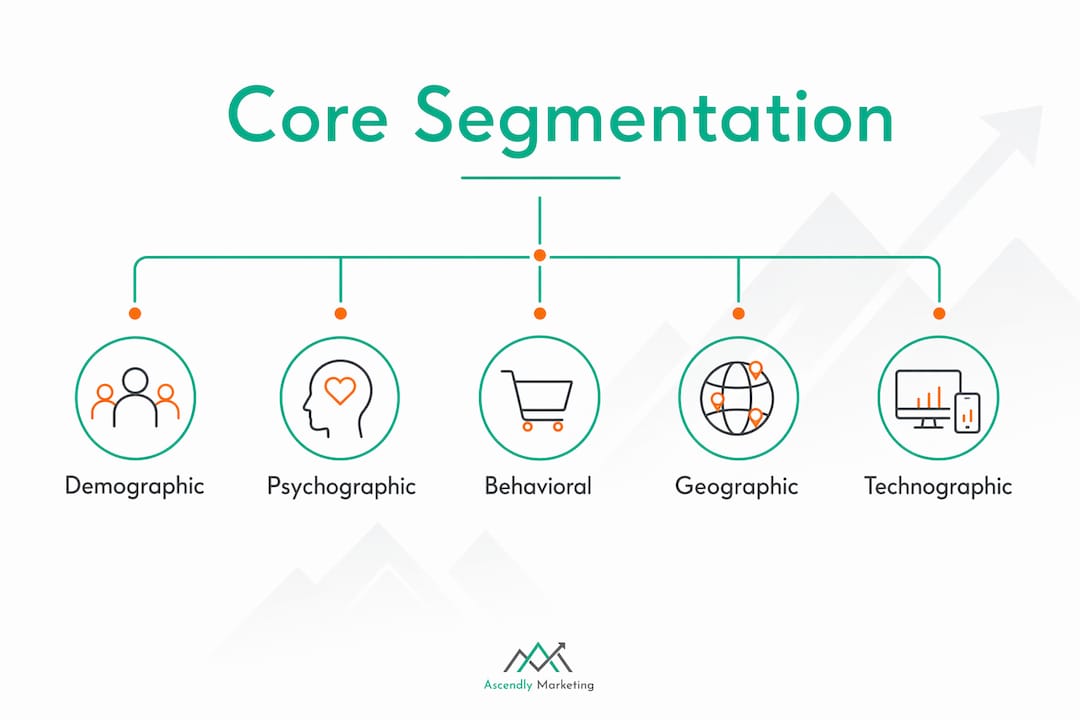
Demographic targeting is the most familiar starting point. It tells you who your customer is on paper. Psychographic targeting tells you what motivates them. Behavioral targeting tells you what they have already done, which is the strongest predictor of what they will do next. Geographic targeting narrows your reach to the locations where your product or service is actually available. Contextual targeting places your ad next to content your customer is already reading, making it highly relevant without relying on personal data.
Pro Tip: Layer at least three segmentation types before launching a paid campaign. A single layer like age alone produces segments that are too broad to message effectively. Combining age, interest category, and recent purchase behavior creates a group small enough to address with one specific message.
How has audience targeting evolved with technology and data analytics?
Early audience targeting relied almost entirely on demographics. Marketers chose age ranges and gender, then hoped the message landed. That approach is now the floor, not the ceiling. Audience targeting has evolved into a sophisticated practice that uses full customer journey analytics and behavioral data to understand not just who to target, but when and why.
The shift matters because timing is as important as identity. A first-time visitor to your website needs a different message than someone who has viewed your pricing page three times. Behavioral data captures that difference. Customer journey analytics maps the full path from awareness to purchase, so marketers can match their message to the exact stage a customer occupies.
“Matching creative and media placement to the right audience segment at the right time is critical. Message timing and audience life stage alignment directly boosts campaign performance.” — Advergize
Privacy regulations and the deprecation of third-party cookies have forced another evolution. Contextual targeting places ads based on the content of the page rather than on tracked user data. It is a resilient, cookieless strategy that SMBs should build into their media mix now, before cookie-based options narrow further. Contextual targeting also tends to reach audiences in a receptive mindset, because the ad topic matches what they are already reading.
Pro Tip: Build a first-party data strategy alongside contextual targeting. Collect email addresses, survey responses, and purchase data directly from your customers. First-party data is immune to privacy regulation changes and produces the most accurate behavioral segments you can build.
What is the difference between audience segmentation and targeting?
Segmentation and targeting are two distinct steps that most SMBs collapse into one, and that mistake costs real money. Segmentation is the analytical step: grouping your full audience by shared characteristics. Targeting is the activation step: choosing which segments to reach and crafting specific messages for each one.
Skipping segmentation and jumping straight into ad platform targeting settings is one of the most common and expensive errors in SMB marketing. Without a clear segmentation strategy, you end up targeting broad, overlapping groups with generic messages. The result is low click-through rates, high cost per click, and poor conversion.
Defining negative personas is equally critical. A negative persona describes who you are not targeting: the job title that never converts, the age group that churns immediately, the geographic area outside your service zone. Excluding these groups from your campaigns reduces wasted spend and improves your return on ad spend directly.
Follow these steps to segment before you target:
- Collect data first. Pull customer records, website analytics, and CRM data before making any assumptions about who your audience is.
- Identify shared traits. Group customers by the characteristics they have in common: industry, purchase frequency, average order value, or content consumed.
- Build negative personas. List the characteristics of people who inquire but never buy, then exclude those profiles from your paid campaigns.
- Rank your segments by value. Prioritize the segments with the highest lifetime value and the lowest cost to acquire.
- Write one message per segment. Each segment needs its own headline, offer, and call to action. One message for all segments defeats the purpose of segmenting.
Pro Tip: Run your negative persona list against your existing customer database quarterly. Audiences shift over time, and a segment that converted well last year may now be your highest-churn group.
How can SMBs implement effective audience targeting strategies?
Effective audience targeting for SMBs starts with building personas that go beyond the standard buyer profile. Audience personas should include not just the decision-maker but also influencers, advocates, and analysts who shape the buying decision. A small business owner may be your buyer, but their accountant, business partner, or industry peer may influence the final choice. Ignoring those roles means missing a significant portion of your real audience.
A practical framework for implementation follows the RACSVR sequence:
- Research: Gather data from your CRM, website analytics, social media insights, and customer interviews.
- Analyze: Look for patterns in demographics, behavior, and purchase history across your existing customer base.
- Create: Build detailed personas for each major segment, including motivations, objections, and preferred content formats.
- Segment: Divide your full audience into distinct groups using the five core targeting types covered earlier.
- Validate: Test your messaging before spending your full budget.
- Repeat: Revisit and refine your audience definitions every quarter as new data arrives.
Validation is the step most SMBs skip entirely. Sharing positioning statements with 5 to 10 people from your target segment before launching a campaign confirms whether your message actually resonates. This takes a few days and costs almost nothing. It can prevent weeks of underperforming ads. Validating messaging with real segment members also surfaces objections you did not anticipate, which you can then address directly in your ad copy.
A/B testing is the ongoing version of validation. Run two versions of every ad with one variable changed: the headline, the image, or the call to action. Let data determine which version wins, then apply that learning to the next campaign. Tools like Google Analytics 4 and Meta Ads Manager provide behavioral data that feeds directly back into your segmentation. Retargeting campaigns are one of the most efficient applications of behavioral data, reaching people who have already shown interest in your product.
Pro Tip: When validation feedback reveals that your message is unclear, do not rewrite the ad. Rewrite the persona first. Unclear messaging almost always means the segment definition is too broad, not that the words are wrong.
Key Takeaways
Audience targeting works when segmentation precedes activation, personas include the full buyer ecosystem, and messaging is validated with real segment members before full budget deployment.
| Point | Details |
|---|---|
| Segmentation before targeting | Always complete the analytical grouping step before activating any paid campaign. |
| Five core segmentation types | Combine demographic, psychographic, behavioral, geographic, and contextual data for precision. |
| Negative personas reduce waste | Defining who you are not targeting cuts wasted spend and improves return on ad spend. |
| Validate before you spend | Test messages with 5–10 segment members to confirm alignment before launching. |
| Contextual targeting is future-proof | Build cookieless contextual targeting into your media mix now to protect campaigns from privacy changes. |
What Ascendly Marketing has learned about targeting mistakes SMBs repeat
The most consistent mistake we see from SMBs is treating audience targeting as a platform setting rather than a strategic process. Marketers open an ad platform, select a few interest categories, and call it targeting. That is not targeting. That is guessing with a budget attached.
The second mistake is building one persona and calling it done. Real audiences contain multiple segments with different motivations, different objections, and different content preferences. A single persona produces a single message. A single message reaches one segment well and every other segment poorly.
Privacy changes are also catching SMBs off guard. Businesses that built their entire targeting strategy on third-party cookie data are now scrambling. The fix is not complicated, but it requires action now. Contextual targeting and first-party data collection are not backup options. They are the primary strategy going forward.
The businesses we work with that get targeting right share one habit: they revisit their audience definitions regularly. They treat their segments as living documents, not finished work. Markets shift, customer behavior changes, and the segment that drove growth last year may be saturated today. Staying current with your audience data is not optional if you want consistent results.
— Ascendly Marketing
Ascendly Marketing’s approach to audience targeting for SMBs
Ascendly Marketing has worked with small and medium-sized businesses since 2013, building digital marketing strategies that connect the right message to the right audience at the right time. The team includes SEO specialists, PPC managers, content creators, and data analysts who build targeting strategies grounded in real customer data, not assumptions.
If your current campaigns are reaching a broad audience but converting a narrow slice, the problem is almost always in the segmentation. Ascendly Marketing builds audience strategies from the data up, including persona development, negative persona mapping, and ongoing validation. Businesses that want a clearer path from ad spend to revenue can book a consultation to see where their targeting strategy stands.
FAQ
What is the definition of audience targeting?
Audience targeting is the practice of dividing a broad market into specific groups based on shared traits such as demographics, behavior, and interests, then delivering personalized marketing messages to each group. The goal is to improve relevance, reduce wasted ad spend, and increase conversion rates.
How is audience segmentation different from audience targeting?
Segmentation is the analytical step of grouping your audience by shared characteristics. Targeting is the activation step of choosing which segments to reach and what message to deliver to each one. Skipping segmentation and jumping straight to targeting is a common SMB mistake that reduces campaign effectiveness.
Why does audience targeting matter for small businesses?
Poor targeting wastes roughly $20 billion in ad spend annually across the open web. For SMBs with limited budgets, precise targeting is the difference between a campaign that pays for itself and one that drains resources with minimal return.
What is contextual targeting and why is it growing?
Contextual targeting places ads based on the content of the page a user is viewing rather than on tracked personal data. It is gaining importance because privacy regulations and the end of third-party cookies are limiting cookie-based targeting options, making contextual methods a reliable, future-proof alternative.
How do I validate my audience targeting before spending my full budget?
Share your positioning statement or ad message with 5 to 10 people who match your target segment and collect their honest feedback. This qualitative step confirms whether your message resonates and surfaces objections before you commit your full campaign budget.