

TL;DR:
- Influencer marketing involves paid collaborations where creators promote products to trusted, engaged audiences. It relies on authenticity and trust transfer, leading to higher engagement and measurable revenue. Success depends on strategic influencer selection, creative freedom, and precise performance tracking.
Influencer marketing is defined as a paid partnership between a brand and a social media creator who promotes products or services to a trusted, engaged audience. Unlike traditional advertising, it transfers credibility from the creator to the brand. Companies earn $5.78 for every $1 spent on these campaigns, and 58% of consumers over 18 have purchased a product because an influencer recommended it. With global influencer spend projected to exceed $21 billion in 2026, this channel is no longer optional for growth-focused marketers.
What is influencer marketing and how does it work for businesses?
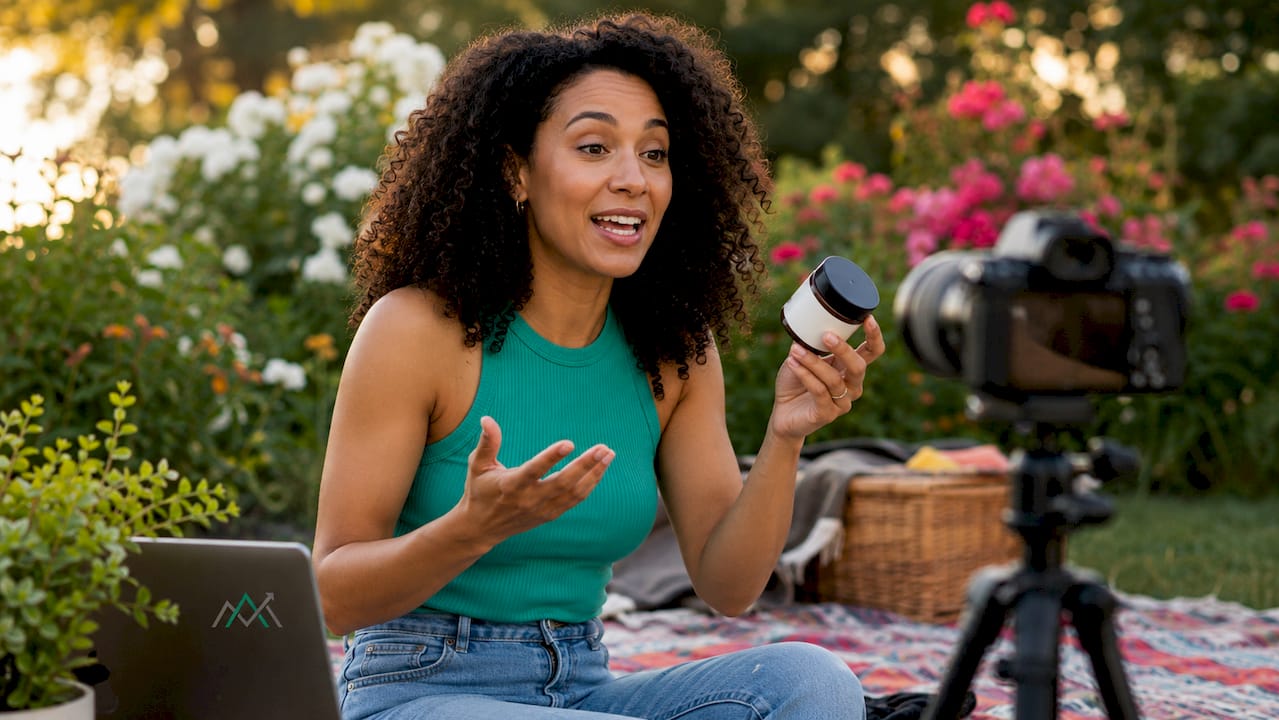
Influencer marketing works through a structured collaboration where a brand identifies a creator whose audience matches its customer profile, agrees on deliverables, and pays for content that promotes the brand authentically. The creator publishes that content on platforms like Instagram, TikTok, or YouTube, and their followers engage with it as they would any organic post. The brand gains exposure, trust, and traffic without cold advertising.
The mechanics follow a clear workflow:
- Influencer selection: Brands identify creators based on niche, audience demographics, and engagement quality, not just follower count.
- Deal structure: Both parties agree on deliverables, usage rights, exclusivity terms, and FTC disclosure requirements. Formal deal memos protect brands legally and set clear expectations before any content is created.
- Content creation: The influencer produces content within agreed brand guidelines. A standard review window runs 48–72 hours with a maximum of 1–2 revision rounds to preserve the creator’s voice.
- Publication and tracking: Content goes live, and brands monitor performance through platform analytics, UTM links, and promo codes.
- Payment: Brands pay via flat fees, product gifting, or performance bonuses, with sponsored content being the most common arrangement.
The underlying principle is trust transfer. When a creator your audience already follows recommends your product, that recommendation carries social proof that a banner ad never will.
Pro Tip: Treat your influencer brief like a creative direction document, not a script. Give clear brand guidelines, key messages, and hard limits, then let the creator decide how to say it. That balance produces content that feels real because it is.
What are the key benefits and challenges of influencer marketing?
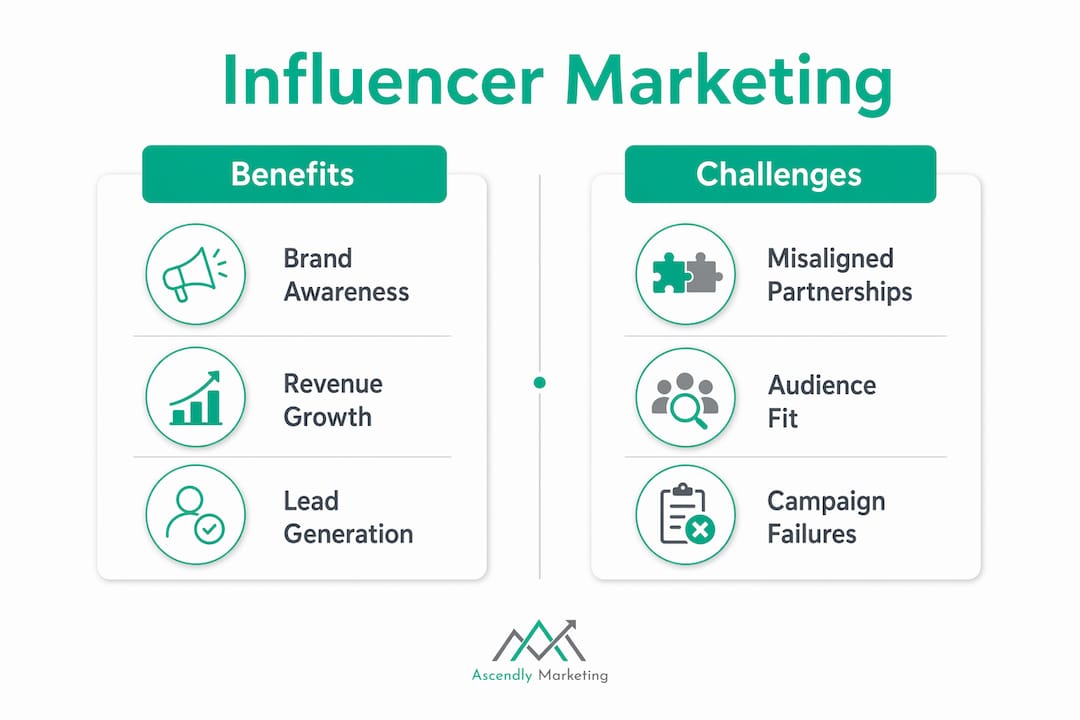
Influencer marketing delivers three primary business outcomes: brand awareness, revenue growth, and qualified lead generation. 66% of marketers use it primarily for awareness, and 55% for revenue growth. Those numbers reflect a channel that works across the full funnel, from first impression to purchase decision.
The core mechanism behind those results is borrowed credibility. 92% of consumers trust peer and creator recommendations over direct brand messages. That gap between consumer trust in creators versus brands is the entire business case for influencer marketing in one statistic.
The benefits stack up clearly:
- Faster audience trust: A creator’s endorsement shortcuts the skepticism consumers apply to traditional ads.
- Precise targeting: Niche creators reach specific demographics that broad media buys miss entirely.
- Content production: Brands receive usable creative assets they can repurpose across paid and organic channels.
- Measurable ROI: Promo codes, affiliate links, and UTM parameters connect influencer activity directly to revenue.
- Scalable reach: Campaigns can run simultaneously with dozens of micro-influencers for the cost of one celebrity placement.
The challenges are real and worth naming directly. 26% of consumers distrust influencer marketing, compared to just 11% for general advertising. That distrust spikes when content feels forced, when the influencer has no obvious connection to the product, or when disclosure is buried or missing.
“The biggest mistake brands make is treating influencer marketing like a media buy. You are not renting an audience. You are borrowing a relationship. Treat it accordingly.” — Ascendly Marketing
Misaligned partnerships are the leading cause of campaign failure. Choosing a fitness influencer to promote a B2B software tool, for example, produces impressions but zero conversions. Audience fit matters more than audience size every time. You can learn more about building transparent marketing practices to address consumer skepticism before it becomes a problem.
How to develop an effective influencer marketing strategy?
A strong influencer marketing strategy starts with a defined business objective. Awareness campaigns call for different creator profiles, content formats, and metrics than conversion campaigns. Conflating the two is how budgets disappear without results.
Choosing the right influencer
Follower count is the least important selection criterion. Engagement quality, genuine comments, and real discussions matter far more than raw reach. A creator with 15,000 highly engaged followers in your exact niche will outperform a celebrity with 2 million passive ones. Evaluate audience demographics, content quality, past brand partnerships, and comment sentiment before making contact.
The table below compares influencer tiers by typical use case:
| Influencer Tier | Follower Range | Best For | Typical Cost Model |
|---|---|---|---|
| Nano | 1,000–10,000 | Hyper-local or niche targeting | Product gifting |
| Micro | 10,000–100,000 | Engaged niche communities | Flat fee or gifting |
| Macro | 100,000–1,000,000 | Broad awareness campaigns | Flat fee or retainer |
| Mega/Celebrity | 1,000,000+ | Mass reach and brand prestige | High flat fee |
Balancing brand control and creative freedom
Giving influencers creative freedom rather than over-scripting produces higher engagement and protects the authenticity that makes the channel work. Forced, scripted content reads as an ad. Authentic content reads as a recommendation. The difference in audience response is significant. Set your non-negotiables (brand name, key claim, disclosure language) and leave the rest to the creator.
Measuring what actually matters
Vanity metrics like impressions and likes tell you almost nothing about business impact. Track cost per acquisition (CPA), conversion events tied to promo codes or affiliate links, and brand sentiment in comments. Focusing on conversions and brand sentiment rather than surface-level numbers is what separates campaigns that generate revenue from campaigns that generate reports. You can build a stronger measurement framework using Ascendly Marketing’s guide to measuring marketing ROI.
Pro Tip: Before launching any campaign, set up a dedicated landing page or promo code for each influencer. This creates a clean attribution path and lets you compare performance across creators with precision.
What campaign types and examples drive real results?
Influencer marketing explained in practice looks very different from influencer marketing explained in theory. The format you choose determines the content style, the platform, and the metrics you track.
Common campaign types include:
- Sponsored posts: A single piece of branded content, usually a photo or video, with a clear disclosure. Best for awareness and product launches.
- Product reviews: The influencer tests and evaluates your product honestly. Higher trust signal because the audience expects candor.
- Giveaways: Brand and creator co-host a contest to drive followers, email signups, or engagement. Strong for list building.
- Brand ambassadorships: Long-term partnerships where the creator represents the brand across multiple content pieces over weeks or months. Builds the deepest audience association.
- Content creation deals: The brand licenses the creator’s content for use in paid ads, email, or on-site. Separates content production from distribution.
Different platforms serve different business goals. TikTok drives discovery for consumer products through short-form video. Instagram works well for lifestyle, fashion, and beauty brands where visual content drives purchase intent. YouTube suits complex products that benefit from detailed reviews or tutorials. LinkedIn influencers reach B2B decision-makers in ways that no other platform replicates.
For small and mid-sized businesses, micro-influencer campaigns on Instagram or TikTok consistently deliver the strongest ROI relative to spend. Ascendly Marketing has documented real SMB influencer campaigns with measurable results worth reviewing before you plan your first activation.
Key takeaways
Influencer marketing succeeds when brands prioritize audience fit, creative freedom, and conversion-focused measurement over reach, scripted content, and vanity metrics.
| Point | Details |
|---|---|
| Define the objective first | Set awareness or conversion goals before selecting any influencer or format. |
| Prioritize audience fit | Choose creators whose followers match your customer profile, not just their follower count. |
| Protect authenticity | Allow creative freedom within clear brand guidelines to keep content credible. |
| Track real metrics | Measure CPA, conversion events, and brand sentiment rather than impressions alone. |
| Use contracts from the start | Deal memos covering FTC disclosures, usage rights, and exclusivity prevent legal and creative disputes. |
What I’ve learned running influencer campaigns for SMBs
The most common mistake I see business owners make is hiring an influencer the way they would buy a billboard. They look at the number, negotiate a price, and expect results proportional to reach. That logic does not apply here.
The campaigns that actually move revenue share one trait: the creator genuinely uses or believes in the product. Audiences detect inauthenticity faster than any algorithm. When a creator is clearly reading from a brief, engagement drops, and so does trust in the brand. I have watched well-funded campaigns with macro-influencers underperform campaigns with three micro-influencers who actually cared about the product.
The second lesson is about control. Brands that over-manage influencers produce content that looks like an ad, gets treated like an ad, and performs like an ad. The entire value of this channel is that it does not look like advertising. The moment you strip that away, you are paying creator rates for display ad results.
My honest recommendation: start with two or three micro-influencers in your exact niche, give them a clear brief and real creative latitude, and measure CPA obsessively. Use those results to build a repeatable playbook before scaling. That approach consistently outperforms the “big name, big budget” strategy for SMBs working with realistic marketing dollars.
— Ascendly Marketing
Ready to build an influencer strategy that actually converts?
Understanding influencer marketing is the first step. Executing it well requires the right strategy, the right creators, and a measurement framework that connects activity to revenue.
Ascendly Marketing has helped small and mid-sized businesses build social media marketing programs that include influencer partnerships, content strategy, and performance tracking since 2013. Our team handles creator sourcing, campaign management, and reporting so you can focus on running your business. If you are ready to put influencer marketing to work for your brand, explore our full services or book a consultation to get a strategy built around your specific goals.
FAQ
What is influencer marketing in simple terms?
Influencer marketing is a strategy where brands pay social media creators to promote their products to an engaged audience. It works because creator recommendations carry more trust than traditional advertising.
How much does influencer marketing cost?
Costs range from product gifting for nano-influencers to flat fees in the thousands for macro-level creators. Payment models include flat fees, performance bonuses, and product-only arrangements depending on the creator tier and campaign scope.
What makes a good influencer for a brand campaign?
A good influencer has an audience that closely matches the brand’s customer profile, strong engagement quality, and a content style that fits the product naturally. Follower count matters far less than audience fit and genuine interest in the category.
How do you measure influencer marketing ROI?
Track cost per acquisition using promo codes, affiliate links, or dedicated landing pages tied to each creator. Brand sentiment in comments and direct conversion events gives a clearer picture than impressions or likes.
Is influencer marketing effective for small businesses?
Yes. Micro-influencer campaigns consistently deliver strong ROI for small businesses because niche creators reach targeted audiences at lower cost than macro-level placements. The $5.78 return per dollar spent average applies across business sizes when audience fit and measurement are done correctly.