

You’ve probably had this moment already. A competitor posts a new video, another runs a short product demo, and someone in your space starts showing up everywhere with clips adapted for each platform. Meanwhile, your team is still asking the same question: where do we even begin?
That hesitation makes sense. A business owner hears “video project” and immediately sees scripts, shoot days, edits, costs, revisions, and a dozen decisions that feel outside the normal flow of running a company. The mistake is treating video like a one-off creative assignment. A digital marketing agency video project works better when you treat it like a business system with defined inputs, approvals, distribution, and measurement.
Your Business Needs Video Now What
A lot of first video projects start with pressure, not clarity. The owner wants “something polished.” The sales team wants leads. Someone on the marketing side wants brand consistency. Then an agency sends over a proposal full of production terms, and the whole thing feels bigger than it should.
The simpler way to frame it is this. You’re not buying a video. You’re building a repeatable asset that needs a purpose, a path to viewers, and a job to do after launch.
That shift matters because video isn’t a side format anymore. As of 2026, 91% of businesses are engaged in video marketing, up from 61% in 2016, according to Wix’s video marketing statistics roundup. That change tells you what the market already decided. Video moved from optional to standard operating practice.
If you’re still at the “we know we need this, but we’re not sure how it fits” stage, it helps to first understand how agencies connect video to wider channel strategy. A practical overview of that sits in this guide on what a digital marketing agency does. And if you want a broader primer before planning your first campaign, this resource can help you optimize your video marketing strategy.
Most failed first projects don’t fail because the footage was bad. They fail because nobody defined where the video would live, what action it should drive, or how it would be reused.
That’s why the first conversation with your agency should sound less like a film meeting and more like a planning session. Who needs to see this? What should they do next? Where will the video be cut down, reposted, promoted, and tracked? Once those answers are on paper, the project gets easier fast.
Laying the Groundwork for Video Success
A strong first project starts before anyone writes a script. The core work is deciding what the video needs to accomplish and what your agency must deliver to support that goal.
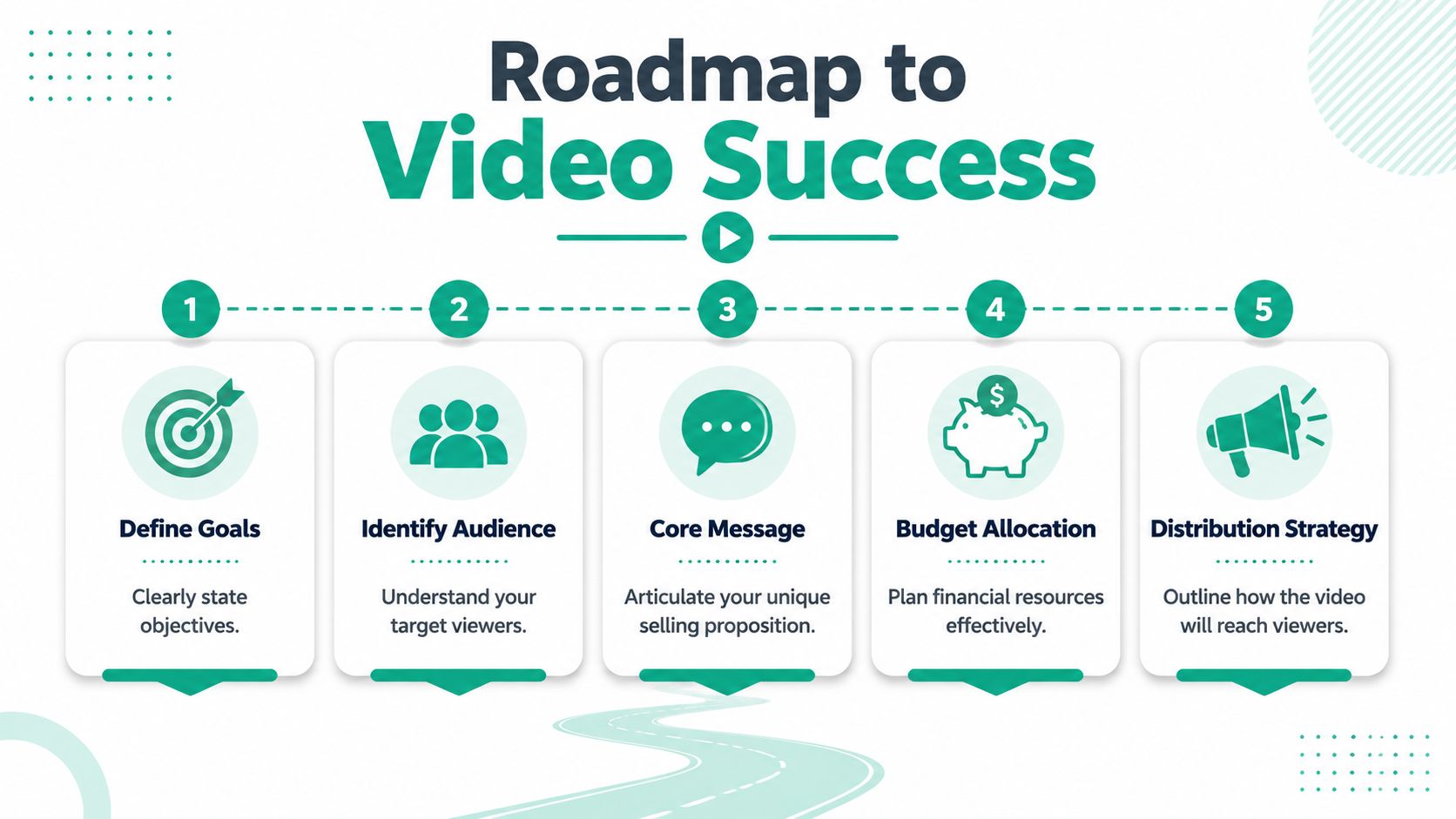
Start with the business outcome
“Make us a brand video” sounds clear until the first review round. Then one stakeholder wants a homepage hero piece, another wants paid ad creative, and a third wants something the sales team can email to prospects.
Pick one primary job.
Some common starting points look like this:
- Lead generation means the video should drive a form fill, booked call, or demo request.
- Customer education means it should explain a process, service, or product clearly enough to remove friction.
- Awareness means the main goal is reach and message recall, not immediate conversion.
- Sales enablement means your team needs a piece they can use during outreach or follow-up.
Once the goal is defined, your agency can build the right structure around it instead of trying to satisfy conflicting demands in one asset.
Build the Video Strategy Brief
I like to see every client approve a short Video Strategy Brief before pre-production starts. This doesn’t need to be long. It does need to be specific.
| Component | What to Define |
|---|---|
| Goal | The single business objective the video should support |
| Audience | Who the viewer is, what they already know, and what problem they’re trying to solve |
| Core message | The one idea the viewer should remember after watching |
| Offer or next step | What action the viewer should take after the video |
| Placement | Where the video will appear first, such as a landing page, ad platform, email, or social channel |
| Format needs | Length, orientation, subtitles, cutdown needs, and any platform-specific versions |
| Success signal | The result your team will use to judge whether the video worked |
Without this document, projects drift. With it, approvals get faster because everyone evaluates the same brief instead of reacting from taste.
Practical rule: If the brief can’t name the audience, the action, and the distribution plan in one page, production is starting too early.
Hook first, CTA second
Structure matters more than most first-time clients expect. Adobe’s guidance on video marketing points to a simple requirement: a compelling hook in the first few seconds must grab attention, and the video needs a clear, action-oriented CTA tied to its goal, as explained in Adobe Express’s video marketing article.
That affects scripting immediately.
A weak opening usually sounds like company history, broad claims, or scene-setting that delays the point. A stronger opening does one of these instead:
- States the problem fast so the viewer knows the video is relevant
- Shows the result before explaining the process
- Asks a direct question that matches buyer intent
- Presents a clear offer without making the audience wait for it
Then the CTA closes the loop. If the viewer should book a demo, say that. If they should contact sales, download a guide, or request pricing, name the action directly.
Decide the budget split before creative expands
Many SMB teams often lose control. They agree to a creative concept before they’ve agreed on where the budget should go. Once production ideas get more ambitious, the money follows the shoot, not the outcome.
Your agency should discuss allocation early, not after the concept deck is approved. If that conversation feels thin, ask blunt questions.
- What are we paying for before filming starts
- What versions are included after the main edit
- How many placements are planned from the start
- What happens after launch to drive traffic and track performance
Those answers tell you whether the agency is building a business asset or merely delivering a finished file.
Navigating Pre-Production With Your Agency
Pre-production is the part clients underestimate and later appreciate. During this stage, expensive confusion gets removed before anyone books a camera crew, reserves a location, or starts editing around avoidable mistakes.

What your agency should put in front of you
A good pre-production package usually includes three core items. First comes the script or talking points. Second comes the storyboard or visual treatment. Third comes the shot list that translates ideas into a practical production schedule.
Each one solves a different problem.
The script controls message and timing. The storyboard shows what the viewer will likely see during each beat. The shot list makes sure the crew captures the footage required to build the edit that was promised.
If one of those is missing, delays show up later.
What to review before you approve
Clients often review creative based on preference instead of function. That’s where projects drift into endless revisions. Review each deliverable against the brief.
Use a short approval checklist:
- Message fit. Does the script say the one thing your audience needs to hear, or is it trying to say five things at once?
- Opening strength. Does the first section earn attention fast, or does it wander?
- Visual accuracy. Do the storyboard frames match your product, service, space, team, and brand standards?
- Operational realism. Can the planned scenes be filmed in the locations, schedule, and setup available?
- CTA clarity. When the video ends, will the viewer know what to do next?
Clients should edit for accuracy and strategy. Agencies should handle how that strategy becomes watchable.
Where AI can help without taking over the work
This is one area where modern workflows have changed for the better. Agencies can now use AI for visual concept development and early storyboarding, which can take 30 to 40 minutes and contributes to an overall 92% reduction in production time, based on the workflow described by MindStudio’s agency video scaling example.
That doesn’t mean AI replaces creative judgment. It means the team can get to rough visual alignment faster. For a client, that’s useful because you can react to concrete concept directions sooner instead of trying to interpret abstract descriptions in a slide deck.
Your side of the job
Pre-production works best when the client assigns one decision-maker or one approval group with clear authority. If three departments are giving equal feedback with no final owner, the script gets diluted, the storyboard gets crowded, and production day turns into a compromise.
Before filming starts, your team should lock down:
- Spokespeople who will appear on camera
- Brand assets such as logos, fonts, product visuals, and usage rules
- Locations and schedules that are available
- Legal or compliance review if your industry requires it
- Approval deadlines so the shoot date doesn’t slide
This is the phase that protects your budget. Every hour spent fixing alignment here prevents higher costs once cameras are rolling.
From Lights and Cameras to Final Cut
Shoot day usually feels more chaotic from the outside than it actually is. If pre-production was done properly, your role won’t be to direct every shot. Your role will be to confirm brand details, answer quick questions, and keep the subject matter accurate.
What a professional baseline looks like
Before a shoot begins, ask one simple technical question. Is the production being captured at a professional minimum standard?
The baseline for digital marketing footage is full HD 1920×1080 at 24 frames per second, according to video requirements published by the University of North Georgia. That doesn’t tell you everything about quality, but it gives you a clear floor. If your agency or production partner can’t meet that baseline, you’re starting with compromised footage.
What your job is on set
Most clients think they need to supervise every creative choice. Usually they don’t. The more useful role is being available for key approvals.
On a typical day, that means:
- Checking visible details such as products, wardrobe, signage, and room setup
- Confirming claims and wording if on-camera lines touch service details or regulated language
- Watching for brand mismatches that an outside crew might miss
- Helping talent stay comfortable if employees or founders are speaking on camera
When a client tries to rewrite the concept on set, the schedule gets expensive fast. By then, the team is working against time, location access, and crew availability.
A calm shoot day is usually proof that the hard decisions were made earlier.
What happens in post-production
Raw footage doesn’t become usable marketing content in one edit. Agencies generally move through stages.
The first pass is often a rough cut. During this stage, the story, sequence, pacing, and major message choices are tested. You’re not judging final color, polished transitions, or perfect audio yet. You’re asking whether the structure works.
After feedback, the edit moves toward a cleaner revision. Graphics, captions, sound cleanup, music, visual consistency, and finishing details are added. At some point, the edit reaches picture lock, which means the visual sequence is approved and shouldn’t keep changing. That matters because downstream work like sound finishing and visual polish becomes less efficient if the structure keeps moving.
How to give useful feedback
Bad feedback sounds like “make it pop” or “we need more energy.” Useful feedback points to a business issue.
Try comments like these instead:
- The first ten seconds don’t explain who this is for
- The demo section feels too late for paid placement
- The CTA isn’t clear enough for a landing page audience
- The customer quote should appear earlier
- This version feels more like brand awareness than lead generation
That kind of response helps the editor make decisions that support the original brief instead of guessing what “better” means.
Unlocking ROI With a Smart Distribution Plan
Most businesses spend months getting a video made, post it once or twice, and then wonder why results feel thin. The problem usually isn’t the asset. The problem is that nobody built a distribution system around it.
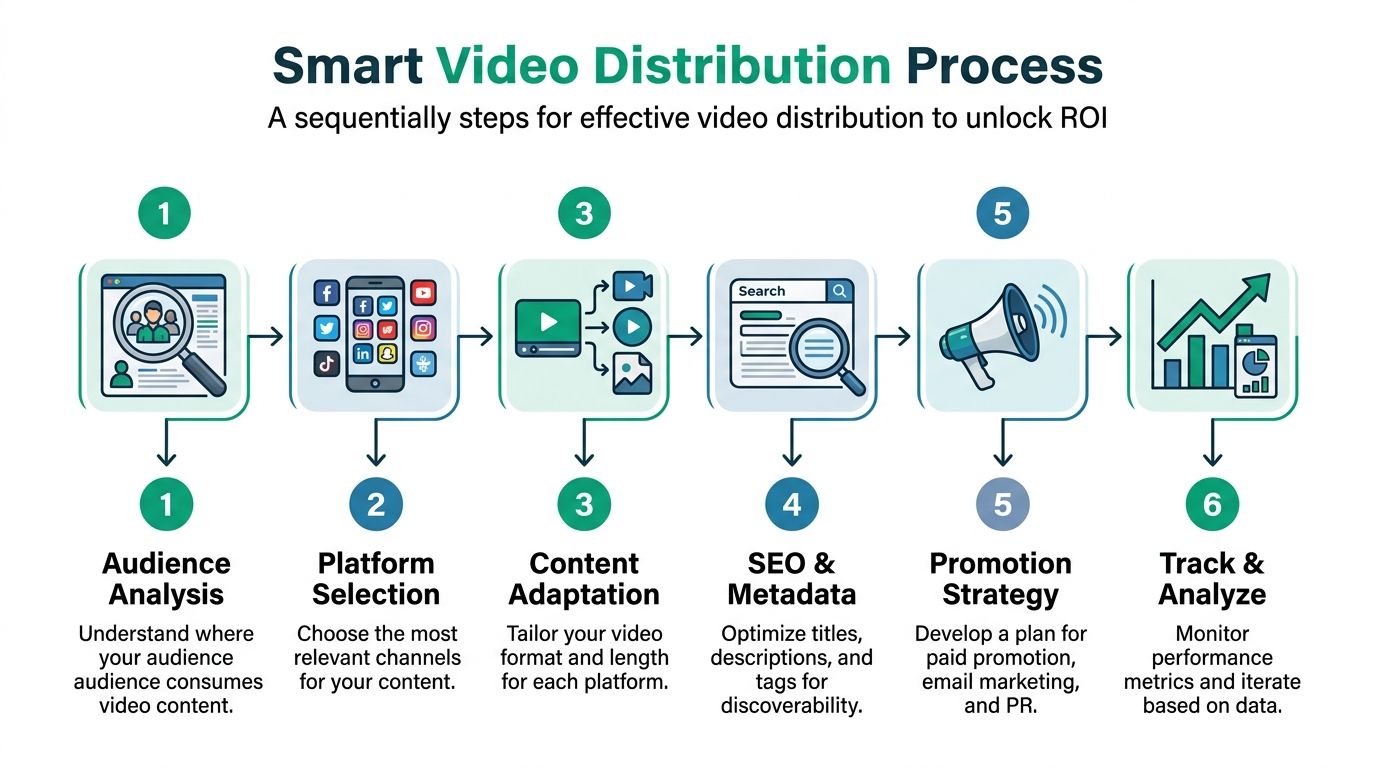
A strong distribution model isn’t complicated, but it is deliberate. This short clip gives a useful visual overview of how video can be used across channels:
One video should become many assets
For SMBs, the greatest value from agency work comes from extensive video repurposing. The main video is only the starting file. It should produce cutdowns, vertical edits, teaser clips, email embeds, landing page versions, paid ad variants, and short social placements.
That approach isn’t just nice to have. A 2025 study found that 73% of agencies fail to implement systematic repurposing across platforms, leaving 60% of potential video ROI untapped. Brands that treat video as a system achieve 3.2x higher conversion rates, according to the cited findings in this video marketing analysis reference.
That’s the gap most guides ignore. They spend pages on lighting, scripting, and camera angles, then treat distribution like a final checklist item. In practice, distribution is where the business result gets created.
Pick platforms based on fit, not habit
A lot of teams default to posting everywhere. That sounds efficient, but it usually creates weak versions for each platform instead of good versions for the channels that matter.
If your audience engages with professional, decision-stage content, your agency may prioritize placements tied to business intent. If your brand needs broad visual reach and short attention capture, the creative approach changes.
Platform choice should answer three questions:
- Where does your buyer already spend time
- What format does that platform reward
- What action can realistically happen there
Marketers are also reporting strong platform-specific outcomes. Instagram shows a 61% success rate and LinkedIn 59%, while 87% say video directly increased sales and 88% say it helped generate leads, based on the data summarized by SellersCommerce’s video marketing statistics. Those numbers don’t mean every business should use the same mix. They do show that platform choice deserves strategic attention instead of being treated as an afterthought.
A practical repurposing model
For a single flagship video, a smart agency often plans outputs like these from the beginning:
- Primary version for the homepage, landing page, or core campaign
- Short paid cuts with tighter hooks for ad testing
- Vertical clips for mobile-first social placements
- Sales follow-up version trimmed for email or direct outreach
- Educational snippets built from one useful answer or product moment
- Captioned silent-play versions for feeds where audio starts off
If your campaign also includes paid distribution, tools and channels, then begin to overlap. A business exploring cross-channel placement can look at how programmatic video advertising fits into broader reach and targeting decisions.
If your agency hands over one finished file and no rollout map, you bought production. You didn’t buy distribution.
What to ask for after launch
Once the video is live, ask your agency for a simple operating plan. Not a vague promise to “push content.” A real plan.
Request these deliverables:
- Posting calendar with platform-specific versions
- Paid promotion plan if ad spend is part of the campaign
- Naming and version control so assets don’t get lost internally
- Performance reporting tied to the original business goal
- Iteration decisions based on what viewers respond to
At this point, a digital marketing agency video project turns from content creation into a working acquisition asset.
Budgeting for Results, Not Just Production
The wrong opening question is “how much does a video cost?” That question pushes the whole discussion toward crew size, camera packages, and editing line items before anyone has asked how the video will generate a result.
The better question is “how should the budget be allocated so the campaign performs?”
Why production-heavy budgets disappoint
A lot of SMB teams assume a more cinematic video will automatically produce better leads. Sometimes higher production value helps. Often it merely raises costs without fixing audience targeting, placement, or follow-through.
The data on budget allocation is blunt. A 2025 Gartner report found that agency video campaigns with $5K–$10K budgets focused on targeted distribution outperform $20K+ production-heavy campaigns by 45% in qualified leads. The same source notes that 68% of small businesses overspend on production while underinvesting in targeting, as cited by Sparkhouse’s video marketing services page.
That should reshape the conversation with any agency you hire. If the proposal spends pages on visual polish and barely mentions targeting, rollout, or analytics, the budget is probably tilted the wrong way.
A more useful budgeting conversation
You don’t need the cheapest video. You need a budget model that protects the business outcome.
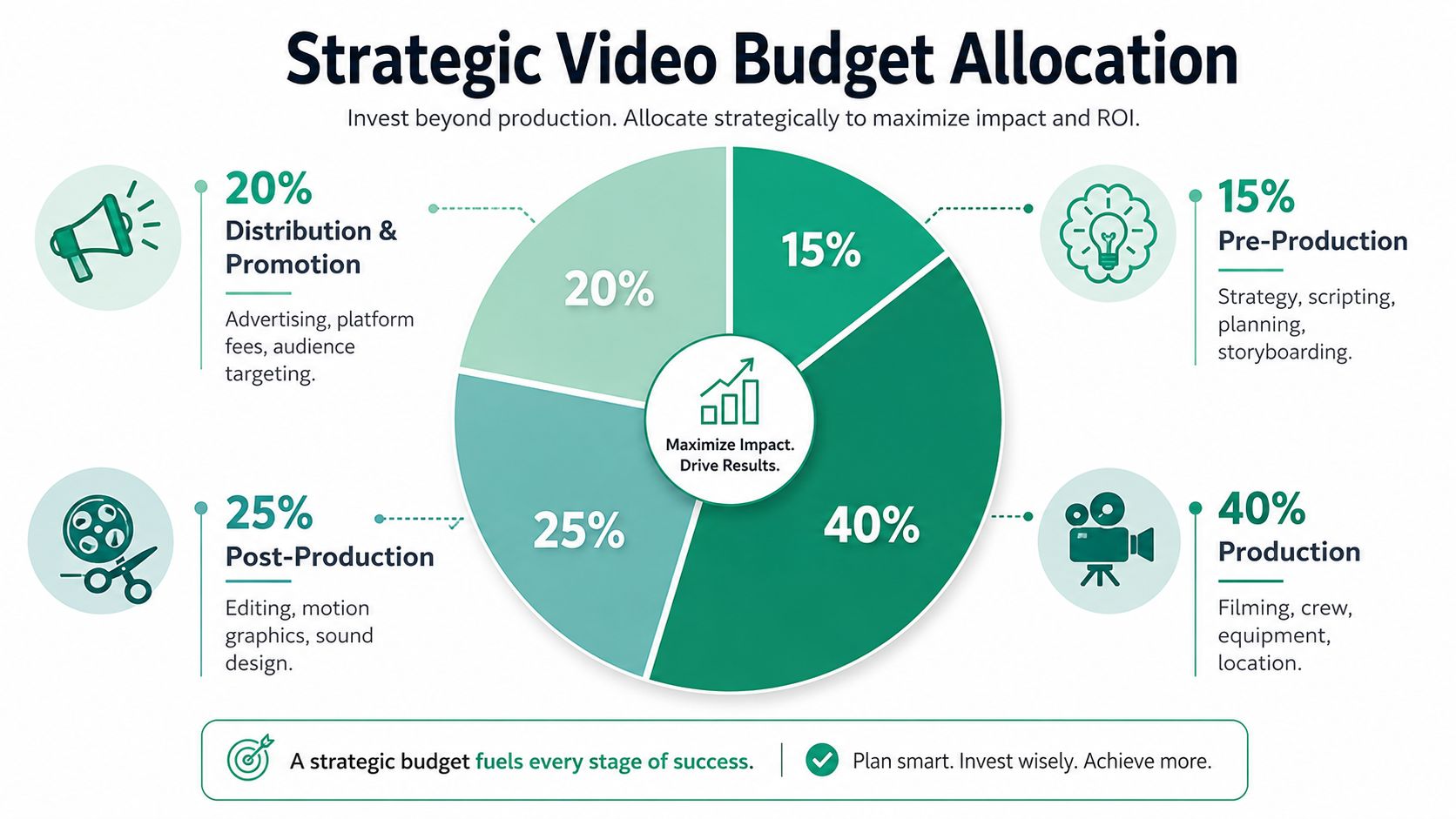
The infographic above uses a practical split:
- Pre-production 15% for strategy, scripting, planning, and storyboarding
- Production 40% for filming, crew, equipment, and location work
- Post-production 25% for editing, motion work, and sound
- Distribution and promotion 20% for advertising, targeting, and deployment
That distribution percentage is where many projects come up short. Teams spend heavily to create the asset, then expect organic posting alone to do the rest.
Compare budgets by what they make possible
If you’ve ever looked into understanding TV advertising costs, you’ve probably noticed how easy it is for production conversations to dominate the budget. Digital video has the same trap. A polished shoot can absorb attention and money very quickly.
Here’s the better comparison method.
Ask what each budget supports after the final export. Does it include platform cutdowns? Audience targeting? Paid testing? Reporting? Iteration after the first performance read? Those line items often create more value than another half day of filming or a more elaborate location.
A practical review framework looks like this:
- Budget A favors production. You get a strong-looking main asset, but limited versions, thin targeting, and weak follow-up.
- Budget B favors performance. The main asset may be simpler, but it launches with cutdowns, media support, audience planning, and measurement.
- Budget C balances both. Production is clean and professional, while distribution still has enough funding to reach the right viewers.
For most SMBs, Budget B or C is the smarter path.
What to ask your agency before you sign
Use direct questions. They force clarity.
- How much of this budget goes to distribution after production ends?
- What platform-specific edits are included?
- What measurement is in scope?
- How will you decide whether to revise, repurpose, or promote the asset further?
- What business result is this budget built to support?
If an agency can answer those questions cleanly, the project is being managed as a growth tool rather than a creative expense. And if you need a broader view of how video supports pipeline, traffic, and conversion across channels, this guide to video marketing for businesses helps frame the bigger picture.
If you want a partner that treats video as part of a measurable growth system rather than a one-off production job, Ascendly Marketing is a strong place to start. Their team builds strategy, creative, distribution, and reporting into one process, which makes it easier to launch video campaigns that support real business goals.