

TL;DR:
- Effective influencer marketing for SMBs relies on strategy, authentic content, and precise attribution rather than budget size. Micro-influencers outperform celebrities in engagement and ROI, especially through product seeding, affiliate, and long-term ambassador programs. Successful campaigns emphasize measurement, relevance, and building scalable, ongoing relationships with trusted creators.
Not all influencer campaigns are created equal. Some brands spend five figures on a celebrity post and see almost nothing in return. Others work with ten creators who have under 50,000 followers each and generate hundreds of thousands in sales. The difference isn’t budget or luck. It’s strategy. These influencer marketing examples show exactly what works, why it works, and how you can apply the same thinking to your own brand without needing a Fortune 500 budget. Brands that earn $5.78 for every $1 spent are following a repeatable system, not guessing.
Table of Contents
- Key takeaways
- Influencer marketing examples by campaign type
- Real campaign case studies with performance data
- Campaign type comparison: costs, ROI, and scalability
- How to choose the right influencer strategy for your SMB
- My honest take after years of watching these campaigns play out
- Ready to build your own influencer program?
- FAQ
Key takeaways
| Point | Details |
|---|---|
| Micro-influencers outperform celebrities | Smaller creators deliver 3.5x higher engagement and lower cost per acquisition for most SMBs. |
| Match campaign type to your goal | Product seeding builds awareness; affiliate programs drive sales; ambassador programs build loyalty. |
| Authenticity wins over scripted ads | Giving creators creative freedom consistently produces higher engagement and organic trust. |
| Track every dollar with attribution | Use UTM links, promo codes, and CRM data to know exactly which creators drive revenue. |
| Long-term partnerships compound | Working with the same 10 to 15 creators over six months builds audience trust and repeatable ROI. |
Influencer marketing examples by campaign type
Before you study specific campaigns, you need to understand the formats available to you. Top influencer strategies in 2026 fall into five main categories, and each one is designed to accomplish something different at a specific stage of your funnel.
Product seeding means sending free products to creators with no guaranteed post in return. The goal is organic coverage and authentic content. It works best for brand awareness and building a content library without high creative costs.
Sponsored content involves a paid agreement where a creator produces posts, videos, or stories on your behalf. This is the most recognized format and works well for awareness and consideration.
Affiliate marketing ties creator compensation to actual sales. Creators share unique promo codes or trackable links, and they earn a commission on each conversion. This format is ideal when your primary goal is revenue.
Ambassador programs formalize long-term relationships with creators who consistently represent your brand. These programs drive loyalty and authentic brand associations over time.
Creator-led paid ads take top-performing organic influencer content and run it as paid social ads. This approach scales what already works and significantly lowers creative production costs.
- Product seeding: best for awareness and content generation
- Sponsored content: best for reach and consideration
- Affiliate marketing: best for direct sales and measurable ROI
- Ambassador programs: best for brand equity and loyalty
- Creator-led paid ads: best for scaling proven content at lower cost
Real campaign case studies with performance data
These are the numbers that matter. Each example below is a real campaign with documented outcomes, and each one offers a lesson directly applicable to your business.
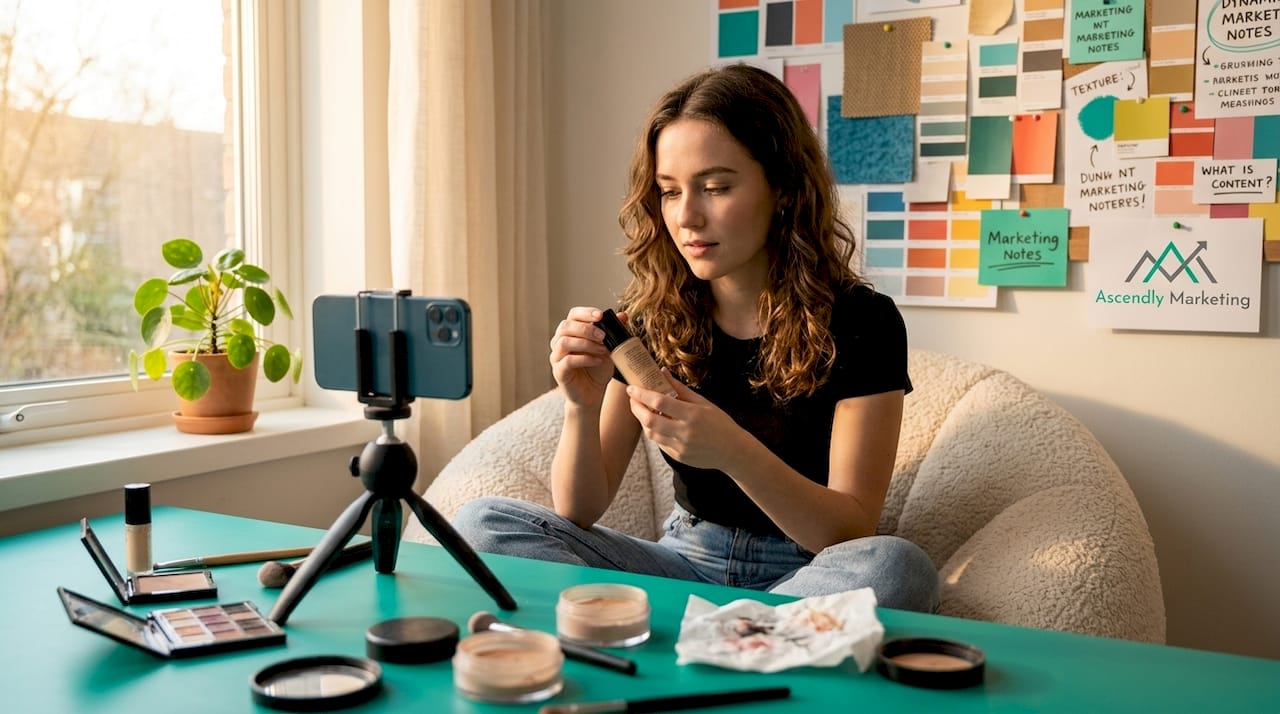
Fenty Beauty: Micro-influencer product seeding at scale. Fenty Beauty distributed products to over 100 micro-influencers across beauty and lifestyle niches. The result was a campaign that generated $20M in sales, with cost per acquisition reduced by 35% compared to traditional advertising. Micro-influencers delivered 3.5x higher engagement than macro alternatives. The lesson: volume and relevance beat individual reach every time.
Daniel Wellington: Sponsored content at volume. Instead of signing one or two big names, Daniel Wellington partnered with 7,200 micro-influencers simultaneously. The campaign generated over 20,000 brand mentions and beat major competitors in social share of voice, all without relying on a single celebrity. It proved that distributed, consistent sponsored content can dominate a category.
OLIPOP: Affiliate marketing with measurable outcomes. The functional soda brand built an affiliate program centered on micro-influencers in the health and wellness space. The program now accounts for 12% of total company sales at a 982% ROI. Each creator uses a custom promo code, which makes attribution clean and optimization straightforward.
Stat to remember: OLIPOP’s affiliate program delivers nearly 10x return for every dollar invested. That’s a performance channel, not a marketing expense.
Tentree: Ambassador program built on shared values. Tentree, a sustainable clothing brand, built its ambassador program entirely around environmental creators. They achieved organic, authentic endorsements with zero paid media because the creators genuinely believed in the brand’s mission. Brand alignment wasn’t a box to check. It was the entire strategy.
Cuts Clothing: Product seeding to nano and micro-influencers. Cuts Clothing sent apparel to nano and micro-influencers in fitness, entrepreneurship, and lifestyle spaces. The content they received back was unscripted and personal. By focusing on authentic creator voices rather than polished ads, the brand built credibility with audiences that distrust traditional advertising.
Pro Tip: Don’t measure influencer campaigns only by impressions. Track promo code redemptions, UTM-linked sessions, and downstream conversions in your CRM to understand actual revenue impact.
Campaign type comparison: Costs, ROI, and scalability
Choosing a strategy gets a lot easier when you can see the trade-offs side by side.
| Campaign type | Avg. cost | Engagement | ROI potential | Scalability | Authenticity |
|---|---|---|---|---|---|
| Product seeding | Low | High | Medium-High | High | Very High |
| Sponsored content | Medium | Medium | Medium | High | Medium |
| Affiliate marketing | Variable | Medium | Very High | High | High |
| Ambassador program | Medium-High | Very High | High | Medium | Very High |
| Creator-led paid ads | Medium | High | High | Very High | High |
Ambassador programs and affiliate marketing consistently deliver the highest combined ROI when measured over a full year. Creator-led paid ads give you the best scaling potential because you’re spending money on content that has already proven its ability to engage real audiences.
The biggest mistake SMBs make is defaulting to sponsored content for every campaign. It has its place, but it’s also the most saturated format. Audiences increasingly recognize it as advertising. Affiliate programs and ambassador relationships, by contrast, produce content that audiences receive as a genuine recommendation.
Pro Tip: Combine two strategies for the same campaign. Seed product first, then upgrade the top creators to a paid ambassador role. You earn authentic content first and scale the relationship with proven performers.
How to choose the right influencer strategy for your SMB
This is where most SMB marketers feel stuck. There are too many formats and too many creators to evaluate. Here’s a practical decision framework that cuts through the noise.
Define your primary goal before anything else. Brand awareness, direct sales, content creation, and community building each point to a different campaign type. If you don’t start here, you’ll optimize for the wrong metric.
Set a testing budget, not a launch budget. Start with $1,000 to $3,000 across five to ten micro-influencers before committing to a full program. You’ll learn what messaging, creator profiles, and formats resonate with your audience before scaling up.
Evaluate engagement rate over follower count. A creator with 15,000 highly engaged followers in your niche will outperform a creator with 500,000 passive followers. Look for comment quality, response rates, and content relevance.
Match the platform to the content format. TikTok favors short, authentic video and discovery. Instagram works well for aspirational visual content and Stories. YouTube supports longer reviews and tutorials that drive consideration. Choose based on where your audience spends time, not where your competitors happen to be active.
Use multiple micro-influencers instead of one big name. Working with ten creators at once diversifies your risk and generates far more content variations to test. Long-term partnerships with 10 to 15 micro-influencers over three to six months consistently outperform single celebrity posts in conversion rates.
Give creators a brief, not a script. Share your brand’s values, the key message, and any claims it can’t make. Then let them create. Unscripted, authentic content produces higher organic engagement and doesn’t read like an ad to their audience.
Integrate influencer content with your paid channels. The best influencer content shouldn’t live only on the creator’s page. Repurpose top posts as paid social ads. This is where your paid advertising strategy and influencer program work together to multiply returns.
Track everything from day one. Every creator should have a unique promo code or UTM link. Sales attribution through promo codes and UTM links is what separates programs that scale from programs that plateau.
Pro Tip: When reviewing influencer analytics, ask for screenshots of actual post-level insights, not account-level averages. A creator’s average engagement rate may look fine, but one viral post can skew the whole account.
My honest take after years of watching these campaigns play out
I’ve watched a lot of SMBs burn money on influencer marketing because they approached it like a one-time media buy. They find a creator with decent reach, pay for a single post, and wait for the sales to come. They rarely do.
The campaigns I’ve seen generate real, repeatable returns share one quality: they treat influencer marketing as a repeatable, scalable system, not a one-off tactic. That means building a roster of creators you work with consistently, giving those creators real creative latitude, and measuring every single campaign against actual revenue.
What most articles won’t tell you is that the ROI tracking piece is often what separates winners from everyone else. Without clean attribution through promo codes and UTMs, you can’t cut the creators who aren’t converting. And you can’t put more budget behind the ones who are. That data is where the program actually lives or dies.
The other thing I’d push back on is the obsession with follower counts. Some of the most effective influencer marketing strategies I’ve encountered involve creators with under 10,000 followers. Their audiences are hyper-specific and trusting. That trust is the asset, not the number.
My advice: pick two or three campaign types from the examples above, run a real test with proper attribution in place, and let the data tell you where to invest more. Stop guessing and start treating this like the performance channel it genuinely is.
— Ascendly Marketing
Ready to build your own influencer program?
Knowing what works is the first step. Building and managing a program that consistently delivers is a different challenge. That’s exactly where Ascendly Marketing helps SMBs move from scattered experiments to a structured, measurable influencer marketing operation.
Ascendly Marketing’s team has spent over a decade working with SMBs across industries to connect influencer-generated content with social media marketing and paid advertising in ways that compound results. From influencer discovery and campaign planning to content repurposing for paid ads and full ROI tracking, the team handles the details so you can focus on growing. You can also explore how organic brand growth through influencers fits into a broader visibility strategy. If you’re ready to stop experimenting and start scaling, Ascendly Marketing can map out a plan built around your goals and budget.
FAQ
What are the best influencer marketing examples for small businesses?
Product seeding and affiliate marketing programs are the most accessible for small businesses. Campaigns like OLIPOP’s affiliate program, which drives 12% of sales at a 982% ROI, show how micro-influencers can deliver measurable results on a limited budget.
How do I choose the right influencer for my brand?
Prioritize engagement rate and audience relevance over follower count. A creator with 15,000 engaged followers in your niche will typically outperform a larger creator with passive, broad audiences.
What is the average ROI for influencer marketing?
Brands earn an average of $5.78 for every $1 spent on influencer marketing. ROI varies significantly by campaign type, with affiliate programs and ambassador programs typically delivering the highest returns.
How should I measure influencer campaign performance?
Use unique promo codes, UTM links, and CRM integration to track which creators drive actual sales. Tracking sales attribution through these tools lets you scale what’s working and cut what isn’t.
Are micro-influencers better than celebrities for SMBs?
In most cases, yes. Micro-influencers deliver 3.5x higher engagement rates and a significantly lower cost per acquisition, as demonstrated by campaigns from brands like Fenty Beauty and Daniel Wellington.