

TL;DR:
- Marketing analytics links marketing spend to revenue by unifying data, applying attribution models, and auditing regularly. SMBs should start with core sources, replace last-click with multi-touch, and perform monthly data quality checks. Success depends on clear goals, clean data, and consistent analysis discipline.
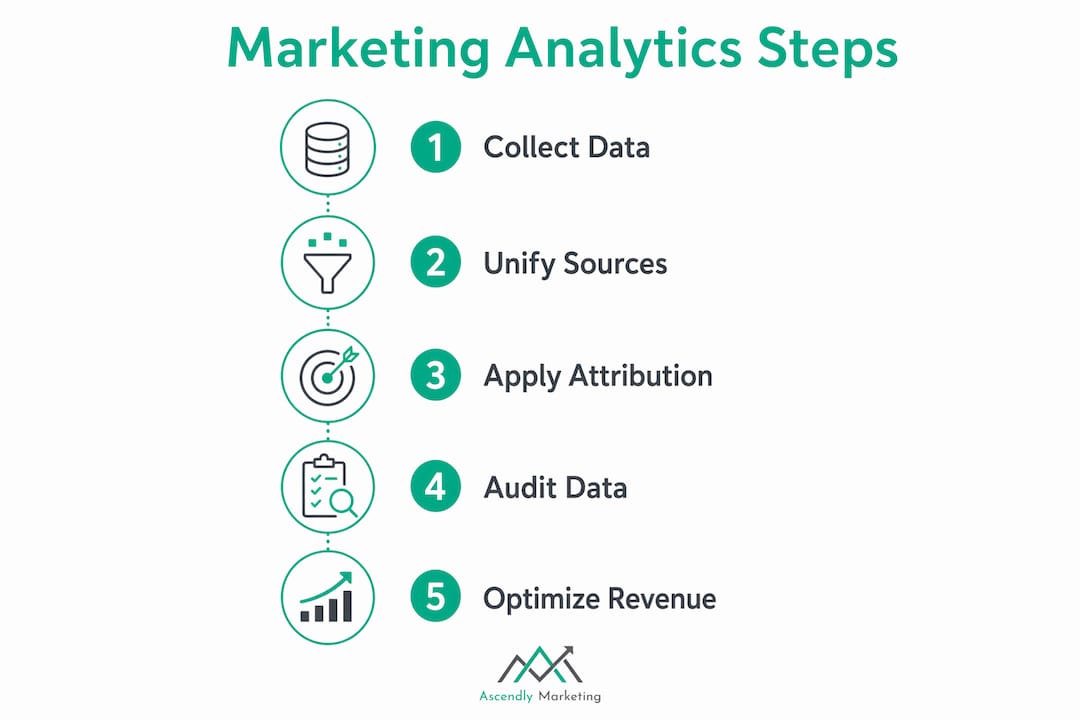
Marketing analytics is the practice of collecting, unifying, and analyzing data from your marketing channels to directly connect spend with business outcomes like revenue and qualified leads. For small and medium-sized businesses, this discipline, formally called marketing performance measurement, separates companies that grow with intention from those that spend and hope. This marketing analytics guide covers the four pillars every SMB marketer needs: data collection, attribution modeling, data quality auditing, and analysis best practices. Get these right, and you stop guessing which channels work. You start knowing.
What is a marketing analytics guide and why does it matter for SMBs?
Marketing analytics unifies data from ad platforms, CRM systems, and web analytics into a single source of truth. Without that unification, you are making budget decisions based on fragmented, channel-specific numbers that each claim credit for the same conversion. The result is wasted spend and no clear picture of what actually drives revenue.
The core goal of analytics for marketing is simple: link every dollar spent to a measurable outcome. That outcome might be a qualified lead, a booked call, or a closed deal. When you build your system around that goal, every tool and process you add has a clear job to do.

What are the key components of a successful marketing analytics setup?
A working analytics setup has three layers: data collection, data unification, and reporting. Each layer must function cleanly before you add complexity to the next.

Data collection: The foundation
Consistent UTM tagging is the starting point. Every paid link, email campaign, and social post needs a UTM parameter that follows a fixed naming convention. Inconsistent casing, like “Facebook” in one campaign and “facebook” in another, creates fragmented attribution data that makes channel comparison unreliable. Set a naming standard in a shared document and enforce it across your team.
Client-side pixels alone are no longer enough. Server-side tracking is now essential because browser privacy restrictions and ad blockers can cause you to miss 15–30% of conversion events when relying only on client-side pixels. Running server-side Conversion APIs alongside client-side pixels, with proper deduplication, captures the maximum number of accurate conversion events.
Data unification: Building one source of truth
| Feature category | What to look for |
|---|---|
| Ad platform integration | Pulls spend and conversion data automatically |
| CRM connection | Matches leads to revenue outcomes |
| Web analytics layer | Tracks on-site behavior and goal completions |
| Deduplication logic | Prevents double-counting across sources |
| Custom reporting | Lets you build views around your KPIs |
Pro Tip: Start by connecting three core sources: your primary ad platform, your CRM, and GA4. Add more sources only after those three are clean and reconciled.
How to choose and implement attribution models that reflect your buyer journey
Attribution modeling is the method you use to assign credit for a conversion across the marketing touchpoints that preceded it. Choosing the wrong model means you fund the wrong channels.
Last-click attribution assigns 100% of the credit to the final touchpoint before conversion. That model is becoming obsolete because privacy regulations have removed the cross-site tracking signals it depends on. A buyer who saw a YouTube ad, clicked a Google search ad, and then converted via email looks like an email-only conversion under last-click. That misreads your actual channel contribution.
The modern replacement is a triangulation approach that combines three methods:
- Multi-touch attribution (MTA): Distributes credit across all touchpoints in the buyer journey. Best for tactical, day-to-day channel decisions.
- Media mix modeling (MMM): Uses statistical regression to measure the causal impact of each channel on revenue. Businesses spending over $50,000 monthly on marketing should invest in MMM because a 10% improvement in budget allocation at that scale produces meaningful ROI gains.
- Incrementality testing: Runs controlled experiments to measure the true lift a channel produces. Answers the question: “Would these conversions have happened without this channel?”
No single model gives you the full picture. MTA handles the tactical view. MMM handles the strategic view. Incrementality testing validates both.
Pro Tip: Use MTA to make weekly channel adjustments and MMM to guide quarterly budget planning. Treat incrementality tests as the referee when MTA and MMM disagree.
How to perform audits and maintain data quality for reliable analytics
Data quality is the most underrated part of marketing performance measurement. Clean data makes every other decision easier. Dirty data makes every dashboard misleading.
A monthly seven-layer attribution audit covers the checks that matter most:
- UTM consistency check: Confirm all active campaigns follow your naming convention. Flag any inconsistencies immediately.
- Pixel health review: Verify that all tracking pixels fire correctly on key pages, including thank-you pages and checkout confirmations.
- Channel definition audit: Confirm that GA4 channel groupings match your actual channel structure. Misclassified traffic inflates organic numbers and deflates paid ones.
- CRM-to-ad-platform reconciliation: Compare leads recorded in your CRM against conversions reported by your ad platforms.
- Conversion deduplication check: Confirm that server-side and client-side events are not double-counting the same conversion.
- Goal completion verification: Test each tracked goal manually to confirm it fires under real conditions.
- Variance review: Calculate the gap between platform-reported conversions and CRM-confirmed leads.
A monthly seven-layer audit produces an average 20% improvement in data reliability. That improvement directly affects the quality of every budget decision you make.
On variance: a stable 5–10% gap between platform-reported conversions and CRM-confirmed leads is normal and acceptable. A gap wider than 10% signals an attribution problem that needs investigation before you act on any channel data.
Pro Tip: Run your digital marketing audit on the same day each month. Consistency makes it easier to spot trends rather than one-off anomalies.
What are the best practices and common pitfalls in marketing analytics for SMB growth?
The biggest mistake SMB marketers make is confusing reporting with analysis. Reporting tells you what happened. Analysis tells you why it happened and what to do next. Most dashboards only deliver the first part.
“A reporting dashboard that shows traffic went up 15% last month is not analytics. Analytics is knowing that the 15% came from a single blog post, that post targets a keyword with high purchase intent, and that you should produce five more like it.”
Focus on revenue metrics, not vanity metrics
Optimizing for CPC often sacrifices lead quality. A campaign with a $2 cost per click that generates unqualified leads costs more than a campaign with a $10 cost per click that fills your pipeline. The metric that matters is Cost Per Qualified Lead (CPQL). Understanding what qualifies a marketing lead before you set your KPIs prevents you from optimizing toward the wrong outcome.
Measuring marketing ROI requires anchoring your KPIs to pipeline velocity and closed revenue, not just clicks and impressions. Set those anchors before you build any dashboard.
Phase your data integration
Gradual data integration is the standard approach used by successful analytics teams. Start with your primary acquisition channel, your CRM, and GA4. Get those three sources reconciled and reliable. Then add a second ad platform or a second CRM integration. Adding five data sources at once creates the data chaos that makes marketers abandon their analytics systems entirely.
Common pitfalls to avoid:
- Skipping UTM standards: One team member using different naming breaks your entire channel comparison.
- Relying only on platform-reported data: Each ad platform attributes conversions to itself. Cross-platform reconciliation is the only way to see the real picture.
- Ignoring server-side tracking: Client-side pixels alone miss a significant share of conversions in privacy-restricted browsers.
- Measuring too many KPIs: Five focused metrics beat twenty scattered ones. Pick the metrics tied directly to revenue.
Key takeaways
Effective marketing analytics connects spend to revenue by unifying data sources, applying the right attribution model, and auditing data quality every month.
| Point | Details |
|---|---|
| Unify three core sources first | Connect your primary ad platform, CRM, and GA4 before adding more data sources. |
| Replace last-click attribution | Combine MTA, MMM, and incrementality testing for a complete attribution picture. |
| Run monthly seven-layer audits | Monthly audits produce an average 20% improvement in data reliability. |
| Accept 5–10% variance as normal | Gaps wider than 10% between platform data and CRM signal an attribution problem. |
| Anchor KPIs to revenue metrics | Track Cost Per Qualified Lead and pipeline velocity, not just CPC or impressions. |
What I have learned after years of building analytics systems for SMBs
The most common mistake I see is not a technical one. It is a goal problem. Business owners set up GA4, connect their ad platforms, and then stare at dashboards without knowing what question they are trying to answer. Analytics without a defined question is just noise with a nice interface.
The second lesson: data hygiene is not a one-time setup task. UTM naming drifts. Pixels break after website updates. CRM fields get renamed. The businesses that get the most from their analytics are the ones that treat monthly audits as non-negotiable, the same way they treat paying invoices.
On attribution: I have seen SMBs abandon multi-touch attribution because it felt too complex. The triangulation approach, combining MTA for weekly decisions and MMM for quarterly planning, sounds sophisticated, but the implementation can start simply. Begin with MTA in GA4. Add MMM only when your monthly spend justifies it. Incrementality testing can start with a simple geo holdout experiment before you invest in formal testing infrastructure.
Privacy changes are not slowing down. Server-side tracking is not optional anymore. Every SMB running paid ads should have Conversion APIs running alongside their pixels before the end of this year.
The businesses that win with analytics are not the ones with the most data. They are the ones with the clearest questions, the cleanest data, and the discipline to act on what the numbers actually say.
— Ascendly Marketing
How Ascendly Marketing supports SMB analytics implementation
Building a marketing analytics system from scratch takes time, technical knowledge, and ongoing maintenance that most SMB teams do not have spare capacity for.
Ascendly Marketing has worked with SMBs since 2013 to build data-driven marketing strategies that connect spend to real revenue outcomes. The team covers everything from UTM architecture and server-side tracking setup to attribution modeling and monthly performance audits. If you are ready to move from scattered data to a system that actually informs your decisions, the Ascendly Marketing team is available for a consultation. No generic dashboards. No vanity metrics. Just a clear picture of what your marketing is actually doing.
FAQ
What is marketing analytics?
Marketing analytics is the process of collecting and analyzing data from your marketing channels to connect spend with business outcomes like leads and revenue. It combines data from ad platforms, CRM systems, and web analytics into one unified view.
Why is last-click attribution no longer reliable?
Last-click attribution ignores every touchpoint except the final one before conversion. Privacy regulations have removed the cross-site tracking signals it depends on, making it an inaccurate model for most buyer journeys.
How often should I audit my marketing data?
Run a full attribution audit monthly. A monthly seven-layer audit produces an average 20% improvement in data reliability and catches issues like broken pixels and UTM drift before they distort your decisions.
What is a normal variance between ad platform data and CRM data?
A stable 5–10% gap between platform-reported conversions and CRM-confirmed leads is acceptable. A gap wider than 10% signals an attribution problem that needs investigation.
What is the best starting point for SMB marketing analytics?
Connect your primary ad platform, CRM, and GA4 first. Get those three sources clean and reconciled before adding any additional data sources or attribution tools.