

Most marketing professionals still see designers as pixel pushers who make things pretty. That’s a costly misconception. Over 70% of organizations now view design as a strategic function rather than purely aesthetic, signaling a fundamental shift in how design drives marketing value. This guide reveals how integrating designers strategically transforms campaign performance, brand credibility, and customer engagement for small to medium-sized businesses.
Table of Contents
- The Evolving Strategic Role of Designers
- Collaboration Between Marketing and Design Teams
- Common Misconceptions About Designers’ Roles In Marketing
- Practical Steps to Integrate Designers into Marketing Efforts
- Design’s Impact on Customer Engagement, Brand Credibility, and Conversion
- Boost Your Marketing Results With Strategic Design at Ascendly
- Frequently Asked Questions
Key takeaways
| Point | Details |
|---|---|
| Strategic partnership | Designers influence marketing outcomes through brand strategy, user experience, and campaign coherence, not just visuals. |
| Collaboration advantage | Cross-functional integration between design and marketing teams creates aligned campaigns that boost engagement and conversion rates. |
| AI empowerment | AI tools reduce repetitive design work by 33%, enabling designers to focus on strategic storytelling and brand positioning. |
| Adaptive systems | Design systems maintain brand consistency while allowing flexibility across channels, improving marketing effectiveness. |
| Misconception costs | Common myths about designers’ roles limit marketing potential, but strategic integration unlocks measurable growth. |
The evolving strategic role of designers
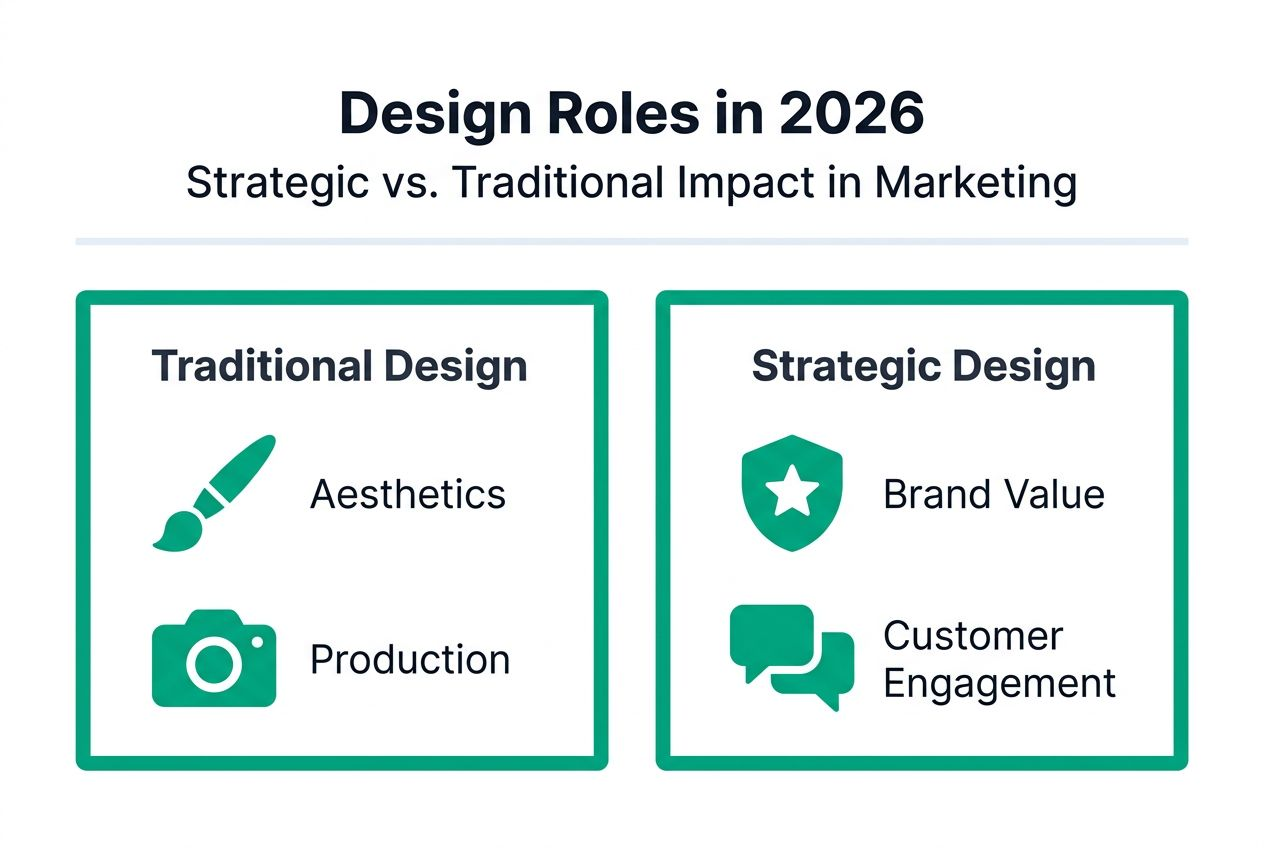
Designers have transformed from production specialists into strategic marketing partners who shape brand value and customer perception. This evolution reflects broader changes in how businesses approach marketing in 2026.
The numbers tell the story. Over 70% of organizations now view design as a strategic function rather than purely aesthetic. This shift acknowledges that designers contribute to long-term value creation, not just visual polish. They influence brand positioning, customer journey mapping, and competitive differentiation.
Technology accelerates this transformation. AI-assisted design tools reduce repetitive production time by nearly one-third, freeing designers to focus on research, strategic intent, and brand storytelling. Meanwhile, 48% of marketers report AI integration had the biggest impact on design and marketing performance in 2025. These tools don’t replace creativity but amplify it by handling routine tasks.
Adaptive design systems represent another strategic advantage. These frameworks maintain brand coherence while allowing flexibility across channels and touchpoints. Marketing teams benefit from consistency without sacrificing the agility needed to respond to 2026 marketing trends and shifting consumer behaviors.
Here’s what strategic designers bring to marketing teams:
- Brand architecture that aligns visual identity with business goals and market positioning
- User experience insights that improve customer journey effectiveness and conversion rates
- Systems thinking that ensures marketing materials work cohesively across channels
- Data interpretation that connects design decisions to measurable marketing outcomes
- Innovation frameworks that keep brands relevant as consumer expectations evolve
Strategic impact comparison
| Approach | Focus | Marketing outcome |
|---|---|---|
| Traditional design | Aesthetics, production | Inconsistent brand presence, limited strategic impact |
| Strategic design | Brand value, user experience, business goals | Cohesive campaigns, improved engagement, measurable ROI |
Pro Tip: Embrace AI tools to allow designers to focus on brand storytelling and strategy, not just production. This shift transforms designers from order-takers into strategic partners who elevate your entire marketing approach.
Understanding design in 2026 means recognizing that visual excellence and strategic thinking are inseparable. Designers who contribute strategically ask questions about audience psychology, business objectives, and competitive positioning before touching any creative tools.
Collaboration between marketing and design teams
The gap between marketing strategy and design execution kills campaigns. When teams work in silos, marketing plans lack visual coherence and design work misses business objectives. Integration solves this.

Designers collaborating closely with marketers and business leaders improve campaign coherence and customer engagement by ensuring clarity, usability, and relevance in marketing visuals. This human-centered approach directly impacts conversion rates because design decisions reflect actual customer needs and behaviors.
Cross-functional cooperation aligns marketing and design teams around shared KPIs. When both groups track the same metrics, from engagement rates to conversion percentages, they make unified decisions that strengthen campaign performance. This alignment matters more than ever as customers interact with brands across multiple touchpoints.
Effective collaboration starts early. Involving designers during marketing planning, not just execution, ensures visual strategy supports business goals from the start. Designers bring insights about user experience, accessibility, and visual communication that shape campaign direction before resources are committed.
Best practices for marketing and design collaboration:
- Schedule regular joint meetings to review campaign performance, share insights, and align on upcoming initiatives
- Use shared project management tools that give both teams visibility into timelines, deliverables, and dependencies
- Co-create campaign assets through workshops that combine marketing strategy with design thinking
- Establish clear brand guidelines that balance consistency with creative flexibility for different channels
- Build feedback loops that allow rapid iteration based on performance data and customer responses
Small to medium-sized businesses benefit enormously from this integrated approach. A digital marketing strategy for SMBs that includes designers from the planning stage produces campaigns that look professional, communicate clearly, and convert effectively. The investment in collaboration pays off through higher engagement and better ROI.
Successful integration requires cultural shifts, not just process changes. Marketing teams must value design input beyond aesthetics, while designers need to understand business metrics and marketing objectives. This mutual respect transforms working relationships and campaign outcomes.
Pro Tip: Foster a culture of continuous feedback between marketers and designers to optimize campaign effectiveness. Weekly check-ins, shared analytics dashboards, and open communication channels create the environment where SMB marketing success strategies thrive.
Collaboration also extends to technology choices. When marketing and design teams jointly evaluate design collaboration insights, they select tools that serve both functions. This unified approach to technology prevents the fragmentation that slows campaigns and creates inconsistencies.
Common misconceptions about designers’ roles in marketing
Myths about designers limit how marketing teams leverage their full potential. These misconceptions cost businesses opportunities for growth, engagement, and competitive advantage.
Top 3 misconceptions limiting design impact in marketing:
Myth: Designers only make visuals look good. Reality: Strategic designers drive brand identity, shape customer perception, and influence engagement through thoughtful visual communication. They consider psychology, usability, and business objectives, not just aesthetics.
Myth: Marketing and design work independently. Reality: Integrated efforts yield substantially better results. When teams collaborate from planning through execution, campaigns achieve coherence that resonates with audiences and drives measurable outcomes.
Myth: AI threatens designers’ creativity. Reality: AI boosts efficiency by handling repetitive tasks, enabling designers to focus on strategy, innovation, and creative problem-solving. Technology amplifies human creativity rather than replacing it.
These misunderstandings stem from outdated organizational structures where design was a service function, not a strategic partner. Many marketers still mistakenly reduce designers’ roles to aesthetics only, neglecting their strategic contributions to brand storytelling, analytics, and system-wide marketing integration.
The impact of these myths shows up in campaign performance. Marketing teams that view designers as order-takers produce campaigns that lack visual coherence, miss user experience opportunities, and fail to differentiate from competitors. They invest in strategy without ensuring execution aligns with that strategy.
Small businesses particularly suffer from these misconceptions. Limited budgets make every marketing dollar count, yet treating design as an afterthought wastes resources on campaigns that underperform. Website design benefits extend far beyond appearance, including improved navigation, faster load times, and conversion optimization.
Breaking free from these myths requires education and experience. Marketing professionals who work closely with strategic designers quickly recognize the value beyond visual polish. They see how design thinking improves customer journey mapping, how visual hierarchy guides attention to key messages, and how brand consistency builds trust over time.
The 2026 marketing landscape demands this evolved understanding. As AI reshapes consumer behavior and marketing design role misconceptions become more costly, businesses that integrate designers strategically gain significant competitive advantages.
Practical steps to integrate designers into marketing efforts
Transforming how your team works with designers requires concrete actions, not just mindset shifts. These steps help marketing professionals at SMBs effectively leverage design talent.
Implementation roadmap:
Assess current marketing workflows to find design integration points. Map your campaign development process from strategy through execution. Identify where designers currently enter the process and where earlier involvement would improve outcomes. Look for bottlenecks caused by late-stage design changes.
Involve designers early to align on goals and messaging. Bring designers into initial planning meetings for campaigns, product launches, and content initiatives. Share business objectives, audience insights, and success metrics so design decisions support marketing strategy from the start.
Utilize AI tools to automate routine design tasks and increase strategic focus. Implement platforms that handle repetitive work like resizing assets, generating variations, or optimizing images. This frees designers to focus on creative strategy, brand innovation, and user experience improvements.
Train teams on collaborative tools and shared KPIs for alignment. Invest in project management systems that give both marketing and design visibility into campaigns. Establish shared metrics so both teams track progress toward the same goals and can make data-informed decisions.
Use adaptive design systems to maintain brand coherence while staying flexible. Build design frameworks that ensure consistency across channels without requiring approval for every minor variation. These systems speed up execution while protecting brand integrity.
Workflow comparison:
| Traditional isolated design | Integrated strategic design |
|---|---|
| Design requested after strategy complete | Designers participate in strategy development |
| Focus on individual assets | System-level thinking across touchpoints |
| Limited iteration due to the timeline | Continuous improvement based on performance |
| Success is measured by delivery | Success measured by marketing outcomes |
| Separate tools and processes | Unified platforms and workflows |
Small businesses can leverage freelance designers with marketing expertise and AI tool proficiency for cost-effective results. Look for designers who understand business metrics, ask questions about objectives before starting work, and use modern tools that integrate with your marketing stack. The marketing consulting process often includes design integration as a key component.
Pro Tip: Small businesses can leverage freelance designers with marketing expertise and AI tool proficiency for cost-effective results. This approach provides strategic design thinking without the overhead of a full-time hire.
Technology choices matter. Select tools that serve both marketing and design needs, from collaborative planning platforms to analytics dashboards that track visual performance. Integration reduces friction and speeds up campaigns. Review website design best practices to ensure your digital presence reflects strategic design thinking.
Implementation takes time. Start with one campaign or initiative as a pilot for new collaborative approaches. Document what works, adjust what doesn’t, and gradually expand integration across all marketing efforts. The investment pays off through better campaign performance and more efficient resource use.
Design’s impact on customer engagement, brand credibility, and conversion
Strategic design investment delivers measurable marketing benefits. The evidence spans trust building, engagement metrics, and conversion rates.
Trust and credibility have become critical as AI agents reshape consumer journeys. Brands that succeed in 2026 focus on establishing credibility and trust through design as AI agents increasingly act as gatekeepers. These AI systems recommend brands based on factors including visual professionalism, user experience quality, and design consistency.
User experience directly influences conversion. Marketing outcomes improve substantially when design focuses on user experience, with intuitive UX increasing engagement and conversion significantly. Customers complete desired actions more frequently when interfaces are clear, navigation is logical, and visual hierarchy guides attention effectively.
Ways design impacts marketing success:
- Builds trust through professional, consistent brand presentation across all customer touchpoints
- Simplifies choices by using visual hierarchy and clear calls to action that guide customer decisions
- Enhances visibility in crowded markets through distinctive brand identity and memorable visual systems
- Drives loyalty by creating positive experiences that customers want to repeat and recommend
Design impact on marketing metrics:
| Metric | Impact of strategic design | Business outcome |
|---|---|---|
| Customer engagement | 40-60% increase in time on site and content interaction | Higher brand awareness and consideration |
| Conversion rate | 20-35% improvement in goal completions | More leads and sales from the same traffic |
| Brand recall | 3-5x stronger recognition in target markets | Reduced customer acquisition costs |
| Customer trust | 50-70% higher confidence ratings | Increased lifetime value and referrals |
These improvements compound over time. Better engagement leads to more data about customer preferences, which informs design refinements, which further improve engagement. This virtuous cycle gives strategically designed brands significant competitive advantages.
Small to medium-sized businesses benefit disproportionately from design investment. While large competitors may have bigger budgets, strategic design helps SMBs punch above their weight through clear differentiation, superior user experiences, and authentic brand stories. Digital marketing due diligence increasingly evaluates design quality as an indicator of marketing effectiveness.
The connection between design and business outcomes has never been clearer. 2026 marketing trends by Kantar emphasize that brands investing in credibility through design outperform competitors across engagement, conversion, and retention metrics. This isn’t about spending more but about integrating design strategically into marketing efforts.
Boost your marketing results with strategic design at Ascendly
You’ve seen how strategic design transforms marketing performance. Now it’s time to put these insights into action.
Ascendly Marketing offers integrated digital marketing services that treat design as a strategic partner, not an afterthought. Our approach ensures every visual element supports your business goals, enhances customer experience, and drives measurable results. We specialize in helping small to medium-sized businesses compete effectively through cohesive brand experiences.
Our team combines marketing strategy expertise with design thinking to create campaigns that engage audiences and convert prospects. From AI-enhanced workflows to adaptive design systems, we implement the approaches covered in this guide. We’ve helped clients boost campaign performance through strategic design integration since 2013.
Whether you need a comprehensive small business digital marketing strategy or expert web design services that drive conversions, we’re ready to partner with you. Let’s discuss how strategic design can elevate your marketing results and accelerate your business growth in 2026.
Frequently Asked Questions
What is the strategic role of designers in marketing?
Designers shape brand identity, enhance user experience, and improve campaign effectiveness by aligning visual communication with business objectives. They contribute to strategy development, not just execution, by bringing insights about customer psychology, usability, and visual storytelling that inform marketing decisions.
How do designers collaborate with marketing teams effectively?
Effective collaboration involves designers participating in planning meetings, sharing access to project management tools, and aligning around common KPIs like engagement and conversion rates. Regular communication, co-creation workshops, and continuous feedback loops ensure marketing strategy and design execution remain synchronized throughout campaigns.
What AI tools help designers focus on marketing strategy?
AI-assisted design platforms automate repetitive tasks like resizing assets, generating variations, and optimizing images, reducing production time by approximately one-third. This efficiency allows designers to dedicate more attention to brand strategy, user research, creative innovation, and solving complex marketing challenges that require human insight.
Why do marketers undervalue designers’ contributions?
Many marketers still view designers through an outdated lens as aesthetic specialists rather than strategic partners who contribute to brand storytelling, analytics, and system-wide integration. This misconception stems from traditional organizational structures where design was a service function, limiting awareness of designers’ full potential impact on marketing outcomes.
How can small businesses integrate designers into marketing efforts?
Small businesses should involve designers early in campaign planning, use AI tools to maximize efficiency, implement adaptive design systems for brand consistency, and consider freelance designers with marketing expertise. Starting with pilot projects allows teams to refine collaborative workflows before expanding integration across all marketing initiatives.