

TL;DR:
- Public relations helps small businesses build trust and generate high-quality leads without relying solely on paid advertising.
- Earned media outperforms paid ads in conversion rates, customer lifetime value, and long-term visibility.
- Investing in targeted local and trade media provides lasting credibility and sustainable growth over time.
Public relations is the most direct path for small and medium-sized businesses to build lasting trust, generate high-quality leads, and grow brand authority without relying entirely on paid advertising. The question of why invest in PR has a clear answer: earned media leads convert at 31% compared to just 12% for paid advertising. That gap is not a rounding error. It reflects a fundamental difference in how buyers respond to credibility versus interruption. For SMB owners and marketers, understanding this difference is the starting point for building a marketing budget that actually compounds over time.
Why invest in PR instead of just running more ads?
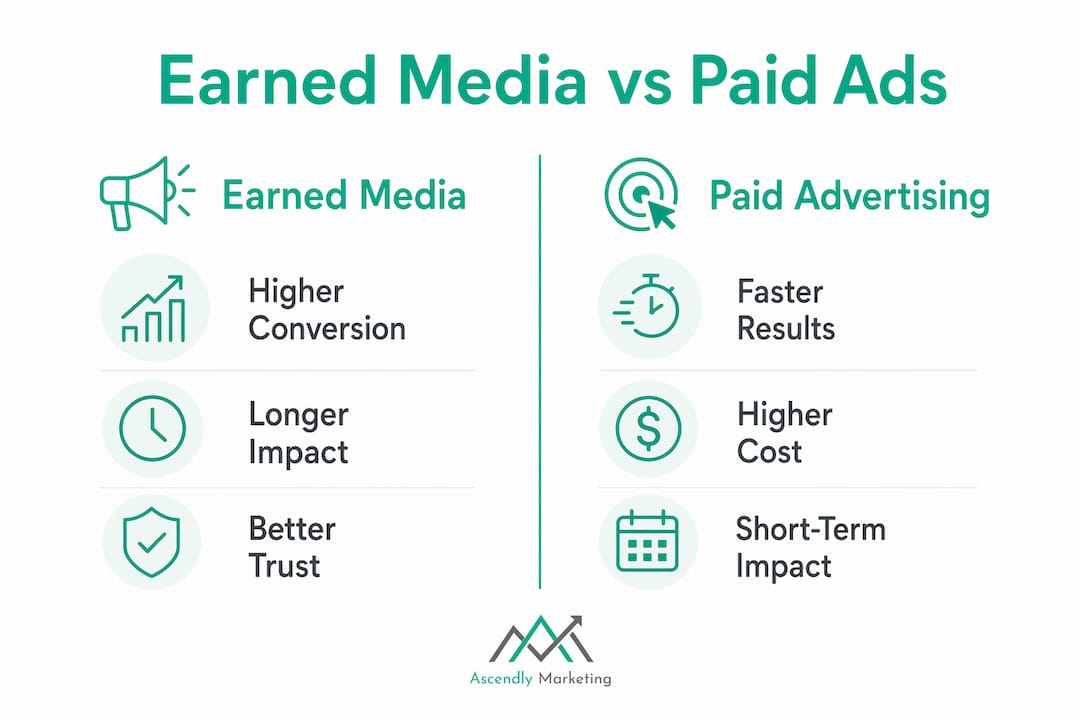
Paid advertising delivers speed. PR delivers trust. The two are not interchangeable, and confusing them is one of the most expensive mistakes SMB owners make.

Earned media outperforms paid advertising because a third party- a journalist, editor, or publication- is vouching for your business. That endorsement carries weight that no ad can replicate, regardless of budget. Buyers trust editorial coverage because it is not purchased.
The benefits of PR investment also compound in ways that paid ads cannot. A press placement from six months ago still drives referral traffic, improves brand search volume, and supports SEO. A paid ad from six months ago is gone the moment the budget ran out. PR builds an asset. Advertising rents attention.
For SMBs with limited budgets, this distinction matters enormously. Every dollar spent on PR has the potential to generate returns long after the initial spend. That is the core argument for the value of public relations as a long-term growth engine.
How earned media delivers better leads and higher ROI
The numbers behind earned media performance are striking. Customer lifetime value is 74% higher from leads that originate through earned media compared to paid media. That means the customers PR brings in spend more, stay longer, and refer more often.
| Metric | Earned media | Paid advertising |
|---|---|---|
| Lead-to-close conversion rate | 31% | 12% |
| Customer lifetime value | 74% higher | Baseline |
| AI platform citation rate | 44% of placements | 2–4% of placements |
| Asset longevity | Months to years | Active spend only |
| Brand credibility signal | High (third-party) | Low (self-declared) |
The AI citation gap is particularly important for SMBs thinking about long-term visibility. Earned editorial placements are cited in Google AI Overviews at a rate of 44%, compared to just 2–4% for paid ads or wire-distributed press releases. As AI-generated search results become the default interface for buyers, appearing in those answers requires the kind of credibility that only earned coverage provides.
The compounding effect is real and measurable. A single strong placement in a trade publication can drive inbound inquiries for 12–18 months. Paid ads require continuous spend to maintain any visibility at all. For SMBs, the math on PR investment advantages becomes obvious when you account for the full duration of returns, not just the first 30 days.
Pro Tip: Track inbound leads by source using UTM parameters and ask new clients directly how they heard about you. Many PR-driven leads arrive through brand search, not a direct link, so self-reported attribution often reveals PR’s true impact.
Why trust matters more than exposure in a skeptical market
Exposure without credibility is noise. The importance of public relations in 2026 is inseparable from a broader crisis in media trust that directly affects how buyers evaluate businesses.
The Reuters Institute Digital News Report found that US public trust in news dropped to just 25%. That figure tells a specific story: buyers are skeptical of everything they read, which means the bar for credibility is higher than ever. Businesses that earn coverage in publications their audience already trusts inherit some of that trust by association.
PR professionals now prioritize credibility, clarity, and consistency over raw volume of coverage. The old model of “getting hits” has given way to a more deliberate approach: building authentic relationships with journalists and editors who cover topics your audience actually cares about. This shift benefits SMBs because it levels the playing field. A well-told story from a local business can outperform a generic press release from a large corporation.
The three principles that define effective PR in this environment are:
- Clarity. Your message must be simple enough for a journalist to explain in one sentence. If you cannot articulate what makes your business different in plain language, no PR effort will fix that.
- Consistency. One placement does not build a reputation. Regular, relevant coverage in the right publications creates the pattern that buyers recognize as authority.
- Credibility. Every claim you make in media must be verifiable. Overpromising in a press release destroys the relationship with the journalist and the audience simultaneously.
Brands that act transparently and deliver visible benefits to their communities are the ones that restore audience confidence in a post-trust climate. For SMBs, that means leading with real outcomes, real customer stories, and real expertise rather than marketing language.
How does PR compare to paid advertising for SMBs?
PR and paid advertising serve different functions. Treating them as substitutes is a strategic error. Treating them as complements is where the real growth happens.
Paid ads provide faster visibility and precise audience targeting, but they lack the lasting credibility and brand footprint that PR creates. An ad tells buyers you paid to reach them. A press placement tells buyers that someone else decided you were worth writing about. Both messages land differently.
The most effective approach for SMBs is a hybrid model. Combining press releases with paid ads creates a strategy that uses each channel for what it does best. Here is how to integrate them practically:
- Secure a press placement first. Use earned coverage to establish credibility on a specific topic or product launch before spending on ads.
- Retarget press-driven visitors. Run paid ads to audiences who visited your site after reading the coverage. These visitors already have context and convert at higher rates.
- Use ads to test messaging. Run short paid campaigns to identify which headlines and value propositions resonate, then bring the winning language into your PR pitches.
- Measure PR’s halo effect on paid performance. Track whether your paid ad click-through rates and conversion rates improve in the weeks following a major press placement. They typically do.
This four-step integration turns PR and paid advertising into a reinforcing cycle rather than a budget competition. The PR investment advantages multiply when earned credibility feeds paid performance.
Pro Tip: Do not measure PR success by media impressions alone. Track brand search volume, referral traffic quality, and inbound lead source data month over month. These metrics reveal PR’s true impact on growth far better than reach numbers.
How can SMBs start investing in PR without a large budget?
The biggest misconception about PR is that it requires a large agency retainer and a national media strategy. It does not. SMBs can build meaningful PR presence by starting with targeted trade and local publications, which cost far less to reach and often deliver more relevant audiences.
Founder visibility is one of the most underused PR assets available to SMBs. When a business owner shares genuine expertise through contributed articles, podcast appearances, or expert commentary in trade publications, they become the go-to source in their category. That reputation opens doors to better prospects, stronger partnerships, and media relationships that compound over time.
Five practical first steps for SMBs ready to invest in public relations:
- Identify three to five trade publications your ideal customers read and study what kinds of stories they cover. Pitch stories that fit their editorial calendar, not your marketing calendar.
- Build a media contact list of five to ten journalists who cover your industry. Follow their work, engage with it genuinely, and reach out with relevant story ideas before you need coverage.
- Create a simple newsroom page on your website with your bio, high-resolution photos, past coverage, and contact information. Journalists who find you organically need this to move quickly.
- Develop two or three signature talking points that reflect your expertise and differentiate your business. Use these consistently across every media interaction so your positioning becomes recognizable.
- Track coverage quality, not just quantity. Use Google Alerts for your brand name, monitor referral traffic in Google Analytics, and log every inbound lead that mentions media coverage as a touchpoint.
Consistent, focused PR beats broad, infrequent efforts every time. A business that earns one relevant placement per month in the right publication builds more authority than one that sends a press release to 500 outlets twice a year. The role of PR in online presence for SMBs is cumulative. Every placement adds to a body of evidence that tells buyers, search engines, and AI platforms that your business is credible and worth paying attention to.
Key Takeaways
PR investment delivers compounding returns in lead quality, brand authority, and customer lifetime value that paid advertising alone cannot match.
| Point | Details |
|---|---|
| Earned media converts better | Leads from earned coverage close at 31% vs. 12% for paid ads. |
| Customer value is higher | Earned media leads generate 74% higher customer lifetime value than paid media leads. |
| Trust beats exposure | US news trust sits at 25%, making third-party credibility more valuable than self-declared claims. |
| Hybrid strategies win | Combining PR with paid ads creates a reinforcing cycle that improves both channels. |
| SMBs can start small | Targeting trade and local publications delivers focused PR results without large budgets. |
PR is the long game most SMBs are not playing
After working with SMBs across industries since 2013, Ascendly Marketing has seen the same pattern repeat: business owners invest heavily in paid ads, get short-term traffic, and then wonder why their brand does not feel established. The answer is almost always the same. They skipped PR.
The discomfort with PR usually comes down to patience. Ads produce results in days. PR produces results in months. That timeline feels risky when you are watching a budget, but the math tells a different story. A single strong earned placement can drive qualified inbound leads for over a year. No ad campaign delivers that kind of return on a single spend.
What Ascendly Marketing has found is that the SMBs who integrate PR with their digital marketing services grow faster and more sustainably than those who rely on paid channels alone. PR gives their paid campaigns better raw material to work with. It gives their sales team a credibility shortcut. It gives their brand a story that buyers remember.
The trust crisis in media is not a reason to avoid PR. It is the strongest argument for doing it right. Buyers are skeptical of everything. The businesses that earn genuine third-party coverage in publications their audience trusts are the ones that cut through that skepticism. That is not a tactic. It is a competitive advantage.
— Ascendly Marketing
Ascendly Marketing’s approach to PR-driven growth for SMBs
Ascendly Marketing has built PR and digital marketing programs for SMBs since 2013, combining earned media with paid and organic strategies to create growth that does not stop when the ad budget runs out.
The team at Ascendly Marketing integrates public relations with SEO, content creation, and paid advertising so that every channel reinforces the others. A press placement improves brand search volume. Better brand search improves paid ad quality scores. Stronger credibility improves conversion rates across the board. If you are ready to build a PR-driven growth plan that fits your budget and your market, contact Ascendly Marketing to schedule a consultation and see what a coordinated approach can do for your business.
FAQ
Why invest in PR instead of spending more on ads?
PR generates leads that convert at 31% compared to 12% for paid advertising, and those leads produce 74% higher customer lifetime value. Paid ads stop working the moment you stop spending; PR placements continue driving traffic and credibility for months.
How long does it take to see results from PR?
PR results typically build over three to six months, with compounding returns that strengthen over time. Unlike paid ads, a single strong placement can drive qualified inbound leads for 12–18 months after publication.
Is PR worth the investment for small businesses?
PR is particularly well-suited for small businesses because targeted trade and local publications deliver focused, relevant audiences without requiring large agency budgets. Consistent coverage in the right outlets builds authority faster than broad, infrequent outreach.
How does PR affect AI search results?
Earned editorial placements appear in Google AI Overviews at a rate of 44%, compared to just 2–4% for paid ads. Businesses with consistent earned media coverage are far more likely to be cited by AI platforms as authoritative sources.
What is the best way to measure PR success?
Track brand search volume, referral traffic quality, and inbound lead source data month over month rather than relying on media impressions alone. Self-reported attribution from new clients often reveals PR’s true impact, since many PR-driven leads arrive through brand search rather than a direct link.