

Many business owners think website design is just about picking colors and fonts. That misconception costs them leads daily. Modern website design integrates aesthetics with structure and functionality to create effective websites that drive business growth. For small to medium enterprises, understanding what website design truly encompasses is critical for enhancing online presence and capturing qualified leads. This guide breaks down essential website design principles, current trends, and practical tactics you can use to transform your digital storefront into a lead generation engine that works 24/7 for your business.
Table of Contents
- Understanding What Website Design Really Means
- Key Principles of Effective Website Design for Business Impact
- Modern Web Design Trends Shaping Effective Online Presence In 2026
- How Well-Designed Websites Drive Lead Generation and Business Growth
- Explore Professional Website Design Services at Ascendly Marketing
- Frequently Asked Questions About Website Design
Key takeaways
| Point | Details |
|---|---|
| Design is multidimensional | Website design combines visual elements, user experience architecture, and technical performance to support business objectives. |
| Mobile responsiveness is mandatory | Responsive design ensures seamless functionality across all devices, directly impacting engagement and search rankings. |
| Speed affects revenue | Fast-loading websites reduce bounce rates and improve both user satisfaction and conversion rates significantly. |
| Clear CTAs drive action | Strategic placement of calls to action transforms passive visitors into active leads and customers. |
| Continuous optimization matters | Regular testing and updates keep your website aligned with evolving user expectations and marketing goals. |
Understanding what website design really means
Website design extends far beyond choosing attractive visuals. It encompasses layout architecture, color psychology, typography hierarchy, user interface patterns, navigation structure, and technical infrastructure that powers your online presence. When visitors land on your site, they form opinions within milliseconds based on these combined elements. Poor design signals unprofessionalism and drives potential customers away before they read a single word.
Effective website design services balance form with function. Your site must look professional while simultaneously guiding visitors toward specific actions like filling out contact forms, downloading resources, or making purchases. Visual appeal attracts attention, but strategic structure converts that attention into measurable business results. Typography needs to be readable across devices. Color schemes should reinforce your brand identity while maintaining sufficient contrast for accessibility. Navigation must be intuitive enough that first-time visitors can find what they need without frustration.
The technical foundation matters just as much as what users see. Page load speed, mobile optimization, browser compatibility, and secure hosting all fall under the website design umbrella. A beautiful site that takes eight seconds to load will hemorrhage visitors regardless of how stunning it looks. Similarly, a desktop-only design alienates the majority of web traffic that now comes from smartphones and tablets.
Good design builds immediate trust with your audience. Professional layouts signal credibility and competence in your industry. Clear information hierarchy helps visitors quickly assess whether your business can solve their problems. Strategic use of white space prevents cognitive overload and guides attention to priority elements. Every design choice should serve a purpose tied to your business objectives.
Pro Tip: Prioritize website usability testing with real users from your target audience to identify friction points you might miss as someone intimately familiar with your own business.
Key principles of effective website design for business impact
Usability stands as the foundation of effective website design. Your site must be easy to navigate with clear pathways to important information and conversion points. Visitors should never wonder where to click next or how to complete desired actions. Intuitive navigation reduces cognitive load and keeps users engaged longer. Clear calls to action tell visitors exactly what steps to take, whether that’s scheduling a consultation, requesting a quote, or subscribing to your newsletter.

Responsive design has shifted from optional to mandatory. Responsive design and fast load times significantly improve user engagement and search rankings. Your website must deliver seamless experiences whether someone accesses it from a desktop computer, tablet, or smartphone. Mobile users now represent over 60% of web traffic for most industries. A site that forces pinching, zooming, or horizontal scrolling on mobile devices will lose those visitors to competitors with mobile-optimized experiences.
Accessibility broadens your potential audience while demonstrating social responsibility. Designing for users with disabilities isn’t just ethical; it’s smart business. Proper color contrast helps users with visual impairments. Alt text for images enables screen readers to convey information to blind users. Keyboard navigation supports those who cannot use a mouse. These accommodations often improve usability for all visitors while expanding your addressable market.
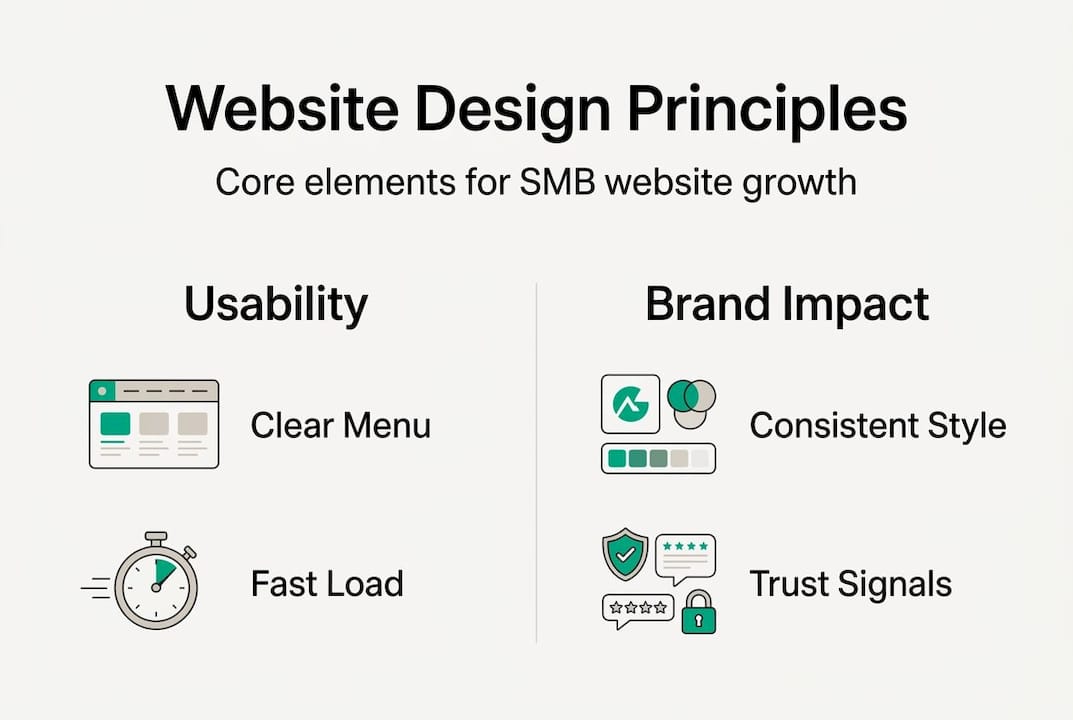
Brand consistency strengthens recognition and builds trust over time. Your website should reflect your brand identity through consistent use of colors, fonts, imagery style, and tone of voice. When visitors move from your social media to your website to your email communications, they should experience a cohesive brand presence. Inconsistency creates confusion and erodes confidence in your professionalism.
Page speed directly impacts both user experience and search engine optimization. Google uses load time as a ranking factor because slow sites frustrate users. Every additional second of load time increases bounce rates exponentially. Optimize images, minimize code, leverage browser caching, and use content delivery networks to keep your site fast.
| Poor Design Impact | Effective Design Impact |
|---|---|
| High bounce rates from slow load times | Engaged visitors who explore multiple pages |
| Confused navigation leading to exits | Clear pathways driving conversions |
| Mobile users abandoning site | Seamless cross-device experiences |
| Weak brand perception | Strong professional credibility |
| Missed accessibility audience | Broader market reach |
Pro Tip: Implement monthly speed audits using tools like Google PageSpeed Insights to catch performance degradation before it impacts your bottom line.
Modern web design trends shaping effective online presence in 2026
Mobile-first design has become the standard approach rather than an afterthought. Designers now create for smartphone screens first, then scale up to larger displays. This priority shift reflects user behavior, with mobile devices generating the majority of web traffic across industries. Sites built mobile-first typically perform better on all devices because they’re forced to prioritize essential content and streamlined navigation from the start.
Artificial intelligence integration enables dynamic, personalized user experiences at scale. AI-powered chatbots provide instant customer service without human intervention. Machine learning algorithms can customize content recommendations based on visitor behavior patterns. Predictive analytics help businesses understand which design elements drive the best results. These technologies were once exclusive to enterprise budgets but have become accessible to small and medium businesses through various platforms and services.
Personalization increases relevance and dramatically improves conversion rates. Generic, one-size-fits-all websites underperform compared to sites that adapt content based on visitor characteristics, behavior, or stage in the buyer journey. Showing different homepage content to first-time visitors versus returning customers creates more relevant experiences. Displaying industry-specific case studies based on referral source improves engagement. Even simple personalization like using a visitor’s name in forms can boost completion rates.
Minimalist design focuses attention and improves both aesthetics and performance. Removing unnecessary elements speeds load times while reducing cognitive load for visitors. Clean layouts with ample white space direct attention to priority content and calls to action. This trend away from cluttered, information-dense pages reflects growing understanding of how users actually consume web content: quickly scanning for relevant information rather than reading everything.
2026 marketing and web design trends provide measurable advantages in customer engagement and conversions. Here are the top five trends transforming SMB websites:
- Voice search optimization adapts content structure for conversational queries as smart speakers proliferate in homes and offices.
- Micro-interactions add subtle animations and feedback that make interfaces feel responsive and engaging without overwhelming users.
- Dark mode options reduce eye strain and battery consumption while offering users interface preferences they increasingly expect.
- Asymmetric layouts break from traditional grid patterns to create visual interest and guide attention more dynamically.
- Sustainability messaging communicates environmental responsibility through design choices and hosting decisions that resonate with conscious consumers.
“The websites that win in 2026 don’t just look modern, they anticipate user needs through intelligent design and seamless functionality that removes friction from every interaction.”
How well-designed websites drive lead generation and business growth
Well-structured website design improves search engine visibility through better user engagement signals. When visitors spend more time on your site, view multiple pages, and return frequently, search engines interpret these behaviors as indicators of quality content and relevant results. Technical design elements like clean code, fast load times, mobile responsiveness, and proper heading hierarchy also directly influence search rankings. Higher visibility in search results drives more qualified organic traffic to your site without ongoing advertising costs.
Strategic calls to action convert passive browsers into active leads. Every page should guide visitors toward a logical next step aligned with their stage in the buyer journey. Homepage visitors might be ready for a free consultation. Blog readers might prefer downloading a detailed guide. Product page visitors could want to see a demo or request a quote. Benefits of investing in website design include improved traffic, trust, and sales for small and medium businesses.
Fast, mobile-optimized sites dramatically reduce abandonment rates. When users encounter slow load times or difficult mobile navigation, they simply leave for competitor sites. Every second of delay costs you potential customers. Mobile optimization ensures the growing majority of smartphone users can easily access your information and complete conversion actions like form submissions or phone calls.
| Metric | Before Redesign | After Redesign | Improvement |
|---|---|---|---|
| Average session duration | 1:23 | 3:47 | 172% increase |
| Bounce rate | 68% | 41% | 40% decrease |
| Lead form completions | 23/month | 67/month | 191% increase |
| Mobile conversion rate | 1.2% | 3.8% | 217% increase |
Tactical website elements that aid lead generation include:
- Exit-intent popups capture emails from visitors about to leave without converting.
- Live chat widgets provide immediate assistance when prospects have questions during the consideration phase.
- Social proof elements like testimonials and case studies build credibility and reduce purchase anxiety.
- Lead magnets offer valuable resources in exchange for contact information, starting the nurturing process.
- Clear value propositions immediately communicate what makes your business different and why visitors should care.
- Simplified forms reduce friction by asking only for essential information needed at each stage.
Integrating your website with marketing automation platforms enables sophisticated lead nurturing sequences. When someone downloads a guide, you can automatically send related content over subsequent weeks. Behavior tracking shows which prospects are most engaged and sales-ready. This integration transforms your website from a static brochure into an active participant in your generate B2B leads effectively strategy.
Pro Tip: Use A/B testing monthly to refine website elements like button colors, headline copy, and form lengths, measuring impact on conversion rates rather than relying on assumptions about what works.
Explore professional website design services at Ascendly Marketing
Transforming your website from a digital placeholder into a lead generation engine requires expertise across design, user experience, technical optimization, and marketing strategy. Ascendly Marketing specializes in top-rated web design services that integrate seamlessly with comprehensive digital marketing services to drive measurable business growth for small and medium enterprises.
Since 2013, our team has helped businesses transform their online presence through websites that don’t just look professional but actively contribute to revenue growth. We understand that your website sits at the center of your small business digital marketing strategy, connecting all your marketing efforts from SEO to social media to paid advertising. Our approach combines data-driven design decisions with creative execution that reflects your unique brand identity and speaks directly to your target audience’s needs and pain points.
Frequently Asked Questions About Website Design
What is the difference between website design and web development?
Website design focuses on the visual and experiential aspects like layout, colors, typography, and user interface elements that visitors see and interact with. Web development handles the technical implementation, writing code that makes the design functional, integrating databases, and building features like contact forms or e-commerce systems. Both disciplines work together to create effective websites.
How often should I update my website design?
Major redesigns typically make sense every three to five years to keep pace with evolving design trends, technology standards, and user expectations. However, you should continuously optimize individual elements through A/B testing and make incremental improvements based on user behavior data. Regular content updates should happen much more frequently, ideally weekly or monthly depending on your industry.
Can good website design improve SEO?
Absolutely. Search engines prioritize sites that deliver excellent user experiences, which good design directly supports through fast load times, mobile responsiveness, clear navigation, and engaging content presentation. Technical design elements like clean code, proper heading structure, and optimized images also contribute to better search rankings. User engagement signals like time on site and low bounce rates, both influenced by design quality, factor into search algorithms.
What makes a website design user-friendly?
User-friendly design features intuitive navigation that helps visitors find information quickly, clear calls to action that guide next steps, fast load times that respect users’ time, mobile responsiveness for seamless cross-device experiences, readable typography with sufficient contrast, and logical information architecture that matches how users think about your products or services. Accessibility features that accommodate disabilities also improve usability for everyone.
How can I measure if my website design is successful?
Track metrics like bounce rate, average session duration, pages per session, and conversion rates for key actions like form submissions or purchases. Use heatmaps to see where users click and how far they scroll. Monitor mobile versus desktop performance separately. Conduct user testing sessions where you watch real people attempt to complete tasks on your site. Compare performance before and after design changes to measure impact on business objectives like lead generation and sales.