

TL;DR:
- Digital PR is a strategic approach that enhances a brand’s online presence through earned media, backlinks, and social proof. Its online focus allows for measurable results and long-term AI visibility, especially when maintained consistently over 12 months. This integrated method supports search rankings, builds reputation, and outperforms traditional publicity in cost-effectiveness and ongoing influence.
Public relations is a strategic discipline that directly shapes a brand’s online presence by securing earned media coverage, authoritative backlinks, and social proof across digital channels. The industry term for this modern practice is digital PR, and it sits at the intersection of traditional communications and digital marketing. Digital PR extends traditional PR by utilizing blogs, podcasts, social media, and digital publications, enabling more measurable and targeted outreach than print or broadcast ever could. For small and medium-sized business owners, understanding the role of PR in online presence is not optional. It is the foundation of long-term brand authority.
What are the main digital PR strategies that enhance online presence?
Digital PR gives you a set of concrete tools to build visibility where your buyers actually spend time. The strategies below are not theoretical. They are the ones that move the needle for SMBs competing against larger brands with bigger ad budgets.
Media outreach and earned coverage
Pitching your story to journalists, editors, and industry publications earns you coverage that paid ads cannot replicate. Earned media coverage earns inbound links that support SEO and builds brand authority beyond what paid marketing can achieve. A single placement in a respected industry outlet like Forbes, Inc., or a niche trade publication can drive referral traffic for months. The key is pitching stories with genuine news value, not thinly veiled advertisements.
Content marketing integration
PR and content marketing work best when they share the same story. A well-researched white paper becomes a press release, a podcast talking point, and a guest post simultaneously. This approach multiplies the reach of a single idea without multiplying your production budget. SMBs that align their PR messaging with their content calendar see faster brand recognition growth than those running the two functions separately.
Social media amplification
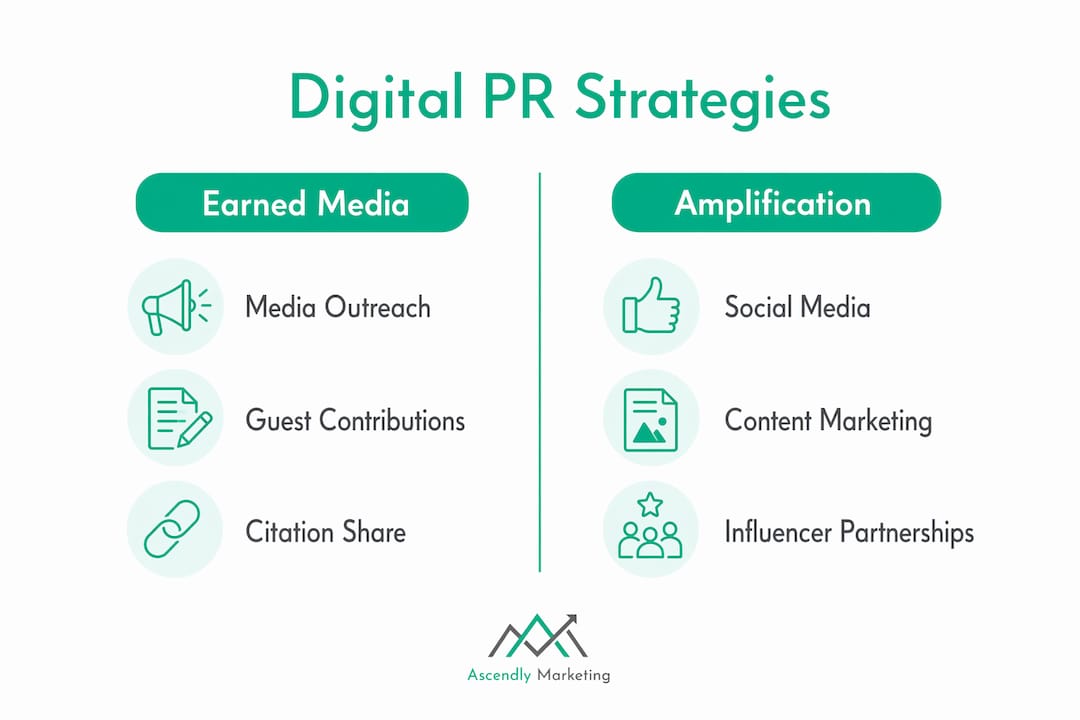
PR integrated with social media enables real-time message amplification and stronger brand storytelling. When a media placement goes live, sharing it across LinkedIn, Instagram, and X (formerly Twitter) compounds its reach. Your audience sees third-party validation, not just your own claims. That shift from self-promotion to earned credibility is what the importance of PR in social media comes down to.

Influencer partnerships and guest contributions
Writing guest posts for respected industry blogs or partnering with credible micro-influencers builds referral traffic and positions your brand as a subject matter authority. Micro-influencers with engaged niche audiences often deliver stronger conversion rates than mass-reach celebrities. Guest contributions also generate backlinks, which directly support your organic search rankings.
Pro Tip: Audit your citation share, meaning how often your brand appears in AI-generated answers on tools like ChatGPT or Perplexity, not just your website traffic. Citation share matters more for AI visibility than raw audience reach. Prioritize placements in sources AI tools pull from, including review sites, industry roundups, and authoritative trade publications.
How does digital PR differ from traditional PR in building online brand image?
The distinction matters because the tactics, measurement methods, and long-term outcomes are fundamentally different. Knowing where each approach excels helps you allocate your budget and effort correctly.
Traditional PR targets print newspapers, television, and radio. Its reach is broad but hard to measure precisely. You get a segment on a local news broadcast and hope the right people saw it. Digital PR targets online channels where every click, share, and mention is trackable. That measurability is the single biggest practical advantage for SMBs with limited budgets.
Digital PR is cost-effective compared to traditional media production and offers ongoing brand reputation benefits. A television commercial requires production costs, airtime fees, and a short shelf life. A well-placed article on a respected industry site costs a fraction of that and stays indexed on Google indefinitely.
| Factor | Traditional PR | Digital PR |
|---|---|---|
| Primary channels | Print, TV, radio | Blogs, podcasts, social media, online news |
| Measurability | Limited, estimated reach | Precise, analytics-driven |
| Cost | High production and placement costs | Lower production, scalable distribution |
| Longevity | Short shelf life | Content persists and compounds over time |
| SEO impact | None | Direct, through backlinks and mentions |
| AI visibility | None | High, earned media feeds AI source pools |
Pro Tip: Use digital PR’s lower production cost to run consistent monthly outreach campaigns instead of one large annual push. Consistency compounds results in ways that single bursts never do.
Why does consistent digital PR coverage matter for long-term AI visibility?
This is the question most SMBs are not asking yet, and it is the one that will separate competitive brands from invisible ones by the end of 2026.
Consistent, tier-one authoritative coverage over 12 months drives measurable AI-driven category recommendation visibility that endures for years. AI tools like ChatGPT, Perplexity, and Google’s AI Overviews pull from editorial sources to answer buyer questions. If your brand appears repeatedly in those sources, AI recommends you. If it does not, you are invisible to a growing segment of buyers who never click a traditional search result.
AI amplifies PR effectiveness by turning published articles into permanent source material used in buyer research for months or years. That is a fundamentally different dynamic than a paid ad that disappears the moment your budget runs out. Earned media becomes a compounding asset.
Here is what a consistent digital PR program looks like in practice:
- Secure monthly placements in at least two authoritative publications relevant to your industry, not just general business press.
- Track citation share across AI tools quarterly. Use tools like Meltwater or manual AI query testing to see where your brand surfaces.
- Repurpose earned coverage into social posts, email newsletters, and website testimonial sections to extend each placement’s reach.
- Build relationships with editors over time rather than sending cold pitches. Editors who know your brand prioritize your stories.
- Integrate PR with SEO so that every earned backlink supports your search rankings simultaneously.
“Measuring online presence with PR means moving beyond vanity metrics like follower counts and press release views. The real measure is how often your brand appears in the sources that AI systems and search engines trust.”
Integrating PR with content, SEO, and demand generation forms a feedback loop that improves AI visibility in real time rather than annually. That loop is what separates brands that grow steadily from those that plateau.
How does PR enhance online reputation through social media and other channels?
Online reputation is not what you say about yourself. It is what others say about you in places your buyers trust. PR shapes that narrative directly.
Digital PR builds online reputation through several concrete channels:
- Authentic brand storytelling: PR professionals craft narratives around real customer outcomes, founder stories, and community involvement. These stories appear in third-party publications, which carry far more credibility than your own website copy.
- Crisis response and perception management: When negative reviews or misinformation spread, a prepared PR response published through credible outlets corrects the record faster than social media posts alone. Search engine reputation management ensures that positive, accurate content outranks damaging content in search results.
- Social proof amplification: Media mentions shared on LinkedIn or Instagram signal to prospects that your brand is recognized by sources they already trust. This is how PR role in brand awareness compounds over time.
- Review site presence: Brands should prioritize placements in sources AI tools pull from, including review sites and industry roundups, not just traditional news outlets. G2, Trustpilot, and Clutch are as important as Forbes for many SMB buyers.
- Real-time engagement: PR integrated with social media enables brands to respond to industry news, join trending conversations, and demonstrate expertise publicly. That visibility builds familiarity, and familiarity builds trust.
The impact of PR on digital image is cumulative. Each placement, mention, and social share adds a layer of credibility that paid advertising cannot manufacture. 58% of Google searches end without a click to an external site. That statistic means your brand must appear in the search result itself, not just behind a link. Earned media mentions, knowledge panels, and AI-cited coverage put your brand in that visible space.
Key Takeaways
Digital PR is the most cost-effective way for SMBs to build lasting online authority, AI visibility, and brand credibility simultaneously.
| Point | Details |
|---|---|
| Digital PR drives AI visibility | Consistent earned coverage feeds AI tools like ChatGPT and Perplexity, making your brand recommendable. |
| Citation share beats follower count | Track how often AI cites your brand, not just how many people follow your social accounts. |
| 12-month consistency is the benchmark | Sustained tier-one coverage over 12 months produces AI-driven visibility that compounds for years. |
| Social media amplifies PR reach | Sharing earned media on LinkedIn and Instagram converts third-party credibility into direct audience trust. |
| PR and SEO reinforce each other | Earned backlinks from media placements directly support organic search rankings and domain authority. |
Ascendly Marketing’s take on where digital PR is actually headed
Most articles on this topic treat digital PR as a visibility tactic. After working with SMBs across industries since 2013, I see it differently. Digital PR is now a trust infrastructure play. The brands that win in AI-driven search are not the ones with the biggest ad budgets. They are the ones that appear repeatedly in the sources AI systems were trained on and continue to pull from.
The uncomfortable truth is that most SMBs are still measuring PR by press release pickups and social shares. Those numbers feel good but tell you almost nothing about whether your brand is being recommended by AI tools during a buyer’s research phase. Prioritizing citation share over traffic metrics is the shift that actually improves AI visibility, because AI uses editorial sources and mentions to recommend brands, not your website’s session count.
The other mistake I see constantly is treating PR as a separate function from SEO and content marketing. They are the same function with different outputs. A media placement earns a backlink. That backlink lifts your search ranking. Your higher ranking earns more media attention. The feedback loop is real, and SMBs that integrate these three disciplines see results that dwarf what any single channel produces alone. If you are running PR campaigns in isolation, you are leaving most of the value on the table.
My advice: stop chasing audience size and start chasing source influence. Get your brand into the publications, review platforms, and industry roundups that AI tools actually cite. Do it consistently for 12 months. The compounding effect will outperform any paid campaign you have run.
— Ascendly Marketing
How Ascendly Marketing can help you build your digital PR presence
Building a consistent digital PR program while running a business is genuinely difficult. Most SMBs do not have an in-house PR team, a media contact list, or the time to pitch stories monthly. That is exactly the gap Ascendly Marketing fills.
Since 2013, Ascendly Marketing has helped small and medium-sized businesses build online authority through digital PR services, SEO, content creation, and social media management. The team includes PR specialists, SEO strategists, and content creators who work together so that every media placement also supports your search rankings. If you are ready to build the kind of online presence that AI tools recommend and buyers trust, Ascendly Marketing’s digital marketing services are built for exactly that goal. Book a consultation and get a plan built around your industry and business size.
FAQ
What is digital PR and how does it differ from traditional PR?
Digital PR is a marketing practice that builds brand visibility through online channels including blogs, podcasts, social media, and digital publications. Traditional PR focuses on print, television, and radio, with limited measurability and no direct SEO impact.
How does PR improve a brand’s online reputation?
PR shapes online reputation by securing third-party coverage in credible publications, managing negative narratives through earned media responses, and building consistent social proof that search engines and AI tools recognize as trust signals.
Why does citation share matter more than audience reach for PR?
Citation share measures how often your brand appears in AI-generated answers, which directly influences buyer decisions. Audience reach measures exposure but does not indicate whether AI tools recommend your brand during research.
How long does it take for digital PR to show results?
Consistent tier-one coverage over 12 months is the benchmark for measurable AI-driven visibility. Shorter campaigns produce results, but the compounding effect that builds lasting authority requires sustained effort across a full year.
Can small businesses afford digital PR?
Digital PR is significantly more cost-effective than traditional media production, and its results persist long after each placement goes live. SMBs can start with targeted outreach to niche industry publications and review platforms before scaling to larger outlets.