

TL;DR:
- A strong online presence combines a fast, mobile-friendly website, focused social media activity, and consistent reputation management. Small businesses should focus on 2-3 relevant platforms, produce quality content regularly, and keep their local listings accurate. Sustained effort in these areas builds visibility, trust, and long-term growth.
Your online presence is the complete digital footprint your business leaves across search engines, social media, directories, and your website. Knowing how to improve online presence is the single most direct path to more customers, more leads, and more revenue for small and medium-sized businesses. A professional website, search engine optimization (SEO), and targeted social media work together as a digital ecosystem. Get any one of those wrong and the whole system underperforms. This guide breaks down each component with specific, practical steps you can act on today.
How to improve online presence through your website
Your website is the foundation of every other digital marketing effort. If it loads slowly, looks broken on a phone, or confuses visitors, no amount of social media or SEO will save your results.

Speed and mobile design come first
A professional business website must load in under 3 seconds to hold visitors and rank well in search. Every extra second of load time increases the chance a visitor leaves before seeing your offer. Mobile-first responsive design is not optional. Most visitors now reach websites from phones, so a site that looks great on a desktop but breaks on mobile loses the majority of its traffic. Tools like Google PageSpeed Insights show exactly where your site slows down.
SEO basics every SMB owner needs
SEO, or search engine optimization, is the practice of making your website easy for search engines to read and rank. The core elements are keyword research, meta title and description tags, image alt text, and schema markup. Targeting keyword themes in your website content attracts higher-quality traffic and improves your position in search results. That means writing pages and blog posts around the specific questions your customers type into Google. Ascendly Marketing’s guide to proven SEO strategies shows how this works in practice for small businesses.
Branding and user experience
A consistent brand voice and visual style across all digital channels increases trust and improves recognition. Pick a logo, a color palette, and a font set, then use them everywhere without variation. Beyond visuals, your site needs clear calls-to-action, simple navigation, and your contact information visible on every page. Visitors who cannot find your phone number or service list in 10 seconds will leave.
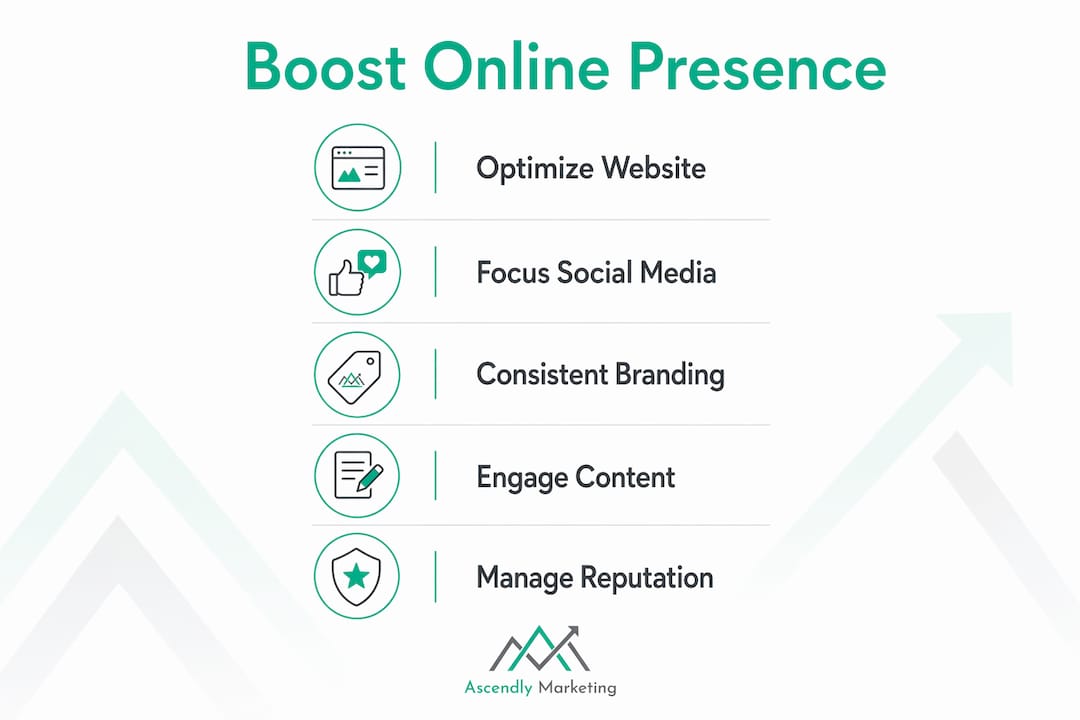
| Website element | Why it matters |
|---|---|
| Load time under 3 seconds | Reduces bounce rate and supports search rankings |
| Mobile-first design | Reaches the majority of web visitors on phones |
| Consistent branding | Builds recognition and trust across platforms |
| Clear calls-to-action | Guides visitors toward contacting or buying |
| SEO-optimized content | Attracts qualified traffic from search engines |
Pro Tip: Run a full website audit every quarter using Google Search Console and PageSpeed Insights. Fix broken links, update outdated content, and check that your contact details are accurate. Small fixes compound into big ranking gains over time.
Which social media platforms should you focus on?
The biggest mistake small business owners make on social media is trying to be everywhere at once. Focusing on 2–3 platforms where your audience is actually active produces far better results than spreading effort across six channels with thin, inconsistent content. That means doing the research first. A B2B service company belongs on LinkedIn. A restaurant or boutique retail shop belongs on Instagram and Facebook. A contractor or home services business often finds strong traction on Facebook and Nextdoor.
What to post and how often
Quality beats frequency every time. One well-crafted post per week that teaches something useful, shows a real result, or tells a customer story outperforms five generic promotional posts. Balance educational content with emotional content. Educational posts build authority. Emotional content, such as behind-the-scenes photos or customer wins, builds connection. Both types drive shares and saves, which extend your reach without paid advertising.
Engaging directly with your audience on social media builds community and nurtures brand loyalty. That means replying to comments, answering questions in DMs, and acknowledging mentions. Platforms reward accounts that generate real interaction by showing their content to more people. A social media strategy built around genuine engagement consistently outperforms one built around post volume.
- Research where your specific customers spend time before choosing platforms
- Post consistently rather than in bursts followed by long silences
- Use platform-native formats: Reels on Instagram, articles on LinkedIn, short video on Facebook
- Reply to every comment and message within 24 hours
- Use relevant hashtags and location tags to expand organic reach
Pro Tip: Use a free scheduling tool to batch your social media content one week at a time. Spending two hours on Sunday preparing posts removes the daily pressure and keeps your presence consistent even during busy weeks.
How does content marketing build trust and authority online?
Content marketing positions your business as an expert by delivering consistent value rather than pushing direct sales. Customers who learn from your content trust your brand before they ever contact you. That trust shortens the sales cycle significantly. The formats that work best for SMBs are blog posts, short videos, and email newsletters.
Here is a practical content system that works for most small businesses:
- Write one blog post per month targeting a specific question your customers ask. Use keyword research to confirm people are actually searching for that topic.
- Repurpose each blog post into a short video summary, a social media carousel, and an email newsletter section. One piece of content becomes four without extra research.
- Build an email list from day one. Email gives you a direct line to your audience that no algorithm can cut off. A monthly newsletter with useful tips keeps your business top of mind.
- Measure what works. Track page views, time on page, and email open rates. Double down on topics that perform and cut the ones that do not.
- Focus on search intent. Write content that answers what your customer is actually trying to accomplish, not just content that mentions your product. Ascendly Marketing’s content marketing guide for SMBs covers this approach in detail.
SEO-friendly content that targets keyword themes does double duty. It builds your authority with readers and signals relevance to search engines at the same time. The businesses that show up consistently in search results are almost always the ones publishing regular, useful content.
How do you manage online reputation and local visibility?
Your online reputation is what potential customers see before they ever visit your website. Responding thoughtfully to customer reviews builds goodwill and strengthens your reputation over time. That applies to both positive and negative reviews. A professional, calm response to a negative review often impresses potential customers more than the complaint itself damages you.
Google Business Profile and local SEO
Google Business Profile management improves local search visibility when you keep it regularly updated with accurate information and respond to customer questions. Claim your profile if you have not already, then fill in every field: hours, services, photos, and a description with your primary keywords. Local SEO also depends on consistent NAP data, which stands for Name, Address, and Phone number. If your NAP information differs across Google, Yelp, and other directories, search engines lose confidence in your listing and rank it lower.
- Claim and complete your Google Business Profile with photos and accurate hours
- Audit your business listings on Yelp, Bing Places, and industry-specific directories
- Keep NAP data identical across every platform
- Ask satisfied customers to leave a Google review right after a positive experience
- Set up a Google Alert for your business name to catch mentions you might miss
Pro Tip: After completing a job or sale, send a follow-up text or email with a direct link to your Google review page. Removing friction from the review process dramatically increases the number of customers who actually leave one.
Key takeaways
Building and maintaining a strong online presence requires a fast website, focused social media activity, consistent content, and active reputation management working together.
| Point | Details |
|---|---|
| Website speed and mobile design | Your site must load in under 3 seconds and work perfectly on phones to hold visitors and rank in search. |
| Platform focus over volume | Concentrate on 2–3 social media platforms where your audience is active rather than spreading thin across many. |
| Content builds trust | Regular blog posts, videos, and email newsletters position you as an expert and attract customers before they contact you. |
| Reputation management | Respond to every review and keep your Google Business Profile and directory listings accurate and current. |
| Consistent branding | Use the same logo, colors, and voice across your website and all social channels to build recognition and trust. |
What I have learned about online presence after working with hundreds of SMBs
Most small business owners come to us with the same problem. They have accounts on five platforms, a website they built three years ago and never touched since, and a Google Business Profile that still lists their old phone number. They are technically present online. They are just not visible.
The businesses that grow fastest are not the ones doing the most. They are the ones doing the right things consistently. One platform done well beats five platforms done poorly every time. A website that loads fast, answers real questions, and makes it easy to contact you will outperform a flashy site that takes six seconds to load.
The other pattern I see constantly is businesses treating their website as a one-time project. Your website is a living document. Search behavior changes, your services evolve, and Google’s ranking signals shift. Businesses that audit and update their content regularly stay visible. The ones that set it and forget it slowly disappear from search results.
The hardest lesson for most owners to accept is that online presence is a long game. Content you publish today may not rank for three to six months. Reviews you earn this quarter build credibility for next year’s customers. The businesses that commit to the process and measure their results honestly are the ones that compound their online visibility advantages year over year. Quick wins exist, but sustainable growth comes from the fundamentals done right, repeatedly.
— Ascendly Marketing
How Ascendly Marketing helps SMBs grow their digital footprint
Ascendly Marketing has worked with small and medium-sized businesses since 2013, building the kind of focused digital presence that generates real leads and measurable revenue.
The team at Ascendly Marketing covers every component covered in this article: website design, SEO, social media management, content creation, and digital public relations. Every strategy is built around your specific audience and business goals, not a generic template. If you are ready to stop guessing about what works and start seeing consistent results, the digital marketing services at Ascendly Marketing are built for exactly that. Book a consultation and get a clear picture of where your online presence stands and what it takes to grow it.
FAQ
How long does it take to improve online presence?
SEO and content results typically take 3–6 months to show meaningful improvement. Social media engagement and Google Business Profile updates can produce faster visibility gains within weeks.
What is the most important step to boost website visibility?
A fast, mobile-friendly website with SEO-optimized content is the single most impactful step. Load time under 3 seconds and a mobile-first design directly affect both user experience and search rankings.
How many social media platforms should a small business use?
Focusing on 2–3 platforms where your specific audience is active produces better results than maintaining a weak presence across many channels.
How do I remove my business from the internet if needed?
Reducing your online presence involves deleting social accounts, removing directory listings, and taking down websites you own. Contact individual platforms directly to request data removal.
Why does NAP consistency matter for local SEO?
Search engines use your Name, Address, and Phone number across directories to verify your business location. Inconsistent NAP data lowers your local search ranking because it signals unreliable information.